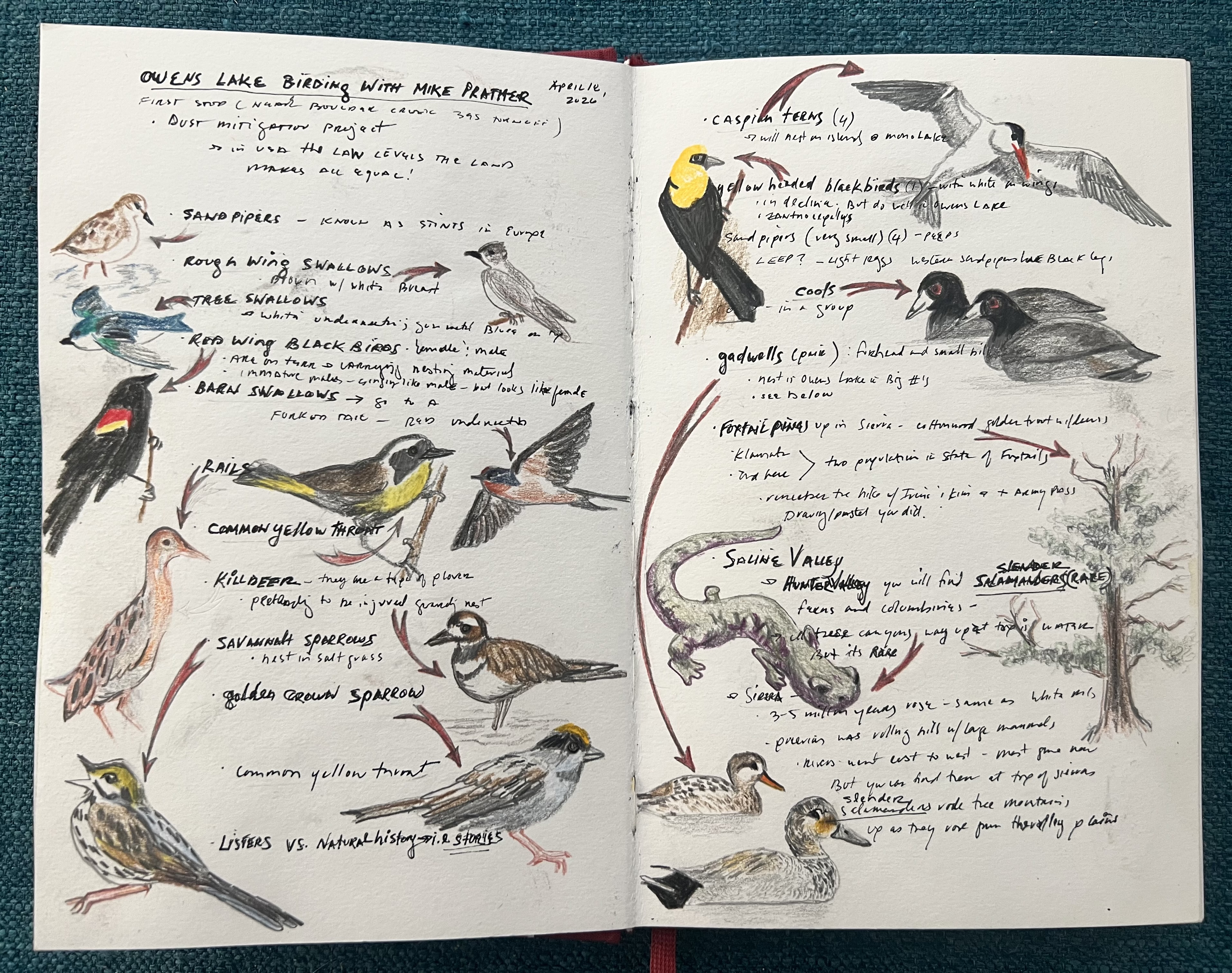
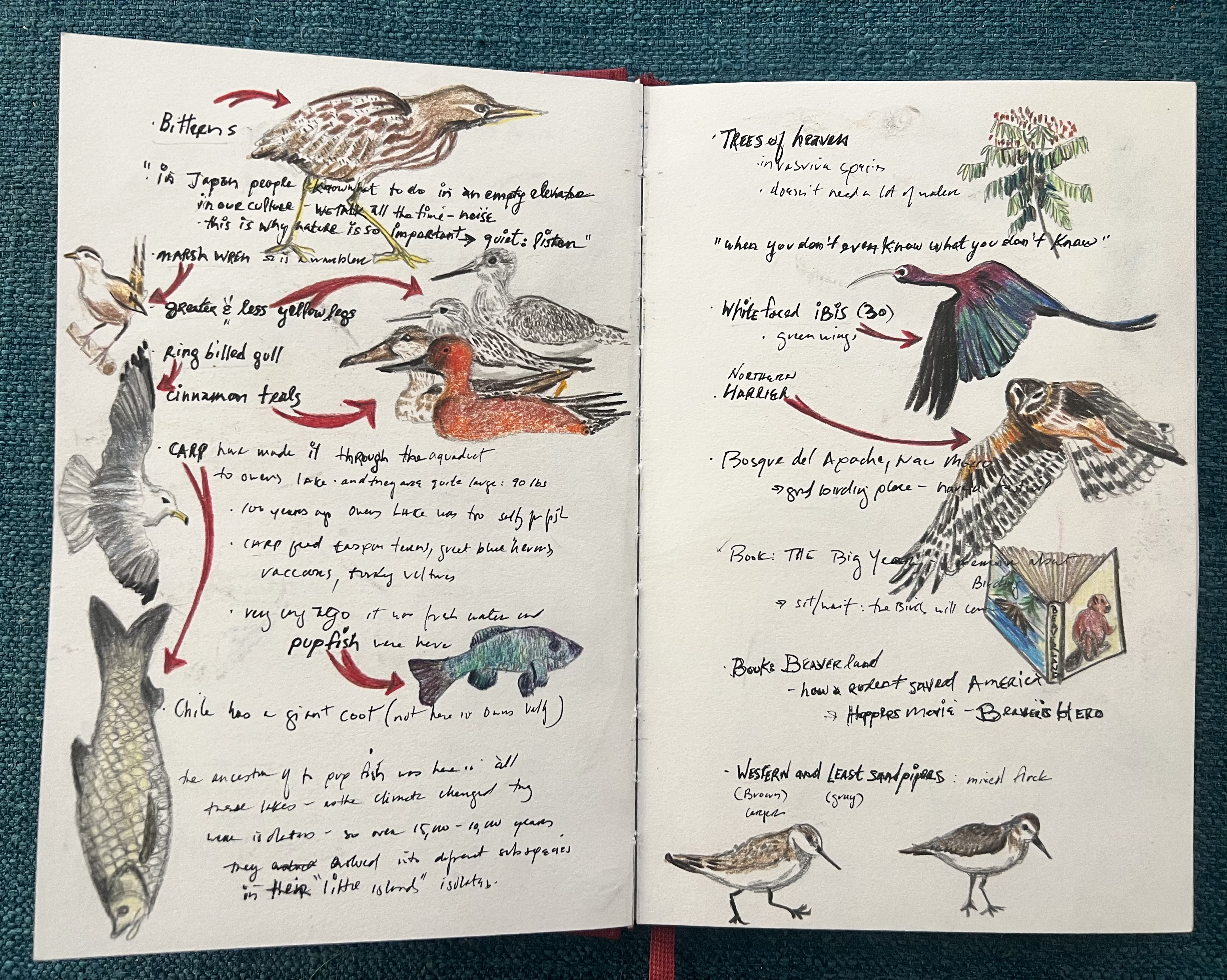
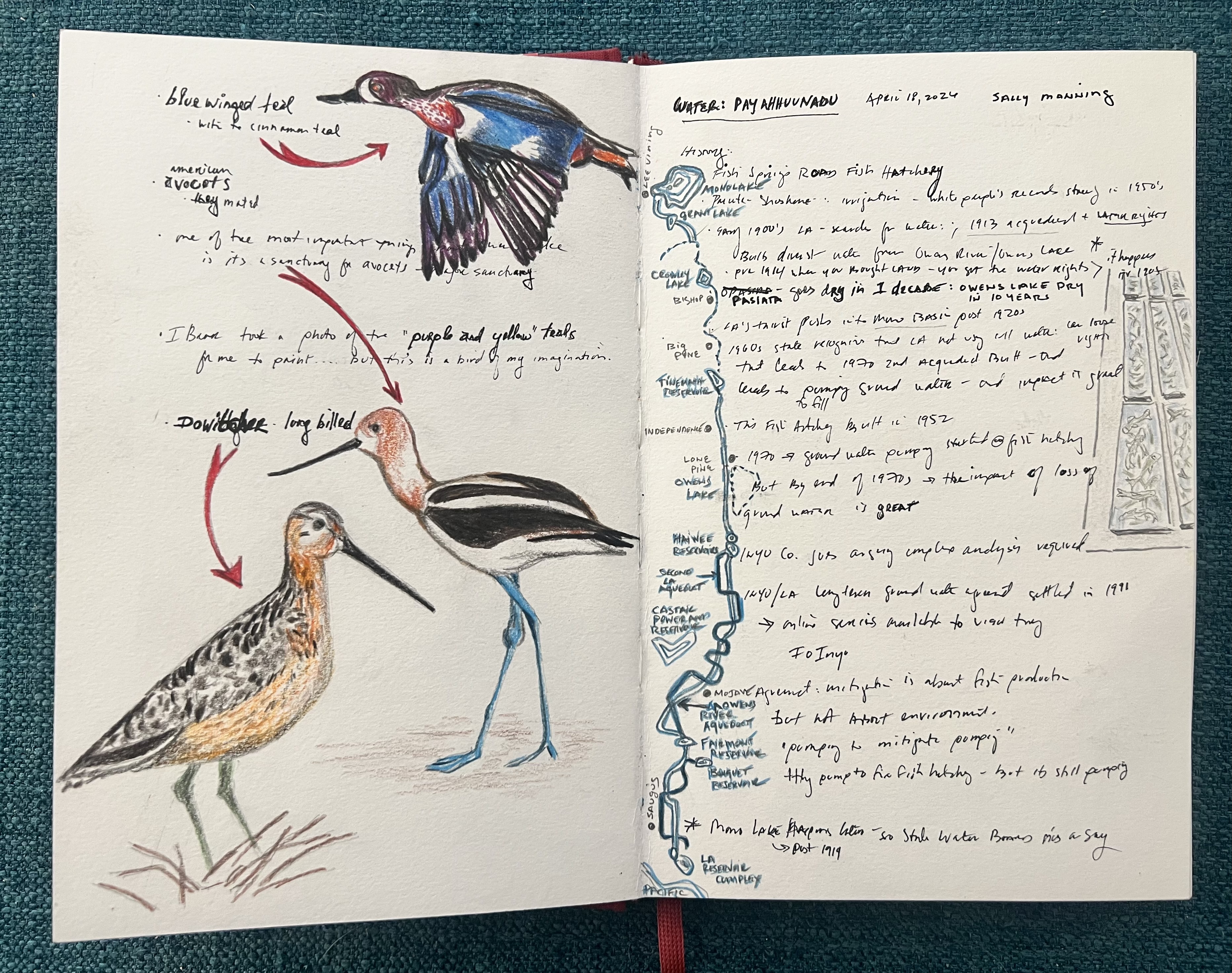
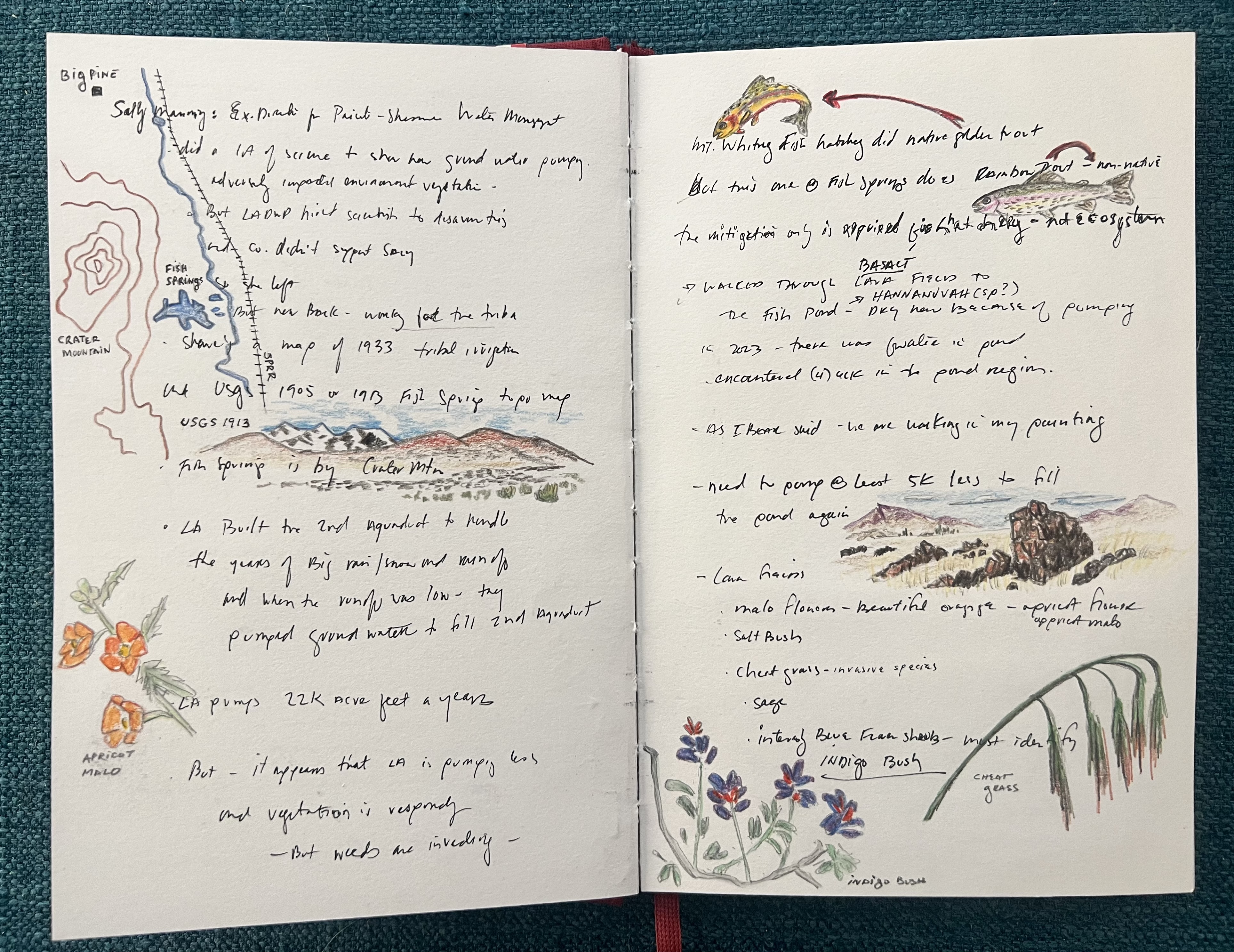
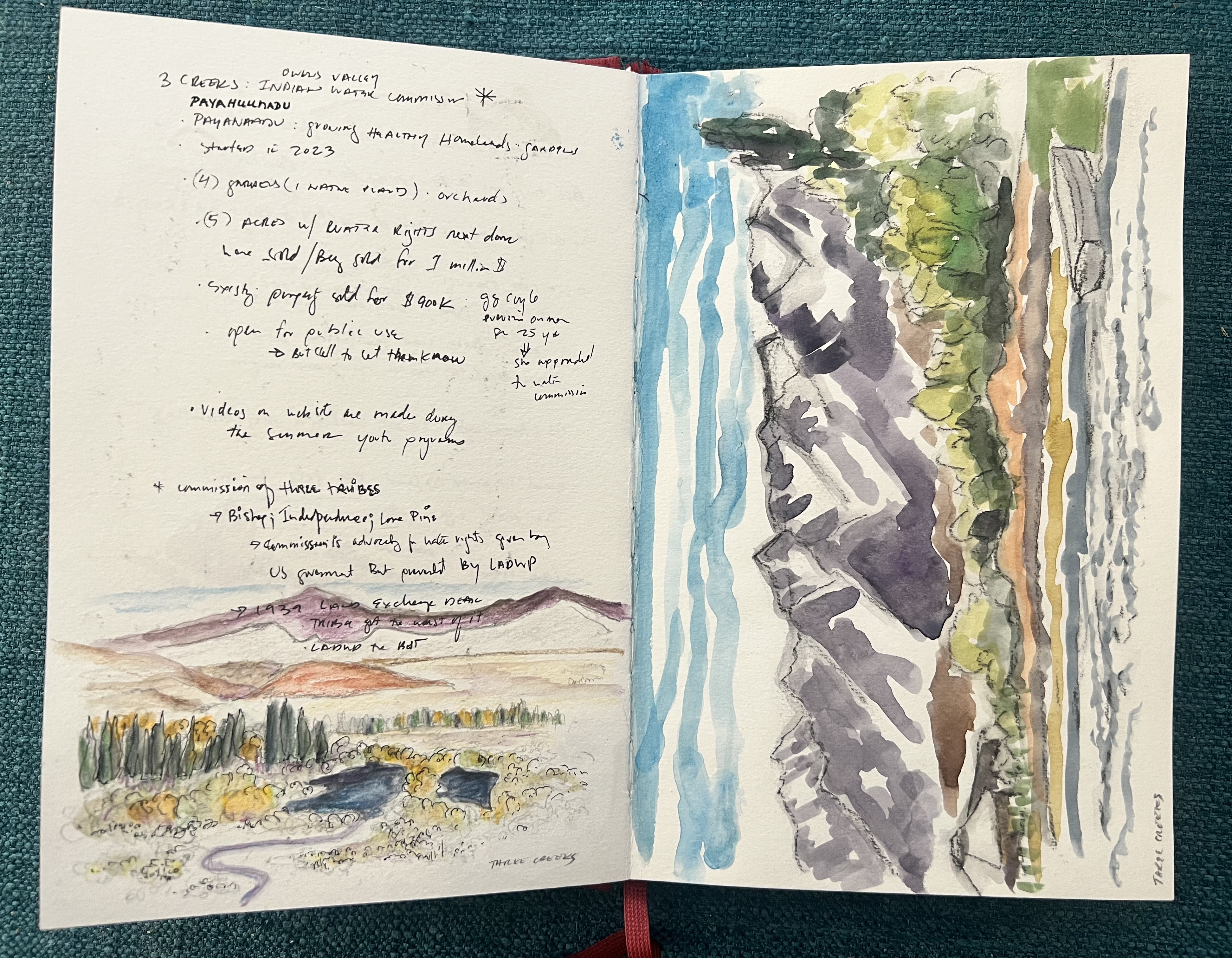
“Pleistocene-era Owens Lake formed eleven thousand years ago, when the huge glaciers that covered the Sierra Nevada melted and plummeted down the Owens River to the lowest point in the valley. It was over 200 feet deep and 200 square miles in area. That massive lake evaporated over time into Owens Lake, which covered 100 square miles and was slightly salty, mainly because of sodium bicarbonate, or “soda.” Then, settlers compressed geologic time into a matter of years. After the U.S. Army murdered or removed many of the regions Native Californians during the Owens Valley Indian War, white homesteaders began diverting water from the Owens River for farming and ranching. Then came Los Angeles and its aqueduct. By 1924, the lake was completely dry. The salts left behind precipitated into a crust of trona, burkeite, halite, potash, potassium, chloride, and borax. And dust. ….. By the 1990s, the bed of Owens Lake was releasing 76,000 tons of dust east year. It had the highest measurement of particulate matter in the United States. ….. Great Basin Unified Air Quality Control District, the agency responsible for enforcing air quality rules in the Eastern Sierra region, started monitoring air quality at Owens and Mono lakes in the 1970s. ….. With the law finally on its side, in the early 1990s, the air pollution control district sued the Los Angeles Department of Water and Power over Clean Air Act standards. The big-city utility tried to starve out the rural regulation agency, filing seven countersuits. But in 1997, the courts decided in favor of Great Basin. They mandated that Los Angeles provide dust mitigation on an initial thirty square miles of lakebed. ….. They created a habitat where algae and brine flies flourished, providing food that attracted birds. ….. In 2002, the National Audubon Society declared the lake an Important Bird Area. Survey teams organized by the Eastern Sierra Audubon Society counted over seventy species in a single day, including fifteen thousand eared grebes, eleven thousand least sandpipers, nine thousand avocets, and twenty-seven thousand California gulls.”
Excerpt from Caroline Tracey’s Salt Lakes: An Unnatural History (New York: W. W. Norton & Company, 2026) pgs.152-159

