Each breath a renewal

Cow skull. Robin L. Chandler Copyright 2015.

On Hallow’s Eve ghosts and monsters threaten our neighborhood streets and doorsteps. Fortunately, these goblins are easily deterred. Sweet gifts return them to their quest for the redemption required to reach a peaceful eternal sleep. Laughing at my imagery, I believe, perhaps, a change from my diet of gothic novels is well overdue. For in truth, on Halloween, we celebrate darkness’ arrival brought about by our solar system’s seasonal choreography, and we celebrate the promise of renewal, as well as death’s significance.


Approaching rain. Robin L. Chandler Copyright 2015.

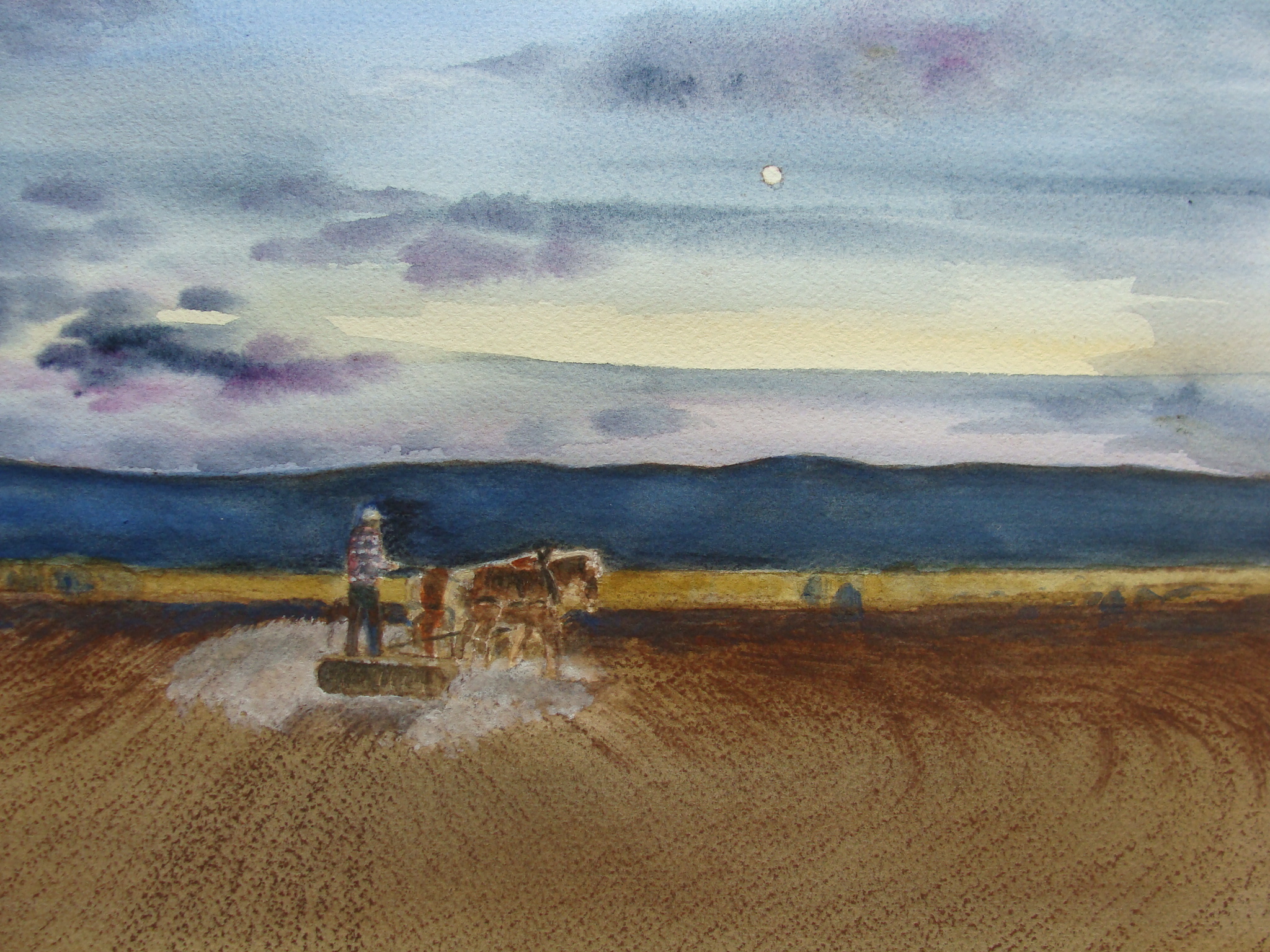
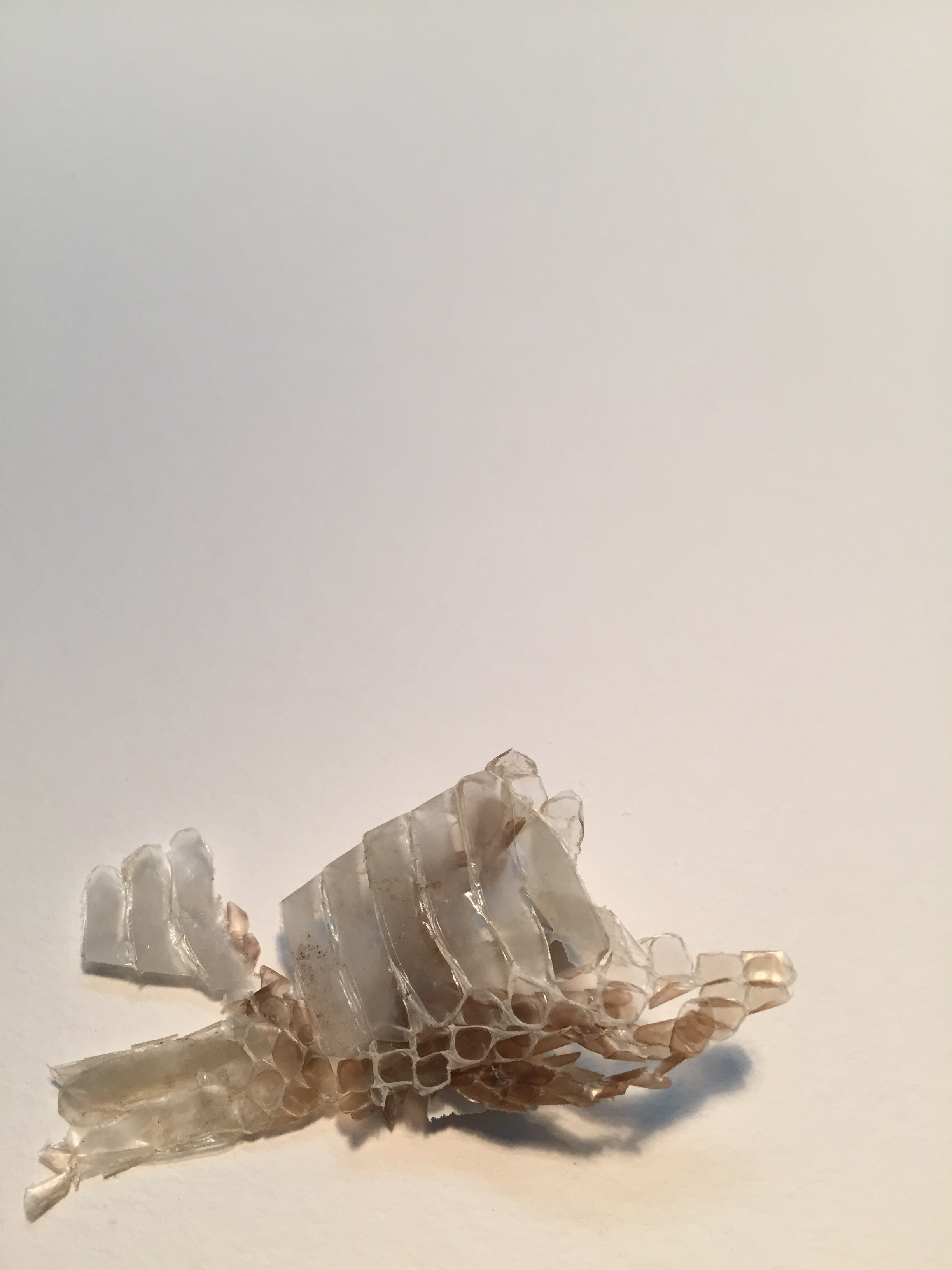
Recently, I visited my friends at Live Power Community Farm, and the changing season was evident: shorter, warmer days; longer, colder nights; clear skies on Thursday; rain clouds on Friday; and the sky at night graced by Orion the hunter. As I wandered the farm, I was struck by the iconic imagery of death around me: shed snake-skins, cow skulls on the compost pile, and dried cornhusks in the fields. The signs of renewal were equally abundant: spring-like flowers bloomed near rows of pumpkins; the farmer and his horses sowing fields with alfalfa seed to nurture the soil; and the milk cow lumbering to the barn, because she walks for two as her calf will be born in the Spring.


Sowing under the rising moon. Robin L. Chandler Copyright 2015.

Belief in renewal is essential to living. Daily life brings both sorrow and joy; twenty-four hours a cycle of symbolic deaths and rebirths. The key is keeping confidence in continual change; it is good, it is necessary. The past, present and future tense bleed one to the other; each exhale a symbolic death, each breath a renewal of life.


Snake skin. Robin L. Chandler Copyright 2015.

In his poem From the Mercury Fountain, Mahmoud, in his book Thread Michael Palmer wrote:

“…..present, infinite presents threading

now forward, now back. Amidst the

shattered symmetries and scattered fictions,

between actual river and imagined shore,

actual breath of wind through the frayed,

half open curtain…..”

Building a bridge

Natural Bridges. Robin L. Chandler 2015.

“In poetry’s words, life calls to life with the same inevitability and gladness that bird calls to bird, whale to whale, frog to frog. Listening across the night or ocean or pond, they recognize one another and are warmed by that knowledge” writes Jane Hirshfield in her book Ten Windows: How Great Poems Transform the World. Waking in the night, each breath calls to yours, building a bridge between us, and I am warmed by that knowledge.

Our share

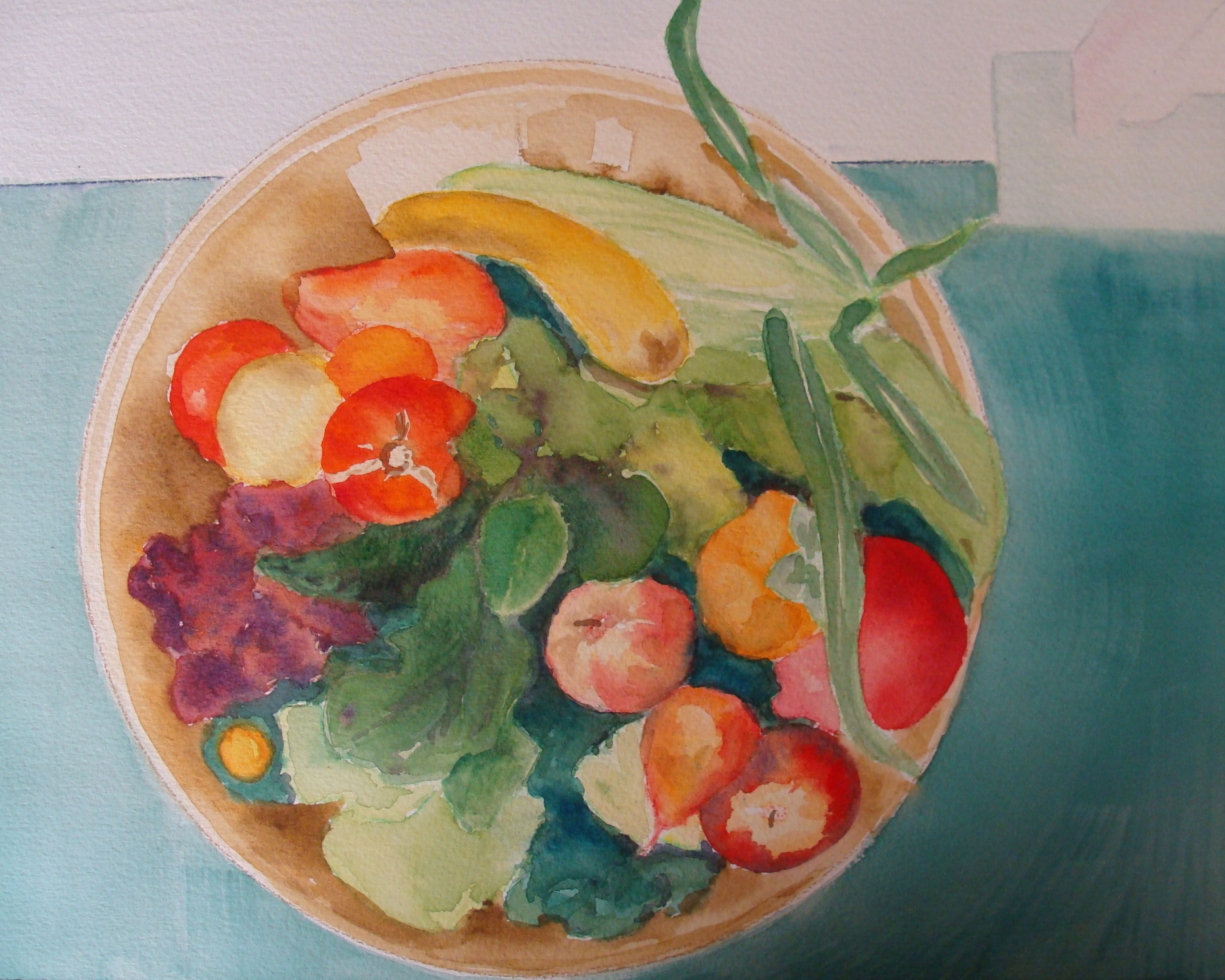
Live Power Community Farm weekly share. Robin L. Chandler Copyright 2015.

Alan Chadwick was a master gardener and major influence on the birth of organic gardening in California. A teacher at UC Santa Cruz in 1967, he started the Chadwick Garden, where he cultivated the minds of many students minds and the seeds of the organic movement in California began to blossom.  UC Santa Cruz Professor Paul Lee wrote about Chadwick’s legacy in his book There Is A Garden in the Mind: A Memoir of Alan Chadwick and the Organic Movement in California. Stephen and Gloria Decater were students of Alan Chadwick; Stephen studied with Chadwick at UC Santa Cruz and followed him to learn and teach in Covelo, California where the master gardener briefly tended another Chadwick Garden reaching more students including Gloria. A living legacy was nurtured and blossomed in Covelo as Live Power Community Farm (LPCF), tended over the years by Stephen and Gloria, their sons and apprentices.  For almost three decades, we have been weekly share holders in LPCF, benefiting from the teachings Alan Chadwick gave his students. Every Saturday morning, the week’s harvest was delivered by the Covelo farmers to San Francisco where our community members sorted vegetables and fruit, flowers and eggs, grains and meat, delivering the weekly basket bounty – a cornucopia – to eager share holders like us. It has been a blessing: shared by Stephen, Gloria and the land. And for this we give our deep thanks for the love you, Stephen and Gloria, have given the land, and the sustenance of “bread” and teachings you have shared with us over the years. With your patient love and guidance we have become better stewards of both the land and the creatures, great and small, graced with walking her gardens. Amen.

Metaphor

Metaphor 1. Robin L. Chandler Copyright 2015.

Lying in bed, reading softly aloud from Afloat, one of Gary Snyder’s poems from his epic Mountain’s and Rivers Without End “…like a cricket husk – like an empty spider egg case, like dried kelp fronds, like a dry cast skin of a snake, like froth on the lip of a wave, trembles on the membrane, paddling forward, paddling backward…there is no place we are but maybe here,” the sound of birdsong and the rain scent drifted through the window. Later, we launched the paddleboards and made our way out of the harbor, and through the river’s mouth to drift among the kelp beds on Monterey Bay. So close, so near, a pair of dolphins broke the surface, exhaling through their blowholes, a magical sound. The water was still and the sky a showcase of rainclouds, dark gray sky reflecting in the sea. “Floating on a tiny boat, lightly on the water, rock[ing] with every ripple…where land meets water meets the sky.” The Greek etymological root of metaphor is meta (across) and pherein (to carry). Cautiously, one stroke at a time, I left my troubles on the shore behind, carrying only my hopes and dreams, stormy skies surrounding me, steadily crossing, stroke by stroke, on my path to the other side.

Metaphor 2. Robin L. Chandler Copyright 2015.

Figasus: what do you tend to?

Figtree for Morris Graves. Robin L. Chandler Copyright 2015.

Our backyard is blessed with fruit trees. In early summer, the apricots and plums ripen and soon find their way as jam, the taste of sunshine on a winter’s day. And now with fall’s arrival the Flanders Fig has ripened; with the pear and persimmon trees soon to follow. This week we will celebrate Sukkot, the Jewish agricultural festival celebrating the harvest. And so we tend to our figs. Even in this severe drought the trees are doing their utmost to participate in the cycle of life; and for this I am grateful and give thanks. But I worry. How much longer can they last with such little rain? Come hither El Nino, and when you come, don’t be shy, bring your entire Cumulonimbus family.

Harvested figs have become star performers in a galette, in salads, and rumors in our home, suggest a caramelized future for pizza pies. We planted the fig tree five years ago and over the years, we have tended the tree, watering, pruning branches, and building supports ensuring it would could grow tall and strong. This is the first bountiful harvest, so we eagerly await the fruit. The tree stands over fifteen feet in height, it’s branches tending towards the sun to help ripen the fruit. Figs are a favorite of the creatures with which we share this Oakland neighborhood; so, fig picking must be timed perfectly. The fruit needs to be ripe enough, but not so ripe as to become easy pickings for the raccoons, jays and squirrels that call our backyard home.

Tending my ripening figs, I contemplated their figgy future. What if the figs could break Newton’s Law of Gravity (avoiding a Fig Newton future) and fly like Pegasus? If figs could fly, what would they intend: remain on the branch, the majority content to a predetermined future filling the stomach’s of mammals and birds; or continue the cycle of rebirth, gravitating to mother earth seeding a new fig tree? If figs could fly, would they break their natural tendency and fly away: planting themselves in a land of gentle rain, or perhaps seek further enlightenment through a closer relationship with the sun? For the remainder of this day, I shall remain in this peaceful garden, seeking liberation from my own samsara by practicing self-discipline, participating in meditative concentration, and considering the wisdom of emptiness. Hoping that should I ever achieve nirvana, I would return as a Bodhisattva, attending to Figuasus and fig lovers on their flightpaths to enlightenment.

Shall we gather at the river?

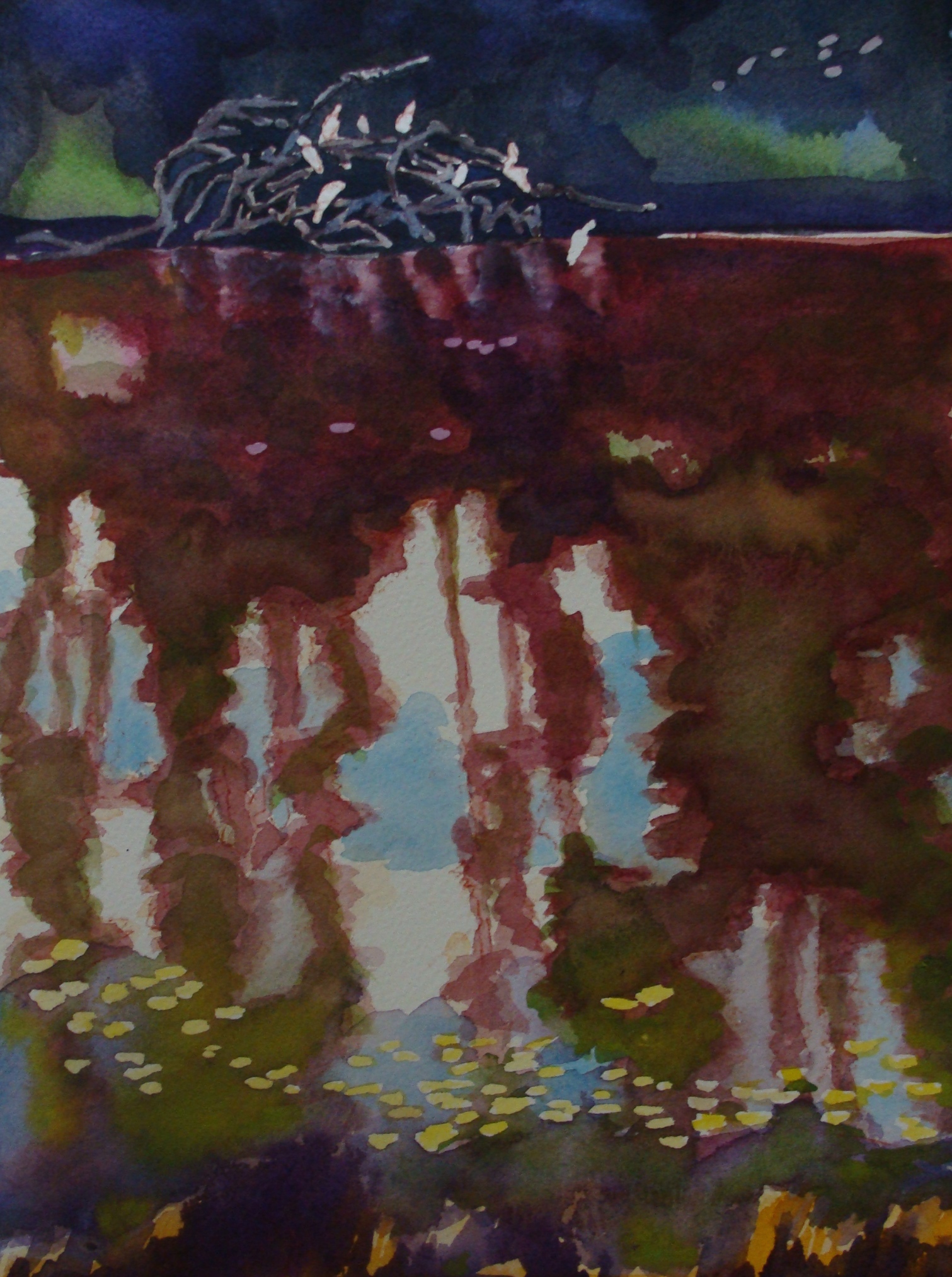
Santa Cruz lagoon. Robin L. Chandler Copyright 2015.

The sun was high in the sky: the light blinding and the air hot; no breeze. The egrets gathered as a rookery on the fallen trees by the lagoon in the Santa Cruz watershed, collecting themselves in the cool of the Eucalyptus trees, like sinners awaiting their baptism to wash away their sins. For a moment I lost myself in the other, the landscape. Quietly, I started to sing “yes, we’ll gather at the river, the beautiful, the beautiful river, gather with the saints at the river, that flows by the throne of God.” Shall We Gather at the River was a signature song for John Ford the filmmaker famous for his westerns shot in Monument Valley; the song became soundtrack in some of his most famous movies including My Darling Clementine, The Searchers, and Stagecoach. Ford often used the song as a means to define the boundary between the anglo-churchgoing community “civilizing” the frontier, and the “other ” community defined by their racial and ethnic differences; the “other’s” music emanated from saloons and was typically defined by Ford as minstrel songs and Spanish California folksongs.

Art and poetry are means to give voice to the other, be it individuals, communities, or the landscape. In his book, The Other Voice: Essays on Modern Poetry, the poet Octavio Paz wrote “all poets….if they are really poets, hear the other voice. It is their own, someone else’s, no one and everyone. Nothing distinguishes a poet from other men and women but these moments – rare yet frequent – in which being themselves they are other.”


City of light

San Francisco seen from the Port of Oakland. Robin L. Chandler Copyright 2015.

Saturday morning we woke to rain. It was a happy shock, given California’s drought. Dropping off the car for an oil change, I asked the mechanics to install new wiper blades. Overreaction? Overly optimistic? Only time will tell. Regardless, the skies put on a tremendous show as the front pushed across the region. It was an opportunity to paint a special place where sky, sea and scape meet with spectacular results. Shoreline Park operated by the Port of Oakland offered a grand stand to capture the atmospheric show: cumulous clouds towering over the San Francisco skyline situated on a bay reflecting the sun’s blinding light. It is a rare gift to live near a city blessed with the drama of sea and sky providing artists an opportunity to capture light reflective and translucent.

J. M. W. Turner lived along the London’s river Thames and visited Venice with its Grand Canal. This summer the De Young Museum hosted an exhibit “Painting Set Free” sharing Turner’s landscapes drawn from the last fifteen years of his career. It is a show not to be missed. Peter Ackroyd’s biography of Turner explains the artist’s first encounter with Venice in 1819: “his first thoughts on seeing the floating city are not recorded but we may imagine the response of one who was so deeply attuned to the movement of water, to the passage of light, and the intermingling of the sun among the waves…..he stayed for only five days on this occasion but the city seized his imagination; he filled some 160 pages of his sketchbooks with drawings and groups of drawings. He also executed some wonderful watercolors of the Venetian morning, where the translucent and ethereal light of the city is evoked in washes of yellow and blue. That sense of light never left him. It irradiates much of the rest of his work.

Fire next time

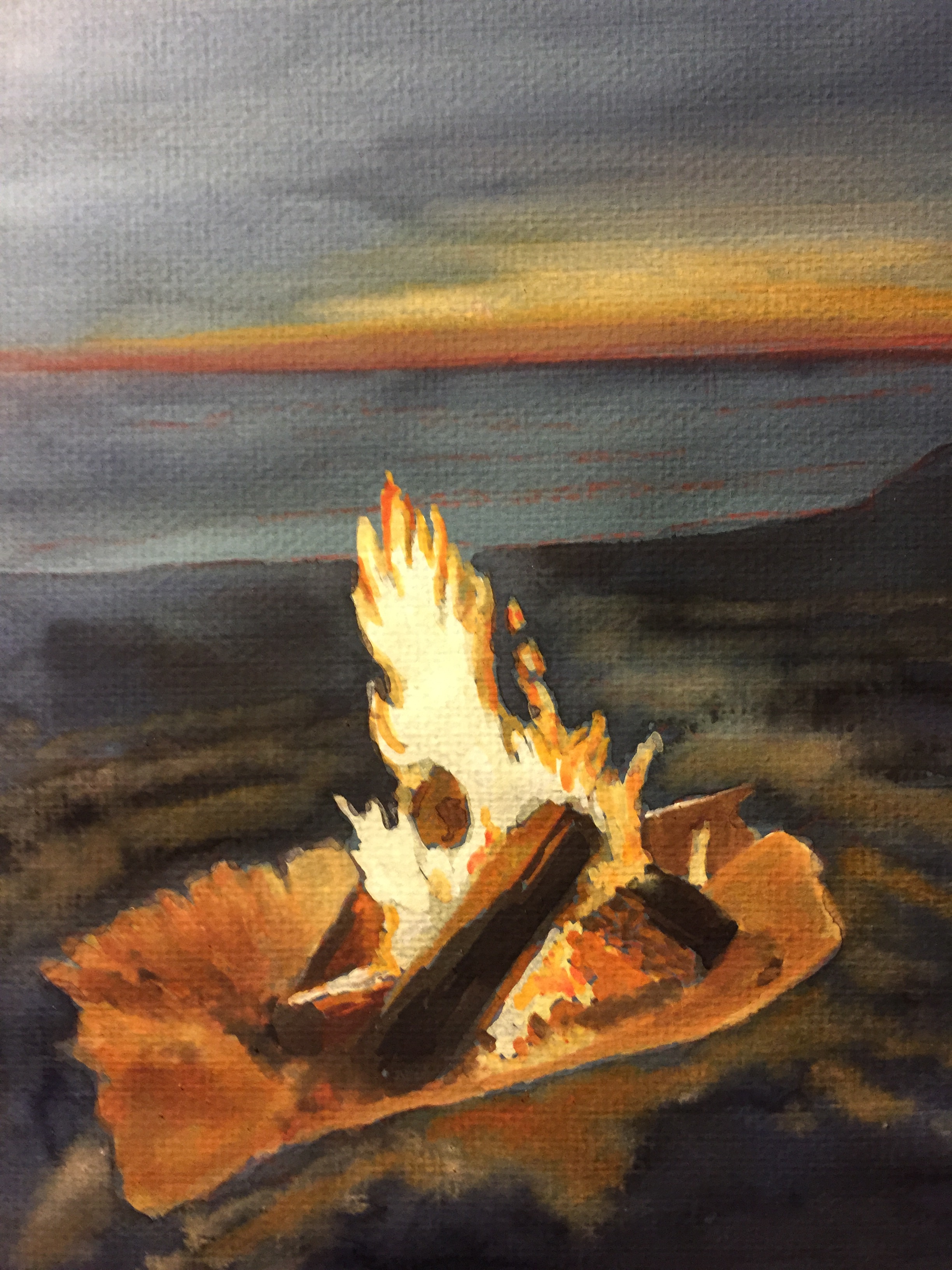
Beach fire Santa Cruz. Robin L. Chandler Copyright 2015.

Darkness appeared in the corner of my eye. The sun dawdled splashing yellow and orange in her wake. Stars like motion detectors tracked the sun’s journey. And then suddenly, almost without warning, it was night. In the beauty of the evening it was easy to neglect the rotation and forward motion of time. Ebb tide, the waves teased the shoreline, waiting, where families danced the crescendo. On the beach friends gathered sharing stories and laughter. Beach fires, first flickering, grew stronger against the night sky, a shield against the darkness, a memory of color and warmth. In this context, fire is friend, a restorative. Staring into the magical flames, I reflect and imagine, a ritual connecting humankind across the millennia. But miles from here, on this summer night of the fourth year of our drought, fire crews are on the line, feverishly working to contain an inferno, capable of erasing entire communities. Difficult to believe on this calm, still night, but scientists say this pacific ocean nurtures El Nino; the infant, powerful, bringing rain and flood to wash away our sins. We live in a fundamental time; a time of powerful extremes. It is feast or famine, flood or fire; forces are in motion changing lives forever in a matter of seconds. A minor traffic violation, becomes a struggle for power; a match is lit resulting in a conflagration of unimagined consequences. Lives are ended, families devastated, and communities entrenched. And for what? How do we heal the rift and bridge the chasm?

The renowned African American writer James Baldwin published two essays as a book The Fire Next Time, taking it’s title from a line in a Negro Spiritual, “God gave Noah the rainbow sign, no more water but fire next time.” In the first essay titled The Fire Next Time:  My Dungeon Shook: Letter to My Nephew on the One Hundredth Anniversary of the Emancipation, Baldwin discusses the history of race in the United States. Baldwin argues that Americans, black and white, must step outside themselves and re-examine what they believe, understand and fear.  Counseling his young nephew, Baldwin writes know whence you came. If you know whence you came, there is really no limit to where you can go…please try to remember that what they believe, as well as what they do and cause you to endure, does not testify to your inferiority but to their inhumanity and fear…and if the word integration means anything, this is what it means: that we, with love, shall force our brothers to see themselves as they are, to cease fleeing from reality and begin to change it…you came from sturdy, peasant stock, men who picked cotton and dammed rivers and built railroads, and, in the teeth of the most terrifying odds, achieved an unassailable and monumental dignity.

For Harvey

Carmel Valley vineyards. Robin L. Chandler Copyright 2015.

After leading the campaign to defeat California Proposition 6 (Brigg’s Initiative), in November 1978, which sought to ban gays and lesbians from teaching in public schools, Harvey Milk, Supervisor from District Five in the Castro of San Francisco, gave a moving speech stating every gay person must come out. As difficult as it is, you must tell your immediate family. You must tell your relatives. You must tell your friends if indeed they are your friends. You must tell the people you work with. You must tell the people in the stores you shop in. Once they realize that we are indeed their children, that we are indeed everywhere, every myth, every lie, every innuendo will be destroyed once and for all.”

During the past 37 years (since the defeat of Proposition 6) we came out and we thrived amongst our friends, families, neighbors and co-workers; we are taking our place amongst the interwoven threads forming our country’s fabric. And we advocated for our rights. And we got a little help from our friends. In 2004, the newly elected Mayor of San Francisco, Gavin Newsom directed city officials to begin issuing marriage licenses to same sex couples. And for a brief time same sex couples were married in San Francisco. Something was coming, coming out.  “Hope is never silent,” said Harvey.

Drakes Bay. Robin L. Chandler Copyright 2015

Miraculously, in June 2015, Justice Anthony Kennedy writing the majority opinion for the Supreme Court, made same-sex marriage a right nationwide “No union is more profound than marriage, for it embodies the highest ideals of love, fidelity, devotion, sacrifice, and family. In forming a marital union, two people become something greater than once they were. As some of the petitioners in these cases demonstrate, marriage embodies a love that may endure even past death. It would misunderstand these men and women to say they disrespect the idea of marriage. Their plea is that they do respect it, respect it so deeply that they seek to find its fulfillment for themselves. Their hope is not to be condemned to live in loneliness, excluded from one of civilization’s oldest institutions. They ask for equal dignity in the eyes of the law. The Constitution grants them that right.”

Harvey said “coming out is the most political thing you can do.

Hope will never be silent.

Colorado of Texas

The Colorado River of Texas. Copyright Robin L. Chandler 2015.

Storm fed by New Mexican arroyos, the Colorado River winds across the Texas plains and prairies nurtured by springs, through the Hill Country and the fertile black bottom land, gathering steam as the Concho, Llano, Perdnales and San Saba rivers contribute on the journey to the Gulf of Mexico. Great forces tell the story of this country, some natural and some manmade. Wind and rain, lightening and thunder, sun and drought, the migration of creatures in the air, on the land, and through the water dialogue with man’s domestication of the landscape, wrestling nature to some kind of tenuous draw.

In a collection of essay’s Sacagawea’s Nickname: Essays on the American West, Larry McMurtry wrote “man may have seven ages, but the West has had only three: the age of Heroes (Lewis and Clark), the age of Publicity (Buffalo Bill), and the age of Suburbia, for which the preferred term is Urban Sprawl. How we got from the first age to the third, and what we have destroyed in the process, is a story historians will be worrying for a long time.”

Leaving Austin meandering the back roads towards Waco, I purposefully took a slight detour to the northwest to visit the Balcones Canyonlands National Wildlife Refuge. Spring is the perfect time to catch the wild flowers and glimpse migratory birds nesting in the Texas Hill Country. Austin’s culture of great music and good food combined with Texas’ tax incentives are attracting the computer industry and the countryside is increasingly being developed into suburban housing enclaves. My journey is a series of interstates, highways, and two-lane roads that are increasingly developed. Thank goodness the Refuge was formed in 1992 to ensure some land would forgo development and protect the habitat of two endangered birds: the Golden-cheeked Warbler and the Black-capped Vireo. And refuge it is. Although it is hard to completely loose sight or sound of the farm to market road, it is possible to loose yourself briefly in the surrounding natural history. Hiking on a ridge in the refuge, populated with juniper trees (known as cedars in Texas), I was rewarded with sightings of the nesting Warbler and a full stereophonic soundtrack of the bird’s beautiful song juxtaposed by distant thunder. My found treasure included a gorgeous view of the Colorado River of Texas with a threatening lightening storm looming on the western horizon.

I am conscious of the looming suburbs on the horizon, threatening like a storm this precious refuge. Back in the car, heading towards my Dad’s home, I queue up The Mountain on Steve Earle and Del McCoury Band’s album of the same name. I know the odds are stacked against nature; mankind’s greed and hunger scar the landscape with glacier like force. But I know we need to come to some compromise with nature, something more than this tenuous draw. We need to live and breathe stewardship; because the land helps keep us from worry and woe. As I merge onto the highway, Steve Earle sings:

“I was born on this mountain a long time ago

Before they knocked down the timber and strip-mined the coal

When you rose in the mornin’ before it was light

To go down in that dark hole and come back up at night

I was born on this mountain, this mountain’s my home

She holds me and keeps me from worry and woe

Well, they took everything that she gave, now they’re gone

But I’ll die on this mountain, this mountain’s my home”