love and change

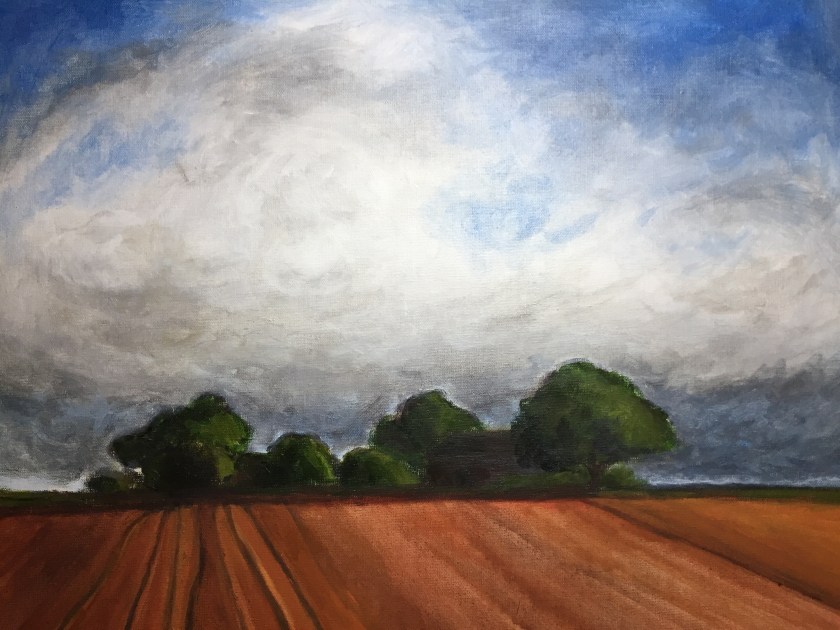
Cottonwood in the Owens Valley. Robin L. Chandler 2016

The lights dimmed and the spotlight focused on the figure center stage guitar in hand; she began to sing, the voice a little smoky and raspy, working towards the high, round notes so clear in my memory. Soon, “Saint” Joan Baez sang two of my favorites by Bob Dylan and Woody Guthrie respectively, “With God on Our Side” and “Deportee,”. Both songs are stories of love and tragic loss.  Each story holding forth the possibility of redemption, that we can learn from our mistakes and take right action.

Election eve, the significance of this sainted singer was not lost on any of us in the audience. This deeply disturbing election season nearly over, we drank deeply of the songs offered us, believing in the promise of a world where all persons count, no matter their origin or identity, and that the fabric of our society is stronger, when our diverse threads are woven together. Listening, my heart responds, I will march again to her call to action to build a better and loving world.

Between songs, she spoke about her belief in the ideas and aspirations expressed by Bernie Saunders as he crossed the county this year connecting with the hopes and ideals of a new generation. But she also spoke admiringly of the courage of Hilary Clinton, withstanding the barrage of lies and intimidation hurled at her these last months.

On my recent trip to the Eastern Sierras, many a cottonwood was growing, singularly, isolated from other trees in the valley, telling a story, stately and proud. In some cases, it was unclear if a tree was near death because of lack of water, or if it was merely beginning the long winter sleep. These trees standing statuesque on a parched landscape, with the majestic sierras as their backdrop, called to mind the elm trees, deemed Liberty Trees by the colonists turned patriots at the time of our Revolution. The first such elm was located in Boston and celebrated in the revolutionary poetry of Thomas Paine. Soon Liberty Trees were anointed in towns and cities throughout the colonies; these majestic trees witnessed calls to action, celebrated victories, and mourned defeats. Trees bear witness to our story, and with this act they become part of our own story, symbols of strength, longevity, knowledge, loss, and redemption.

We are participating in the most historic election of our time. The stakes are high; it feels like the future of our nation and perhaps the world weighs upon our ballot box. At times, I have been paralyzed with fear of what may come. But I also know that there are persons, my fellow citizens, who think differently than I and will vote differently than I, and they too are fearful of change. And yet, we are all part of the same country, and we must move forward together, whatever changes comes. I think of the lone cottonwood in the Owens Valley, thirsty. Is the tree telling a story of suffering brought on by a changing climate?  Is it hanging on for dear life hoping for the redemption winter snow in the mountains will bring? Is this cottonwood a symbol of my republic gasping, near death? Listening to the tree, my heart responds. While I fear the change that the election could bring, I will be strong like a tree, making connections, bringing the long-view, and sharing all the knowledge and wisdom found deep in my core. I will take right action continuing to build a better and loving world respecting the rights of all living beings.


comes-a-round

Alpenglow. Robin L. Chandler Copyright 2016.

With a timetable to keep, the sun waits for no one. Rolling quietly out of our sleeping bags trying not to disturb our friend still wrapped in dreams, we emerged before dawn. Our feet heavy, not yet at full speed, our eyes bleary, not yet focused, we wandered to the overlook. The air, cool at elevation, was very dry. We stood on the White Mountains, the highest range in the Great Basin Desert. It would be another blazing hot day, mid-summer, in the Owens Valley four thousand feet below.

The momentary beauty subdued speech. Alone, together in reverence, we spoke only in gestures and whispers. Awake now, we scrambled amongst the sage and rocks excitedly imaging the ever-changing play of light and shadow. The sun comes-a-round again. Now blinding. Now instantly drying the sweat on my skin. No limits on shutter clicks, silently we prayed at least one image would convey the eternal beauty and connection now felt. The simple beauty found in a morning.

Looking west, the alpenglow danced across the Sierras. Standing somewhere between the void and illusion, Michael Cunningham’s Richard, the poet, a central character in The Hours came to mind. Richard, moments before he dies, says “Like the morning you walked out of that old house…and I thought I had never seen anything so beautiful as the sight of your walking out a glass door in the morning…I just feel so sad. What I wanted to do was so simple. I wanted to create something alive and shocking enough that it could stand beside a morning in somebody’s life. The most ordinary morning. Imagine, trying to do that…I don’t think two people could have been happier than we’ve been.” Cunningham’s Pulitzer Prize winning fiction concerns three generations of women impacted by Virginia Woolf’s novel Mrs. Dalloway. Eulogizing, Cunningham wrote most of us, if we are very fortunate, are devoured by time itself and “for consolation: an hour here or there when our lives seem, against all odds and expectations, to burst open and give us everything we’ve ever imagined…though everyone…knows these hours will inevitably be followed by others, far darker and more difficult. Still, we cherish…the morning; we hope, more than anything, for more.”


reach

Reach. Robin L. Chandler Copyright 2016.

We took the back roads, choosing to meander through the country, forgoing the fast pace of the interstate. It was a beautiful fall day – cool in Texas terms — the sky was bright blue and gorgeous cumulus clouds, like cotton balls, soared across the heavens. For over twenty-five years, I have taken this drive with my father to visit my mother’s grave. Reaching out, I took my father’s hand as we passed  farmland, where corn and cotton was recently harvested and now farmers prepare the soil for winter.

treasure

Treasure. Robin L. Chandler Copyright 2016.

Dick Allen wrote a poem that I treasure. Here are a few lines:

When you love, give it everything you’ve got.

And when you have reached your limit, give it more,

And forget the pain of it.

Because as you face your death

it is only the love that you have given and received

which will count,

and all the rest:

the accomplishments, the struggle, the fights

will be forgotten in your reflection.

Mend

Mend. Robin L. Chandler Copyright 2016.

Mending. Helen Keller once wrote “although the world is full of suffering, it is also full of the overcoming of it.” Our garden is blessed with fruit trees and in the fall we harvest pears, persimmons and figs. Generously, we share the bounty with other inhabitants of our neighborhood, our neighbors, the scrub jays, the squirrels and the occasional raccoon. But today I saw my first crow choosing a fig. It reminded me of a story in the BBC news about a little girl named Gabi Mann who made friends with a flock of crows. About five years ago, part of Gabi’s lunch unexpectedly became a feast for the crows, but then something special happened. Gabi started purposefully sharing her lunch with the crows, and as if to mend the relationship – strained by the stolen lunch –  the crows returned, bearing gifts. Four years later, Gabi ritually feeds the birds, and the crows continue to express their thanks with gifts. Gabi saves and savors the gifts including beach glass, beads, lego pieces, and her favorite, a pearl colored heart. Mending.

Gather

Gather. Robin L. Chandler Copyright 2016.

A Buddhist seeks refuge in the Three Jewels: Buddha (the enlightened one), the Dharma, (the Buddha’s teachings of the four noble truths and the eightfold path), and the Sangha (the community of Buddha’s followers seeking enlightenment). The Sangha can be a formal community of monks living in a monastery or a community of laypeople who gather together.

Enlightenment is nearly impossible to achieve alone. A person must understand that we suffer as do all those around us; suffering comes from a cause; suffering can end; and the path to end suffering and achieve enlightenment is the middle way. A central aspect of Sangha is to gather with others who can mentor, as we in turn mentor others. As members of a Sangha we help each other on the eightfold path to right understanding; right intention; right communication; right engagement; right service; right energy; right mindfulness; and right concentration.

down in the valley

Bristlecone Pine in the White Mountains. Robin L. Chandler Copyright 2016.

The White Mountains are a high desert range situated between the Sierra Nevada Mountains and the Great Basin Desert and overlooking Death Valley to the South and the Owens Valley to the West. White Mountain Peak at 14,252 feet is third highest mountain in California following Mt. Whitney and Mt. Williamson. A big, empty, solitary place, created by dynamic geologic forces; it is a place where, Ancient Bristlecone Pines teach pilgrims about a higher consciousness. Time stands still, and peering down in the valley, pilgrims can see life’s journey, the forks in-the-road ahead, and path choices, guided by the wisdom discovered amongst trees – like the Bodhi Tree –  over four thousand years old.

In the late 1930s, the ethnomusicologist Alan Lomax preserved for the Library of Congress Archive of Folk Song Down in the Valley. Captured in the Great Smokey Mountains of North Carolina, the song is written from the perspective of an empty, solitary, place – prison – where time also stands still. Peering into space, cut off from the earth and sky, the prisoner sees deep into life’s chasm, the forks in the road behind, and reflects sadly on choices made.

Down in the valley valley so low
Hang your head over hear the wind blow
Hear the wind blow dear hear the wind blow
Hang your head over hear the wind blow.

Roses love sunshine violets love dew
Angels in heaven know I love you
Know I love you dear know I love you
Angels in heaven know I love you.

If you don’t love me love whom you please
Throw your arms ’round me give my heart ease
Give my heart ease love give my heart ease
Throw your arms round me give my heart ease.

Build me a castle forty feet high
So I can see him as he rides by
As he rides by love as he rides by
So I can see him as he rides by.

Write me a letter send it by mail
Send it in care of Birmingham jail
Birmingham jail love Birmingham jail
Send it in care of Birmingham jail.


flowers depart when we hate to lose them

Kalalea revealed. Robin L. Chandler Copyright 2016.
Kalalea obscured. Robin L. Chandler 2016.
Kalalea in faith. Robin L. Chandler Copyright 2016.

Early in the morning, I meditated on the Kalalea Mountains while swimming in the waters of Kauai. Floating in the warm water, each wave washed through me, its action filling the emptiness in my soul. The sun shone on the mountaintop above me, but as quickly as the golden ridge appeared, it was gone. The Kalaleas were obscured, disappeared, in fact vanished. Had you just arrived you would never know the mountains existed. A cloudburst, a downpour, and then a waterfall tumbled down the mountains to the sea. Momentarily, the tempest ceased, the clouds parted and the sun returned to reign down upon the peak. And just as quickly the clouds returned, the mountains departed, and the waves again washed through me. I grasped the Buddhist understanding of faith.

Created by Tibetan monks, the great sand mandalas, objects of beauty, are readily swept away. By their impermanence, these objects teach us about truth. Their creation and their dissolution is an act of faith, revealing the beauty and truth of impermanence.

A haiku from Matsuo Basho captures this idea of impermanence well; beauty cannot be held captive. Beauty must be free, so it can return.

“The bee emerging

from deep within the peony

departs reluctantly”

coastline or borderline?

Pescadero. Robin L. Chandler Copyright 2016

The salty taste of a brisk wind and the bright midday sun welcomed we plein air painters fleeing the sweltering inland heat. Time suspended, we set-up our easels and laid out our paints and brushes intent on capturing the moment. Painting the seascape, onsite, is a meditation, a chance to lose self, and by the act, find self again. The sea, sky and land fill the gaps, and the renewed soul sees the wonder of life everywhere.

Driving to the coast, the radio waves burst with information about the sea change in Britain, Brexit. A campaign of fear coaxed many to mortgage their future to recapture a time past. Examine wisely the evidence of history; think critically of the stories told by those who seek power. Myths are one interpretation of the past. Identify the evidential source, and ask for what purpose was it created, and for what goal it is used now. William Carlos Williams wrote In the American Grain “to try to find out for myself what the land of my more or less accidental birth might signify.” It is a very good book, a poet’s interpretation of my country’s history. William writes “History, history! We fools, what do we know or care? History begins for us with murder and enslavement, not with discovery.”