Leave no trace

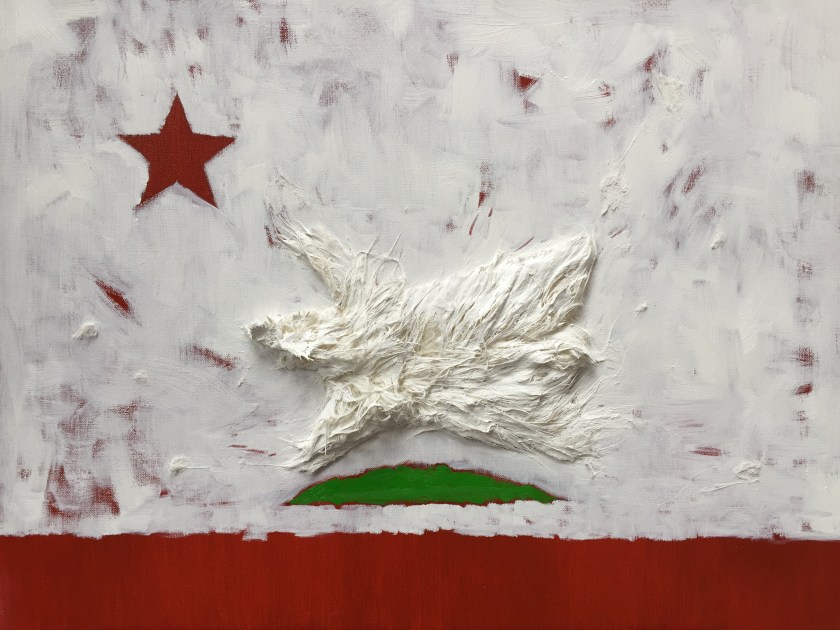
Bear Rug Flag. Robin L. Chandler 2017.

“I long ago lost a hound, a bay horse, and a turtle dove, and I am still on their trail,“ wrote Henry David Thoreau in Walden; or Life in the Woods. “Many are the travellers I have spoken to concerning them describing their tracks and what calls they answered to. I have met one or two who have heard the hound, the tramp of the horse, and have even seen the dove disappear behind a cloud, and they seemed as anxious to recover them as if they had lost them themselves.” Thoreau’s words can just as readily apply to animals in the wild, especially those we are endanger of losing all trace of.

On Wednesday February 15, 2017 the U.S. Senate Environment and Public Works Committee held a hearing to consider “modernizing” the Endangered Species Act (ESA) to eliminate red tape and bureaucratic burdens that eliminate jobs. According to the Washington Post, during the two-hour session, lawmakers discussed how “federal efforts to keep species from going extinct encroaches on states’ rights, is unfair to landowners, and stymies efforts by mining companies to extract resources and create jobs.” The ESA is a 43 year old law, enacted during the Nixon Administration, when we were beginning to grapple with the devastating impact of chemical use and human development on the environment. This legislation has likely saved from extinction the bald eagle, the California condor, gray wolves, black-footed ferret, American alligator, and the Florida manatee.

The Center for Outdoor Ethics developed the Leave no Trace Principles to protect the outdoors by teaching and inspiring people to enjoy nature responsibly. Ironically, the meaning of these words “leave no trace” could be twisted to serve as an epilogue for the Environmental Species Act. This phrase, used malevolently, can mask and suppress the evidence at the murder scene. Leave no Trace. Should the Environmental Species Act be terminated, or so diluted as to be ineffective, we can “leave no trace” giving a green light to actions that would “endanger” species.  We should take note of our crimes locally and consider disappearing the California Grizzly from the California State Flag. The last California Grizzly Bear was shot in Tulare County in 1922, and the last believed sighting was in Sequoia National Park in 1924.

It is not too late to fight the proposed destruction of the Endangered Species Act, in my humble opinion, one of the noblest pieces of legislation in our country’s history.

“All of this is made more precious, not less, by it’s impermanence. No matter what goes missing…disappearance reminds us to notice, transience to cherish, fragility to defend wrote Kathryn Schultz in her article “Losing Streak” published in The New Yorker February 13 & 20, 2017. Loss is a kind of external conscience urging us to make better use of our finite days. As [Walt] Whitman knew, our brief crossing is best spent attending to all that we see: honoring what we find noble, denouncing what we cannot abide, recognizing that we are inseparably connected to all of it, including what is not yet upon us, including what is already gone.”

Mindfulness, the Buddhist practice of self-awareness, is needed. We must recognize that the vanishing of others is akin to the vanishing of our selves. All life on the planet is endangered. Take action today: call your Senators and Representatives and advocate to preserve and strengthen the Endangered Species Act. Because the ESA ultimately protects you and me, as well as other endangered creatures.

near (and far)

Trees burned by fire in the drought stricken Owens Valley. Robin L. Chandler Copyright 2016.

Thanks to an early start, we reached the Owens Valley just before the storm closed Tioga Pass for the winter. Snow had dusted the peaks cradling Tuolumne meadow. There would be no pie today as we passed the Tioga Pass Resort; the diner long since closed, the windows boarded until the spring snowmelt. We were giddy, caught in the romance of the storm; dark thick clouds promised snow and rain to assuage our five-year drought.

Descending to Mono Lake, we made a right turn onto 395 towards Bishop and the Eastern Sierra Interpretive Association’s (ESIA) inaugural conference on the history of the eastern sierras. This is a desolate land, whose emptiness holds so many stories to be shared. The Owens Valley straddles two counties: Mono and Inyo. Mono County defined by Mono Lake and the volcanic fields at an elevation of 7,000 feet and the Mammoth Lakes ski resort. Inyo County, the table drops sharply, thousands of feet in altitude is lost, as we descend into ranch lands, cottonwoods and the meandering Owens River. We stopped often, capturing with camera and brush the conversation between brooding sky, dark mountains, parched landscape, and autumnal trees. A photographer and a painter, drawn to this sacred place, finding poetry at every compass point.

At the ESIA conference, David Carle spoke about water and the historic choices that shaped California. A long-term California State Park Ranger, Carle now writes full-time about land and water issues facing our state. According to Carle, in 1902 Los Angeles was a small town of 100,000 people, with a promising citrus industry, but desperately seeking water. Led by the engineer William Mulholland, businessmen and city planners set their sights on the Owens Valley, a region of 8,000 residents with a 75,000 acres of farm and pasture land producing 51,000 bushels of wheat annually. The Owens Valley also held lakes and rivers fed by the water stored in the snow covered Sierras. The aqueducts were completed in 1913, but it didn’t take long before Los Angeles was thirsty again. By 1924 Owens Lake was a dry lake bed where dust storms raged. Los Angeles had purchased all the water rights in the valley, but by the mid-1920s they owned all the towns too. Communities had been destroyed and ecological disaster created for the region. The author Mary Austin asked “ is all this worthwhile in order that Los Angeles should be so big?” Today, Los Angeles Department of Water and Power (LADWP) is working hard to implement water reclamation, and to their credit most of Orange County’s water now comes from reclamation. But for some, there will never be enough water, Southern California’s thirst will not be slaked. The proposed Twin Tunnels Project would move water from the Sacramento and San Joaquin Rivers to the southland. Recently, LADWP purchased five islands located in the heart of the river delta, just as LADWP purchased the Owens Valley a century ago. Stop the Tunnels provides information about establishing fair water policies in California.

Looking out across the Owens Valley, at a land so near, so precious, it is scary to know that actions taken by a few powerful people, so far away, change the land and communities forever.

snapshot

Search 1. Robin L. Chandler Copyright 2015.
Search 2. Robin L. Chandler Copyright 2015.
Search 3. Robin L. Chandler Copyright 2015.
Search 4. Robin L. Chandler Copyright 2015.

They are often found by browsing. We find them in antique shops, or abandoned on that hard-to-reach shelf: forgotten. You can randomly encounter them preserved in an archival collection, displayed on a museum wall, or even in a digital library like Calisphere. The snapshot: a random glimpse of the world capturing someone you’ll never meet and a story you will never know. But yet, it draws us. We search for meaning. Vivian Maier’s street photographs come to mind. The composition, the lines, the color, or lack of, and the emphasis all conspire to spark the imagination and engage us.

Consciously or unconsciously made, art stands on its own authority; the artwork must exist successfully regardless of the creator’s context. The use of light, space, movement, rhythms, and textures must interact so compellingly that we gain insight on the human experience regardless of the work’s origin. The creator’s story can shape and enrich the work, but our engagement, that “snapshot” moment the work captures the viewer’s imagination, is the starting point. We want to understand the human experience. Can we solve the mystery?

The creation of and engagement with art is, among other things, a deep and personal search for knowledge, for certainty. It is a search for meaning. But this thirst for knowledge is a double-edged sword: overexposure can lead to wisdom or paralysis; underexposure to bliss or ignorance. Perhaps we must be both overexposed and underexposed to truly understand the meaning of being human. Understanding is not found in a single snapshot, but awareness is, and consciousness is a good place to start.

In Ten Windows: How Great Poems Transform the World Jane Hirshfield writes about the Heian era Japanese poet Izumi Shikibu stating [his] poem reminds its reader that the moon’s beauty, and also the Buddhist awakening…will come to a person, only if the full range of events and feelings are allowed in as well.

Although the wind

Blows terribly here,

moonlight

also leaks between the roof planks

of this ruined house.

Building a bridge

Natural Bridges. Robin L. Chandler 2015.

“In poetry’s words, life calls to life with the same inevitability and gladness that bird calls to bird, whale to whale, frog to frog. Listening across the night or ocean or pond, they recognize one another and are warmed by that knowledge” writes Jane Hirshfield in her book Ten Windows: How Great Poems Transform the World. Waking in the night, each breath calls to yours, building a bridge between us, and I am warmed by that knowledge.

The power of language


The Poet & the Patriot pub in Santa Cruz on St. Patrick's Day. Robin L. Chandler Copyright 2015
The Poet & the Patriot pub in Santa Cruz on St. Patrick’s Day. Robin L. Chandler Copyright 2015

Language and the stories we tell about our relationships to homelands and new found lands has been on my mind. Sitting in the pub on Saint Patrick’s Day surrounded by the din of good cheer, shamrocks, and a pint of stout, I heard above the fray, a few stanzas of my favorite Irish ballad The Maid of Coolmore.

The first time I met her, she passed me by, the next time I met her, she bade me good-bye. But the last time I met her, she grieved my heart so, for she sailed down from Ireland away from Coolmore. To the north of America my love I’ll search for, for there I know no one, nor no one knows me. But should I not find her, I’ll return home no more, like a pilgrim I will wander for the maid of Coolmore

Forced to flee their homeland because of famine, the Irish immigrated to America in the 1840s bringing little but the language in their songs. The great historian Oscar Handlin wrote in his 1952 Pulitzer Prize winning book The Uprooted “only in Dublin did I discover something and that not what I expected – not the documents in the libraries, not the sight of Bloom’s city, but the lilt of the Irish language everywhere adding a magical intonation to the words, so that never again could I read a line of the writing without hearing the resonance of actual speakers’ voices, without knowing the presence of persons long gone-by but real.” With this groundbreaking book, Handlin changed how we speak about and write our nation’s story and in so doing he changed how we see ourselves in and on this land. Regardless of origin, “the common experience was one of wrenching hardship and alienation and a gradual assimilation…that changed the country as much as it changed the newcomers.” The American story was no longer the myth of the Wild West, but the idea that we were a nation of immigrants. In Handlin’s words “once I thought to write a history of the immigrant in America. Then I discovered the immigrants were American history.”

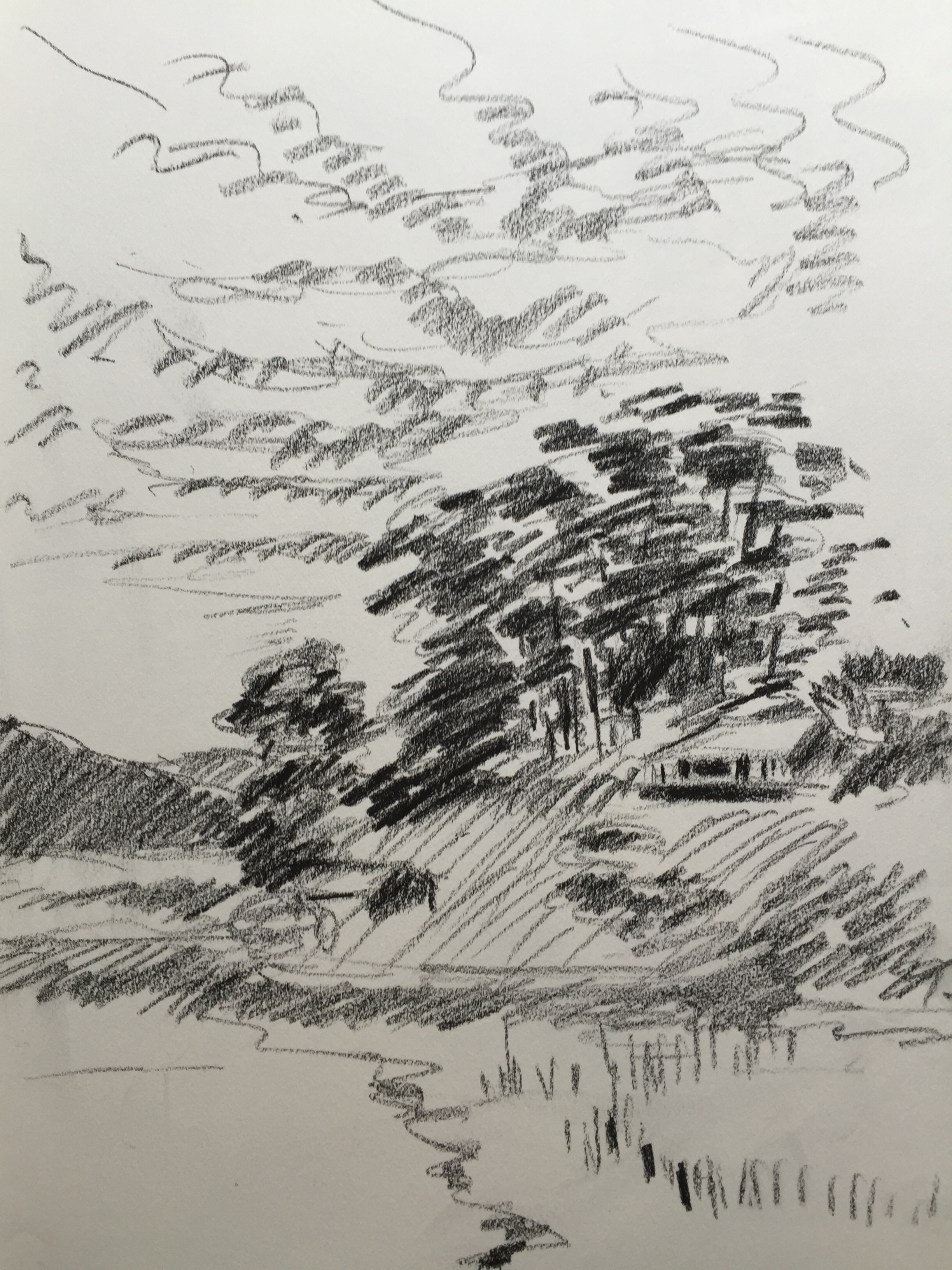
Tomales Bay looking north from Point Reyes Station, charcoal sketch. Robin L. Chandler Copyright 2015.

Last weekend, I had the great good fortune to attend Geography of Hope a biennial conference held by Point Reyes Books fostering discussion about the relationship between people and the land. The 2015 conference focused on Women and the Land, and the panelist’s made clear the power of language to assign status or empower the powerless. The keynote speaker Robin Wall Kimmerer insightfully connected the objectification of women and the land; “when language objectifies, ascribing the status “it” we loose all responsibility. It is a convenient linguistic imperialism” that allows us to exploit and destroy instead of learning from and living with a land and it’s people. Kimmerer, a scientist, member of the Potawatomi tribe, and author of Braiding Sweetgrass: Indigenous Wisdom, Scientific Knowledge, and the Teachings of Plants, called for the restoration of sacred language protocols with values of reciprocity and stewardship. Reading  the Poem When Earth Became An It, by the Cherokee poet Marilou Awiakta, Kimmerer said

“When the people call the Earth “Mother,” they take with love and with love they get back, so that all may live. When the people call Earth “it,” they use her, consume her strength. Then the people die. Already the sun is hot out of season. Our Mother’s breast is going dry. She is taking all green into her heart and will not turn back until we call her by her name.”

Tomales Bay looking north from Point Reyes Station, watercolor. Robin L. Chandler Copyright 2015

One panel asked the question what are the gifts and responsibilities of women in the work against carbon catastrophe? Lauret Savoy, Professor of Environmental Studies and Geology at Mount Holyoke spoke about Wangari Maathai, first Kenyan woman to receive a Ph.D., founder of the Greenbelt Movement, and recipient of the 2004 Nobel Peace Prize. Recognizing that women are the primary caretakers of their families and their environment, Maathai established the Greenbelt Movement to plant trees and preserve watersheds, strengthening local communities’ capacity to take action against climate change; advocate for an end to government policies supporting land grabbing, deforestation and corruption; and advocate for gender livelihoods (recognizing that women’s work was critical to family survival – imagine that!). According to Savoy, Maathai’s work illustrates how cultural diversity and biodiversity are intertwined; because there is a wealth of knowledge to be tapped in people’s knowledge of the land, and their stories, their language about the land, restoring the environment goes hand-in hand with restoring cultural integrity.

Savoy also co-edited the book Colors of Nature: Culture Identity and the Natural World which features an essay by Jamaica Kincaid In History. Kincaid begins the essay asking “what to call the thing that happened to me and all who look like me? Should I call it history? If so, what should history mean to someone like me? Should it be an idea, should it be an open wound and each breath I take in and expel healing and opening the wound again and again…or is it a moment that began in 1492 and has come to no end yet?” Kincaid’s essay clearly evokes the power of language as she describes Christopher Columbus’ discovery “he couldn’t find enough words to describe what he saw before him: the people were new, the flora and fauna were new, the way the water met the sky was new, this world itself was new, it was the New World…to have knowledge of things, one must first give them a name.” Botanists from the Old World quickly began to organize the fauna. “The plants…had two names: they had a common name, that is, the name…assigned to them by people for whom these plants have value; and then they have a proper name, or a Latin name…assigned to them by an agreed-upon group of botantists…the invention of the system has been a good thing. Its narrative would begin this way: in the beginning the vegetable kingdom was chaos; people everywhere called the same things by a name that made sense to them, not by a name that they arrived at but by an objective standard. But who has interest in an objective standard? Who would need one? It makes me ask again what to call the thing that happened to me and all who look like me? Should I call it history?” Language give us the power to reimagine our destiny and rebuild our world.


Everyone Deserves Beauty

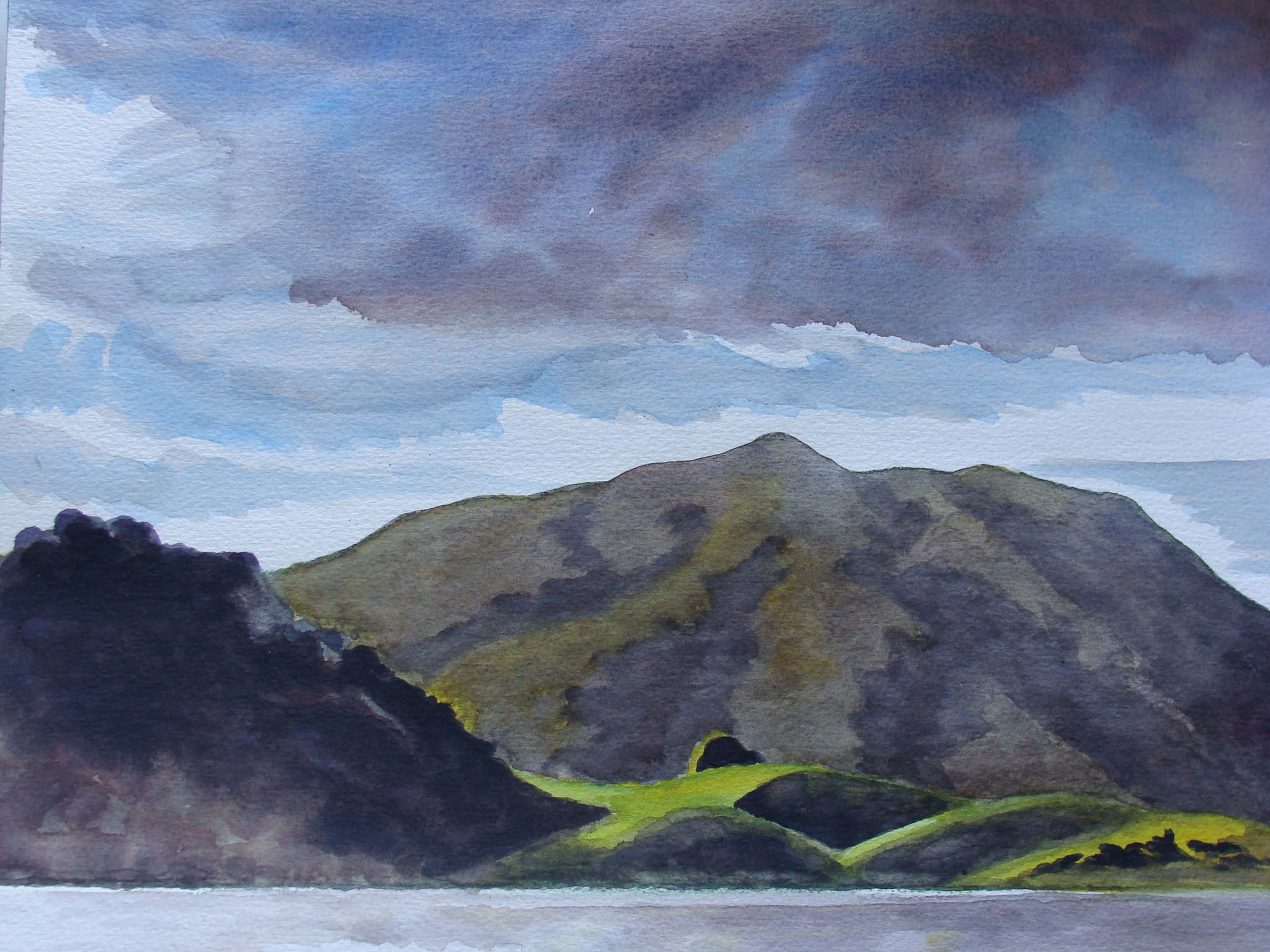
Black Mountain from the Nicasio Reservoir. Copyright Robin L. Chandler 2014.

To my way of thinking, beauty and art are synonymous. Art, the creative act and our engagement with that act, stimulates thoughts, emotions, beliefs or ideas. When painting, I am participating in the creation of beauty. When I engage – my five senses – with any work of art, that is beauty too.

Last Saturday, driving home from a Point Reyes Books event through the cold December night, we talked about important work before us in the New Year, and fundraising was front and center. We had just attended a successful fundraiser for KWMR, West Marin’s Community Radio Station. Our donation allowed us to share the evening with Frances McDormand, actress and producer, in conversation with screenwriter Jane Anderson about their collaboration televising Elizabeth Strout’s Pulitzer Prize winning book Olive Kitteridge. It was a generous act for two artists to contribute their time, hearts and minds to encourage donors to help sustain a community treasure.

The evening was inspiring and priceless; stimulating thoughts, emotions, beliefs and ideas. We laughed and cried, recalling McDormand speak about “poor” Olive suffering her husband Henry’s tyrannical happiness. McDormand’s art, gave us a chance to step off the dance floor and see life from the balcony, gaining insight into our lives, from that act of beauty.

Fundraising, no matter the cause, requires commitment, but how do we persuade donors to fund art and learning, when there are so many worthy causes to support directly saving and improving lives or the environment? Registered to ride in the AIDS Lifecycle 2015, I am fundraising to make a difference in the lives of people living with AIDS and HIV. My wife is continually fundraising to support the Environmental Design Archives preserving and cherishing the importance of design in architecture and landscape. To which cause would you donate? Hard choices, but most of the time we donate to save and improve lives and our threatened planet.

But I make a case for beauty, passionately arguing that art directly impacts life. By stimulating our thoughts, emotions, beliefs and ideas, art encourages contemplation and reflection about the precious and fleeting beautiful moments and places. Without art and beauty, what life is there to save? Beautifully rendered in prose and theatrically, Olive Kitteridge reveals “what young people didn’t know…that love was not to be tossed away carelessly, as if it were a tart on a platter with others that got passed around again…[if] she had found it burdensome, had flicked it off crumbs at a time, it was because she had not known what one should know: that day after day was unconsciously squandered.”

From this valley

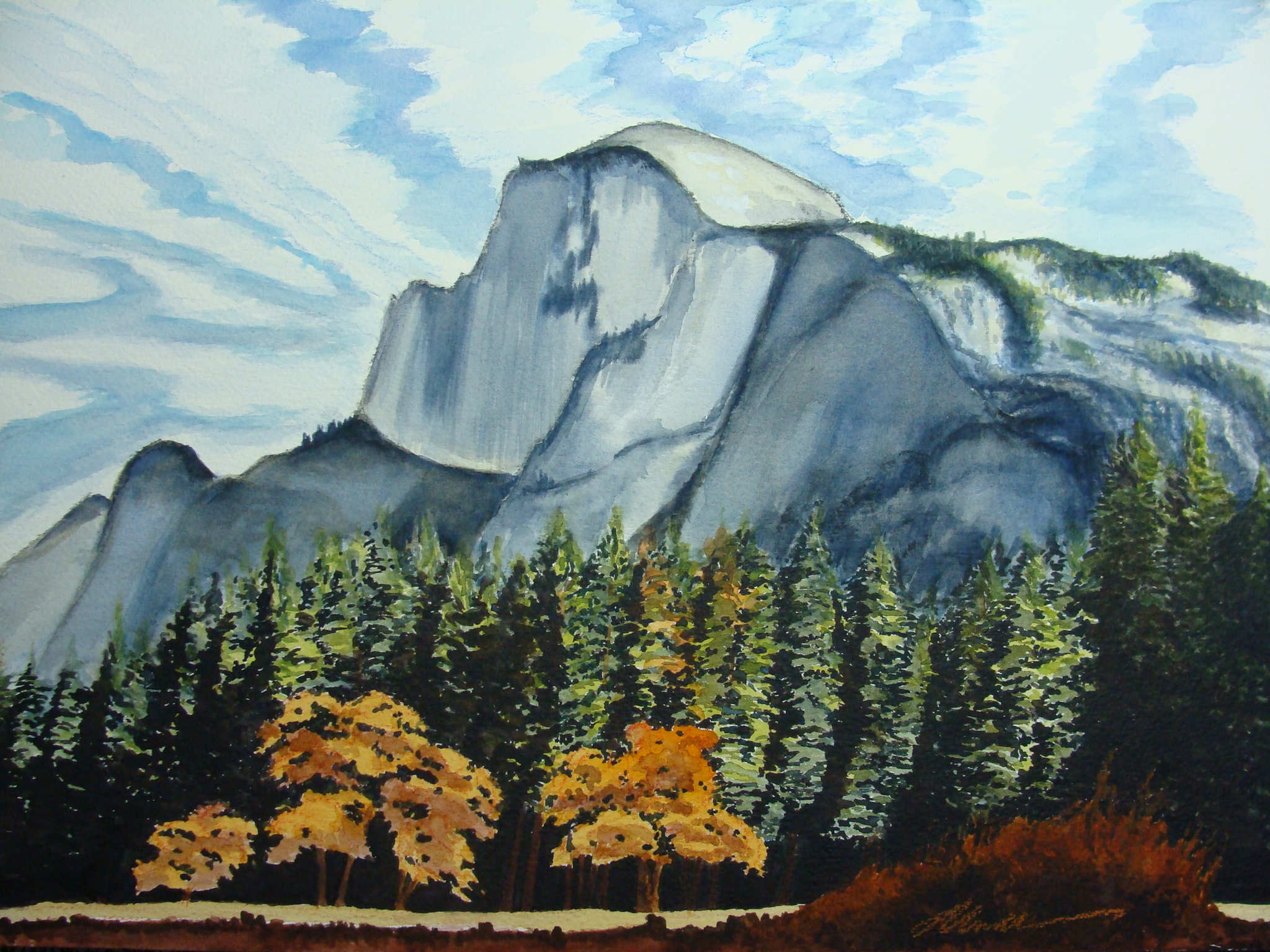
View of Half Dome in Yosemite Valley. Copyright Robin L. Chandler 2014.

From this valley they say you are going…we will miss your bright eyes and sweet smile…for they say you are taking the sunshine…that has brightened our path for a while.” These are lines from Red River Valley, a song heard throughout John Ford’s classic film of the Great Depression, The Grapes of Wrath, and the melancholy theme for the Joad family’s hard-travelin’ exodus from dustbowl Oklahoma. Tenant farmers, the Joads head to California hoping for a better life, forced from their home by drought and economic hardship. With a few days off in early November, I am driving there and back, crisscrossing my great state of California from Santa Cruz to Nipomo, Los Angeles to Fresno, and Yosemite to Oakland. The many legs of my journey take me through the Central Coast, the Los Angeles Basin, the Central Sierras, and the Central Valley. The land is parched, thirsting for rain and relief from a multi-year drought; and Chicano, Latino and Mexican-American agricultural workers — immigrants and migrants – who came to California hoping for a better life, populate much of this land.

In the fields of the Pajaro Valley, near Watsonville in Monterey County, artichokes, strawberries and cole crops like Brussels sprouts and cauliflower are tended and harvested. Farther down the road, I arrive in yet another important agricultural county, San Luis Obispo, where avocados, citrus, and vegetables are grown. As I drive by the workers in the field, Gloria Anzaldua’s words from her book Borderlands: La Frontera ring in my ears: “To live in the Borderlands means you are neither hispana india negra espanola, ni gabacha, eres mestizo, mulata, half-breed caught in the crossfire between camps while carrying all five races on your back not knowing which side to turn to, run from…”

Today migrants of the borderlands make these agricultural riches possible, but some fifty years ago, “Okies” migrants from the 1930s dustbowl tended the crops of this county. Working in Nipomo, Dorothea Lange documented this earlier migration and plight of the workers in her famous Great Depression photograph of the “Migrant Mother.”

Further down the road, I reach Kern County in the San Joaquin Valley where, Buck Owens Boulevard crosses Highway 58, which leads to the Cesar Chavez National Memorial in Keene. The child of Texas sharecroppers driven out by dust and the Depression, Buck Owens found seasonal work following the crops from Gila Bend, Arizona through the Imperial and San Joaquin Valleys of California. Growing up listening to Mexican border radio stations and Baptist gospel songs, Buck made Bakersfield his home and became famous for singing the story of the “Okie” migrants who came to find work in the farms and oilfields of Central California. Owen’s contributions and the work of Merle Haggard are chronicled in Gerald Haslam’s Workin’ Man’s Blues: Country Music in California. Ironically, just a few miles south of the road memorializing Owens is the final resting place of Cesar Chavez at the headquarters of the United Farm Workers (UFW) who started and led the farm workers’ movement to give voice to the next generation of poor and disenfranchised agricultural workers.


Color from the sea

View of Santa Cruz coastline and Monterey Bay National Marine Sanctuary. Copyright Robin L. Chandler 2014

Reached from our hilltop campus by a swift bike descent, UCSC’s Long Marine Laboratory rests on the cliffs overlooking the Monterey Bay National Marine Sanctuary. Today I cycled part of the Empire Grade and then spun quickly back down to the sea to visit the lab’s Seymour Marine Discovery Center. A research and teaching center, “Long “is renowned for innovative marine mammal research. Walking along the cliffs searching for a spot to paint, I was greeted by the sounds of the ebbing tide and the snowy plovers dancing along the water’s edge. Hard at work in search of nourishment, sea otters and bottlenose dolphins swim in the silver-white waves below me and pelicans glide searching for fish just above the whitecaps. It was late in the afternoon and mostly overcast but from time-to-time the clouds broke and the cerulean blue sky peaked through allowing sunlight to stream from above infusing distant cliff sides with a glow seemingly from within.

My visual experience is beautifully expressed by Santa Cruz resident, writer James D. Houston, who wrote Where Light Takes Its Color From the Sea, a series of essays about place inspired by the California landscape. In an essay titled “The View from Santa Cruz” Houston wrote “in later afternoon the light turns the bay white…the sea, as much as the light, gives this curve of coast its flavor. The light takes its color from the sea, sometimes seems to be emerging from it. And the sea here is ever-present. On clear days it coats the air with a transparent tinge of palest blue that salts and sharpens every detail…the slow process of erosion has left many colored cliffs – yellow, buff, brown and ochre. Each striated layer reveals the pressed sand of beaches eons old. Sometimes in the low sun of an autumn afternoon they turn orange and glow like the horizon itself.” With his wife Jeanne Wakatsuki, Houston co-authored the memoir Farewell to Manzanar. The Japanese Internment Camp Manzanar, located in the Eastern Sierras, resides in the shadow of my majestic friend Mt. Whitney.

The Monterey Bay National Marine Sanctuary is so precious; we must ensure its continued existence through direct stewardship and consciousness raising actions. On Sunday September 21, 2014 citizens from over 150 countries took part in a consciousness raising action for the environment and social justice, participating in a global People’s Climate March. Largely ignored by the mainstream press, Ben Wikler host of MoveOn.org ‘s “The Good Fight” has chronicled the march in his podcast which can be listened to in iTunes or through the web at “inside the ginormous, huge-tastic climate march.”

forests of Forster

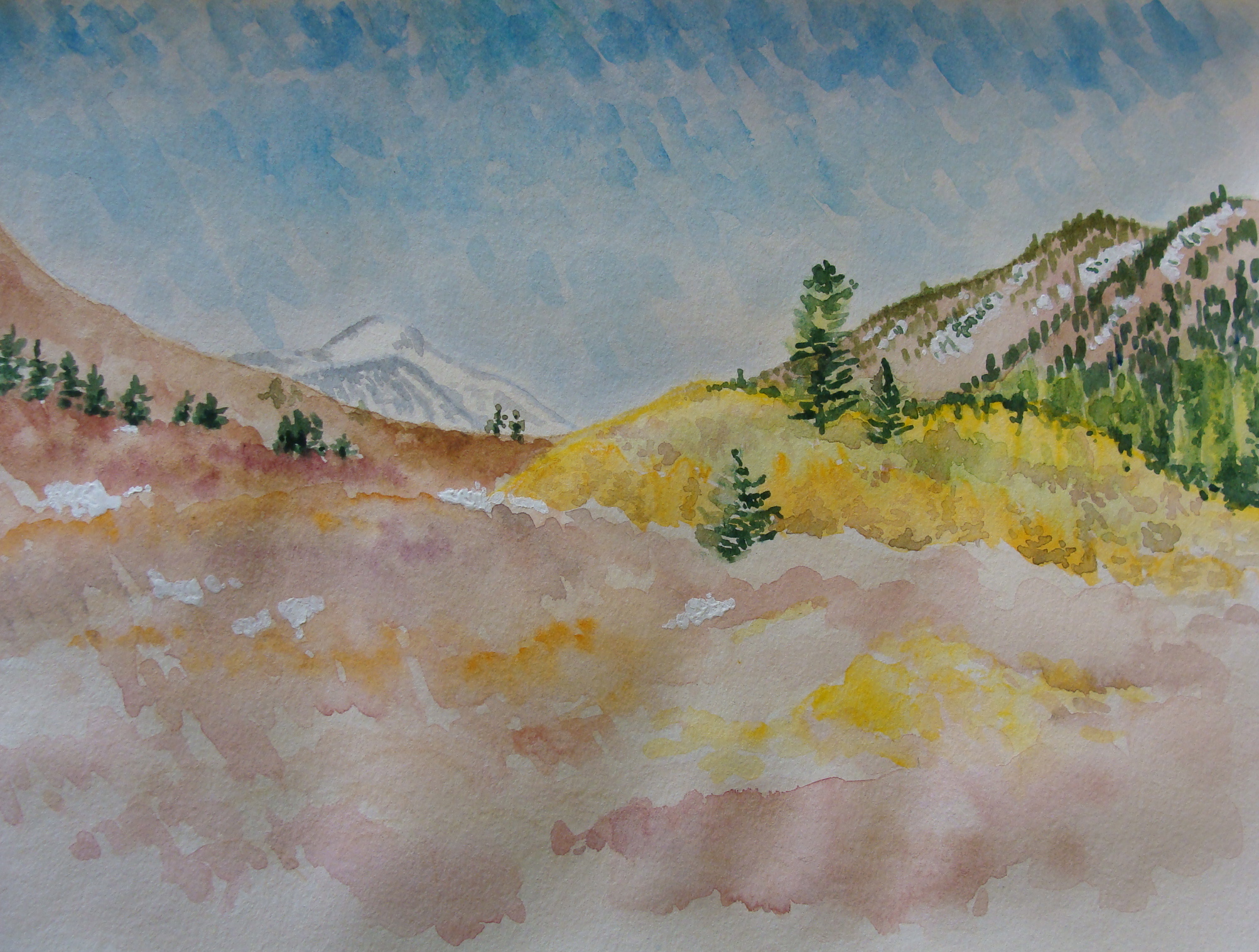
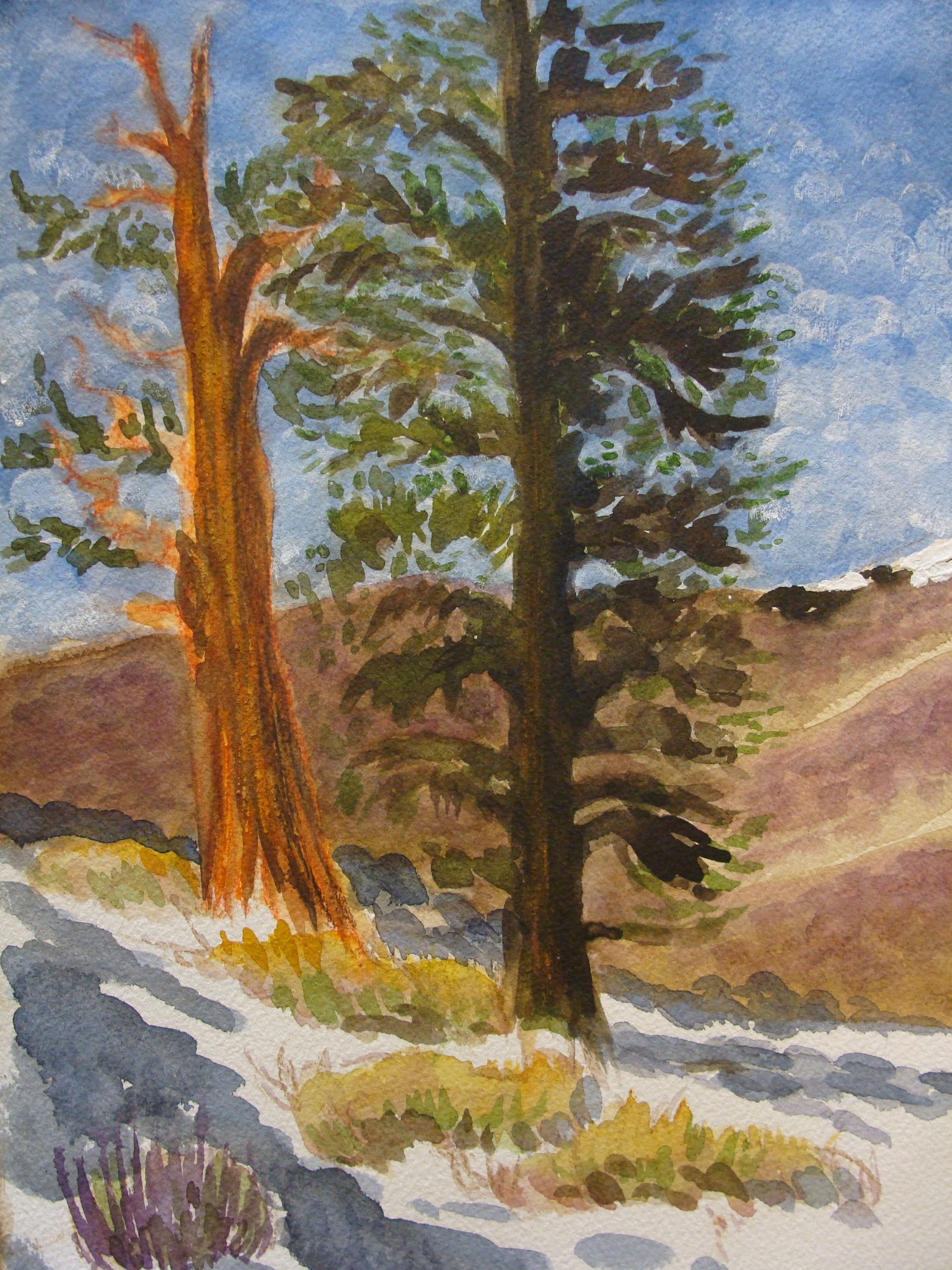
Quaking Aspens on Rock Creek in the Eastern Sierra. Copyright Robin L. Chandler 2013

October’s government shutdown locked us out of our national parks. Fortunately, national forests are nearly impossible to fence in. Forest rangers closed visitor centers, but they could not padlock our public lands. The indifference, lack of connection, and abstract selfishness of a political minority – disregarding communities beyond their voting district – blocked passage of a federal budget, keeping government workers from their jobs – in this case stewardship of our natural resources – and held our country hostage, reeking havoc with local economies, such as businesses dependent on tourists to our national parks. Flouting our temerity, we voted with our feet gaining access to our birthright, our public lands. Entering Inyo National Forest, we found welcome amongst the wilderness of trees in the Eastern Sierra and Great Basin Desert, trees, blessed by their ignorance of Washington, D.C.’s theater of the absurd. I photographed our journey in addition to the watercolors in this blog entry.

Ancient Bristlecone Pines on the White Mountains. Copyright Robin L. Chandler 2013

When its fall in the Eastern Sierra, trees dress in dramatic and painterly yellows and gold accented now and then with a touch of red and orange. Near sagebrush scrub in the yellow pine belt bioregion found at approximately 7,000 feet above the sea, the yellowing leaves of black cottonwoods are jewel-like on the landscape. Thriving on moisture, the cottonwoods grow where their roots find water near lakes, meadows, springs, and mountain streams. Higher in the Sierras, in the 9,000 – 11,000 foot elevation range, forests of jeffrey and lodgepole pines, red fir and western junipers are found, as well as stretches of quaking aspens, simply breathtaking to behold. Finding water amongst rocks at cliff bases, these trees sparkle in the sunlight, and the wind reveals their white trunks and stirs leaves in a continual flutter. Farther East in the Great Basin Desert, the White Mountains host magnificent ancient bristlecone pine forests. Methuselah, the oldest tree on earth, estimated at over 4,750 years in age, thrives in this arid, exposed landscape, requiring minimal water and finding just enough nutrients in the dolomitic and alkaline soils where few other trees can flourish. Keeping only essential parts alive during times of stress, the living tree is dressed in dead branches, made smooth over time by the forces of wind, ice and fire. The sculptural bristlecone pines seem to form a community of dancers moving nominally in a minimalist ballet for the ages. The beauty is sublime; this place opens our living souls and we are filled with affection.

For this trip, my book of choice was A Great Unrecorded History a biography of one of my favorite writers, E. M. Forster, written by Wendy Moffat. In 1909, just days after reading Walt Whitman’s Leaves of Grass, an inspired Forster sketched out the entire concept of one of his finest works, Howard’s End. Published in 1910, Forster explored several themes including developing urban industrial spaces juxtaposed with a rapidly eroding English countryside, and the human need to connect. A century later, Wendell Berry, who like Forster appreciated the value of community and place, was honored to give the 2012 Jefferson Lecture in the Humanities, which he titled It All Turns on Affection. Informed by Forster’s Howard’s End, Berry described the need for integrated local economies connecting cities with their surrounding rural landscapes “to bring producers and consumers…back within the bounds of the neighborhood…[within] effective reach of imagination, sympathy, affection…[gaining] a measure of security that cannot derive from a national or global economy controlled by people who, by principle have no local commitment.” In his talk, Berry described Forster’s foresight: “the existence of small farms were limited and that an industrial ugliness, was creeping out of the cities and into the countryside, and that this ugliness was characterized by the withdrawal of affection from places.” In Howard’s End climactic scene Margaret Schlegel talks to her husband Henry Wilcox, “a plain man of business who sees life realistically with a hardness of mind and heart only because it is expedient and because it subtracts from reality the life of imagination and affection, of living souls.”  Margaret tells Henry “it all turns on affection now…affection. Don’t you see?”

In Song of Myself a poem from Leaves of Grass, Walt Whitman penned the line “the press of my foot to the earth springs a hundred affections.” May our political leaders in Washington remember their actions impact places and persons across our nation and the world. As they do their work, may they walk with affection, understand their commitments, and not trample  – drunk with power – the places and communities – in the lands just beyond their own.

Be Alert! Deer Crossing the Roadway!

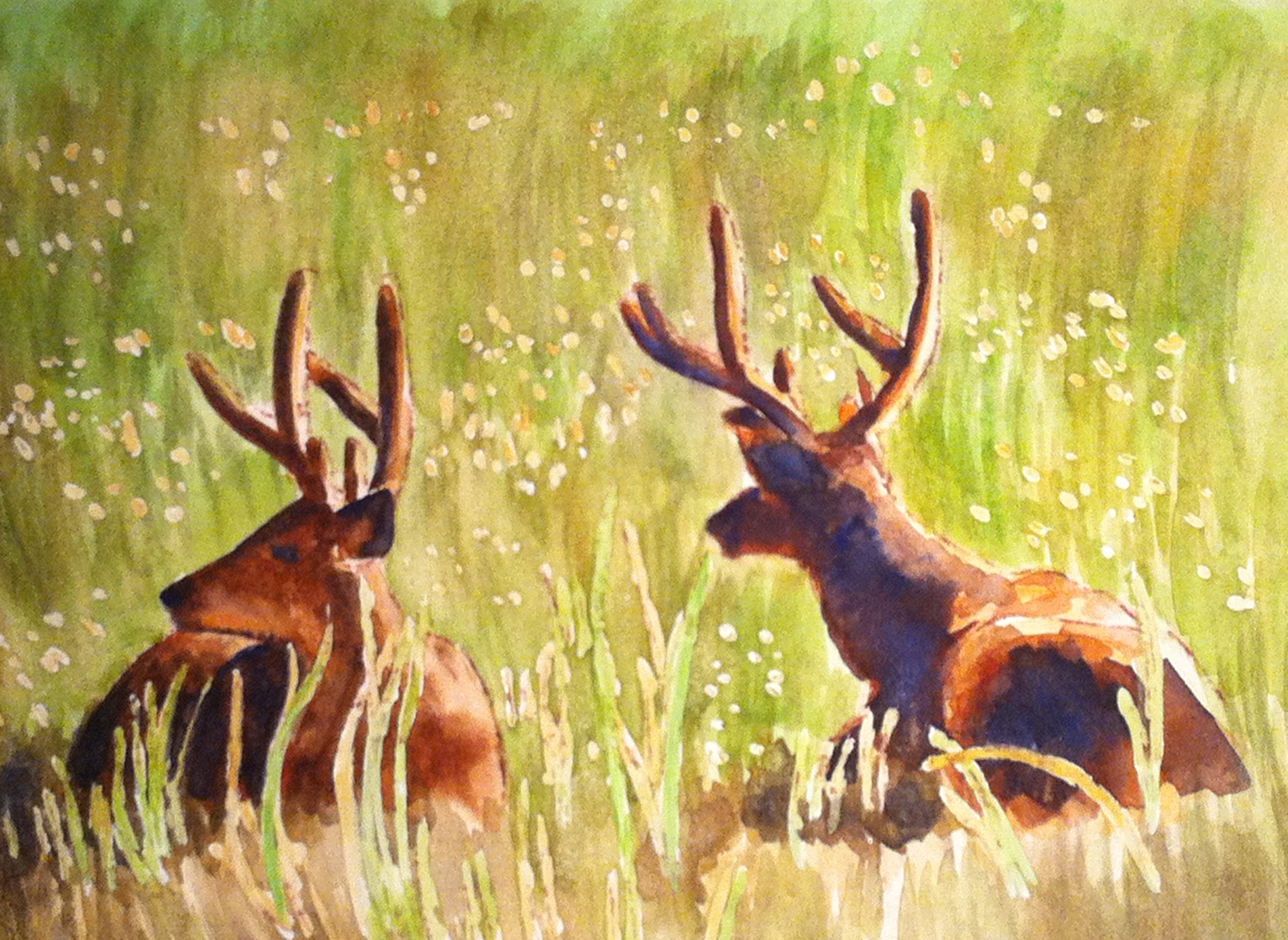
Young deer in the Santa Cruz meadow. Copyright 2013 Robin L. Chandler.

UC Santa Cruz is a special place; where else would you find a traffic sign flashing bright orange “be alert…deer crossing the roadway.” Cycling into work, I laughed lovingly acknowledging both the practical advice and the deeper meaning of mindfulness. Situated on a mountain overlooking the Pacific, the campus is replete with rolling meadows and coastal forests of tanoak, bay laurel, Pacific madrone and the regal Redwoods. An ecosystem intimately shared by animals, plants and people. After a quiet summer, September signals major events in certain campus populations: the academic cycle migration of homo sapiens and the advent of the breeding season for California mule deer. The traffic signal brings some needed intervention to manage the humans and deer inhabiting this space. All summer the bucks have roamed the meadows as a herd while their antlers grew big and strong preparing to compete for a mate. Next spring, fawns begin the cycle anew. Riding up the bike path through the thirsty meadow, I wonder from where the mountain lion watches these migrations and lifecycles. Will I ever see one?

Right mindfulness, an element of the Buddhist eight-fold path, teaches adherents to be alert, present, building awareness of the moment…the path to enlightenment. Earlier this year, I received a gift from the wife of a landscape painter whose work I greatly admire; she connected me to the work of Peter Matthiessen, Buddhist and writer of fiction and many well-respected books about the environment including the National Book Award winner The Snow Leopard.  Trekking through Nepal with the ancient Buddhist shrine Shey Gompa on Crystal Mountain as their destination, Matthiessen and the field biologist George Schaller were seeking research data on the Blue Sheep and the Snow Leopard.  Truly a book about his spiritual journey, Matthiessen finds the revered Lama of Shey who blesses him with a koan “Have you seen the snow leopard? No. Isn’t that wonderful!”  Matthiessen writes “I feel great gratitude for being here, for being, rather for there is no need to hike oneself to the snow mountains in order to feel free.  I am not here to seek the “crazy wisdom;” if I am, I shall never find it. I am here to be here, like these rocks and sky and snow, like this hail that is falling down out of the sun…the absurdity of a life that may well end before one understands it does not relieve one of the duty (to that self which is inseparable from others) to live it as bravely and generously as possible.”

It is the season when deer are on the minds of many. Last weekend we attended the fundraiser for the journal West Marin Review held by Point Reyes Books. Two great women poets read from their work: Kay Ryan and Jane Hirshfield and ironically among the many poems they read, they both chose to read works about deer. Selecting a poem from her book The Best of It, Ryan read “a buck looks up: the touch of his rack against wet bark whispers a syllable singular to deer; the next one hears and shifts; the next head stops and lifts; deeper and deeper into the park.” Hirschfeld choose a poem from The Lives of the Heart and read “a root seeks water. Tenderness only breaks open the earth. This morning, out the window, the deer stood like a blessing, then vanished.