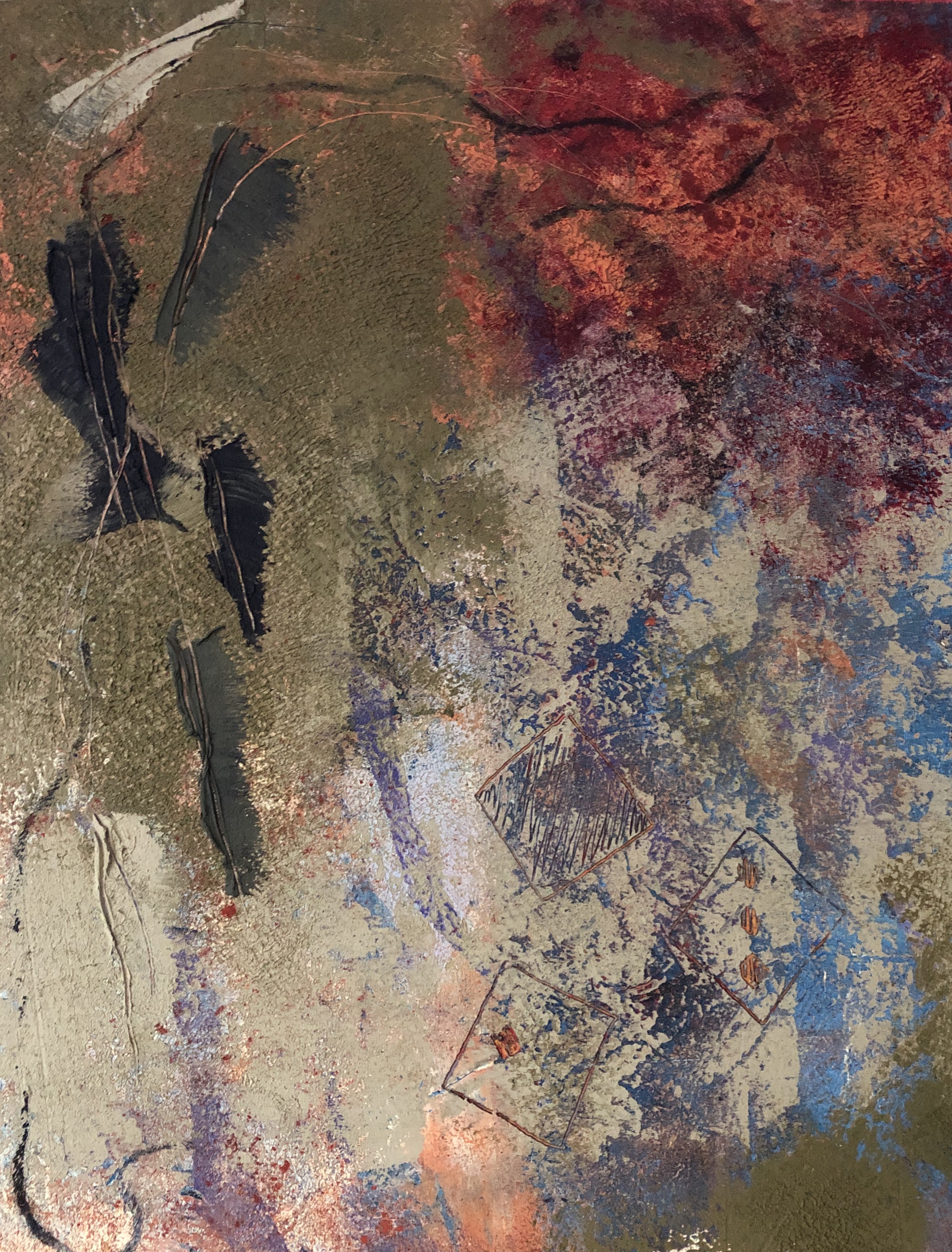
Glowing in the spirit

View from the Estero Trail at Point Reyes. Robin L. Chandler, 2025

Thomas [Mann] paid his bill and walked towards his grandmother’s house. He could see his two sisters now, waiting for the rest of the story. Both of them in their night attire, and he could see Heinrich sitting apart from them and always in a story their mother would sigh and say that she had work to do and would continue the story tomorrow. And they would appeal to her, beg her to finish the story and she always would.

The young composer’s name was Johann Sebastian Bach, she said, and he walked to Lübeck through wind and rain and often he could find no boardinghouse and had to sleep in haystacks or in fields. Often, he was hungry. Very often he was cold. But he was always sure of his purpose. If he could get to Lübeck, he would meet the man who would help him to become a great composer.

Buxtehude was almost in despair. Some days he really believed that his sacred knowledge would be buried with him. On other days, in his heart, he knew that someone would come and he dreamed that he would recognize the man immediately and he would take him to church, and he would share his secrets with him.

‘How would he recognize the man?’ Carla asked. ‘The man would have a light in his eyes, or something special in his voice,’ her mother said.

‘How could he be sure?’ Heinrich asked.

‘Wait! He is still on the journey and worried,’ she went on.

Every day the walk seems longer. He has told the man he works for that he will be away only a short time. He does not realize how far Lübeck is. But he does not turn back. He walks on and on, asking all the time how far Lübeck is. But it is so far that some people he meets have never even heard of Lübeck and they advise him to turn back. But he is determined not to, and eventually when he reaches Lüneberg, he is told that he is not far from Lübeck. And the fame of Buxtehude has spread to there. But because of all his time on the road, poor Bach, normally so handsome, looks like a tramp. He knows that Buxtehude will never receive a man as badly dressed as he is. But he is lucky. A woman in Lüneberg, when she learns of Bach’s plight, offers to lend him the clothes. She has seen the light in him.

And so Bach arrives in Lübeck. And when he asks for Buxtehude, he is told that he will be in the Marienkirche practicing the organ. And as soon as Bach steps into the church, Buxtehude senses that he is no longer alone. He stops playing and looks down from the gallery and sees Bach and behind him he sees the light, the light Bach has carried with him all the way, something glowing in his spirit. And he knows that this is the man to whom he can tell the secret.

‘But what is the secret?’ Thomas asked.

‘If I tell you, will you promise to go to bed’

‘Yes.’

‘It is called beauty,’ his Mother said. ‘The secret is called beauty. He told him not to be afraid to put beauty in his music. And then for weeks and weeks and weeks, Buxtehude showed him how to do just that.’

‘Did Bach ever give the woman back the clothes?’ Thomas asked.

‘Yes, he did on his way home. And on their piano, he played music for her that she thought came from heaven.’ “

Excerpt from Colm Toibin’s The Magician pgs. 496-497

ash and bone

Walking along Inverness Ridge among the new growth of bishop pines after the Vision Fire (1995); in the distance are douglas firs burned in the Woodward Fire (2020). Robin L. Chandler, 2025.

We were afraid to go back

afraid to listen to the stories

ash and bone might tell

We wanted to believe our lives were immutable

untouchable by nature, fate or disaster

At twilight we skirted the base of the first burned hill

reclaimed her scorched shoulder

her ruined slope

The ground beneath our feet released puffs of smoke

like ancient ghosts they rose up around us

to disappear into wind…..

Excerpt from the poem “After the Fires” by Devereaux Baker published in California Fire & Water: A Climate Crisis Anthology edited by Molly Fisk (p.15)

“When Sir Francis Drake spent a month in 1579 repairing his ship in the bay that now bears his name, the hills and ridges to the east would have been mostly open grassland or coastal scrub because of the Miwok’s liberal use of fire as a key tool of their ecological management and because of grazing by herds of elk, which benefited from the anthropogenic burning. The same was true when Sebastian Ceremeno, a Portuguese navigator and explorer sailing on the Manilla galleon route, was shipwrecked in Drakes Bay in 1595. Richard Henry Dana, visiting San Francisco Bay in 1840 described the herds of elk he could see on the open headlands.” (p.84)

“The [Mt.] Vision Fire started on October 3, 1995, and burned for about a week in an area mostly designated as park wilderness, eventually burning almost twelve thousand acres. Some local boys apparently thought they had drowned their campfire, but they hadn’t. It’s a story that reminds me of Henry David Thoreau; on a camping trip with a friend in April 1844, their campfire got out of control and almost burned down their hometown of Concord, Massachusetts. Many years later, that experience led Thoreau to investigate the fire ecology of his local ecosystem. He recognized the influence of past Native American burning on the landscape and became essentially the first published fire ecologist through his writing on the subject. The Vision Fire burned an area partly dominated by bishop pine, Pinus muricata. Bishop pine became so familiar with fire that it evolved a relationship that could be called “friends with fire.”  (p.86-87)

Excerpt from the chapter “Making Friends with Fire” published in Bruce Byer’s book titled Nature on the Edge: Lessons for the Biosphere from the California Coast.

directness and certainty

Lodgepole Pines along the Little Lakes Trailhead. Robin L. Chandler, 2024

“In the beginning there were stories and the stories were made of Earth. Rocks and rivers, mountains and sea, these were the gods and the gods moved within them.” (p.225)

In 2013, the entirety of the novel Moby Dick was translated into emojis, those little ideograms of smiling faces and pets and objects that populate our phones and number around 1000…their appeal seems to be based on the strange and paradoxical combination of specificity and obscurity that they embody…they purport to transcend cultural difference and cut a line of sincerity and clarity straight to the nebulous heart of what we mean to say. Yet for all that, emojis, particularly in combination, open wormholes of ambiguity.” (p.228)

“Yet directness and certainty remain a dream despite our words, despite our codes, despite our cyphers. Who can state for sure the meaning of Moby Dick? ‘Of whales in paint; in teeth; in wood; in sheet-iron; in stone; in mountains; in stars’: Ishmael, its narrator, could find them everywhere. Yet the whale itself, the white whale, the named whale, is elusive. What did it mean to Ahab? Why the obsession, the desire, the pursuit? Everything can mean something else, if only we could agree what. Augustine wondered whether we could decide simply by pointing and naming. Remember that Moby Dick, whose title names its prey, itself begins with an act of naming: ‘Call me Ishmael.’ Yet in saying that, it is clear, too, that any name would have sufficed. The willow is also ‘sallow,’ is also ‘osier.’ In such simple acts lie a world of ambiguity, and a history concealed from the eyes of the everyday. Nothing is steady. Meaning sways like the hull of a ship. Ahab, with leg of wood, and scars on his body like the ‘seam sometimes made in the straight, lofty trunk of a great tree,’ hunts over ocean and sea in a vessel of timber from which a mast extends like a great oak into the sky above. Nailed to it is a gold doubloon and at its top a man sits, in the masthead, watching the horizon, searching.” (p.228-229)

Excerpts from Aengus Woods’ Of Trees in Paint; In Teeth; In Wood; In Sheet-Iron; In Stone; In Mountains; In Stars published in Katie Holten’s The Language of Trees: A Rewilding of Literature and Landscape

legendarium

Middle-earth deluged by Sauron
Middle-earth. Robin L. Chandler, 2019.

Sitting in an Oakland coffee shop, on a gray morning, savoring a cup of coffee…one of life’s precious moments. I am reading, and I am loving this time, when my imagination can soar, inspired by a good book, before I must return to work.

A few weeks ago, I saw Tolkiena film seeking to capture key moments in J.R. R. Tolkien’s life that inspired his epic novels The Lord of the Rings. In his May 2019 New Yorker article, Anthony Lane described Director Dome Karukoski as “determined to map Middle-earth onto the life of its creator. Thus, the club of school comrades foretells the brotherhood of Frodo and his fellow-hobbits; flamethrowers, in the trenches, turn to dragons in Tolkien’s fevered eyes; mustard gas slithers and drifts like the Ringwraiths.” Being a fan of Tolkien’s books, Peter Jackson’s film adaptations, and now intrigued to learn more about Tolkien the author (after seeing the literary bio-picture),  I found Joseph Laconte’s A Hobbit, A Wardrobe and A Great War.  Sometimes you can judge a book by its’ cover because I quickly moved from browse to buy inspired by the book’s synopsis: J.R.R. Tolkien and C.S. Lewis enjoyed one of the most consequential friendships of the twentieth century – a friendship that emerged from the suffering and sorrow of the war. Both men fought on the front lines during the First World War…influencing the life of each writer and subsequently shaped the nature and character of their respective towering achievements, The Lord of the Rings and The Chronicles of Narnia.” Laconte’s book has given me a greater understanding of how a writer can draw upon their deepest experiences to produce works of art inspiring audiences to reflect upon humanity’s greatest strengths and most egregious tragedies.

 Although the Great War ended over a century ago, some of us continue to live on in its’ shadow. Most Americans paid scant attention to Europe’s 100thyear commemoration of the end of the Great War’s on November 11, 2019, the eleventh hour of the eleventh day of the eleventh month. The names of battles (Ypres, Somme and Verdun) mean little to many. But millions of humans perished in the Great War and the Belgian and French countryside was so drastically decimated and scarred that the landscape quickly became a known as “no man’s land.” Western Leaders in the years leading up to WWI ascribed to the Myth of Progress believing in the benefits of technology and that ever greater days lay ahead. “Railway engines, steam engines, blast furnaces, textile plants, coal and iron mines were turning nature into the handmaiden of humanity…technology was improving life for ordinary people.” Tolkien’s “love of the English countryside, his attachment to nature, rebelled against the chaotic industrialization of his day…the over reliance on technology, ‘the Machine,’ as a step towards dominating others.” Tolkien believed “the act of bulldozing the real world involves coercing other wills.” World War I was chaotic industrialization for Tolkien, and he wrote novels cherishing nature and the human spirit’s ability to rise above the tragedy of misguided industrialization.

awaken at the beach

Limantour Beach
Limantour Beach. Robin L. Chandler, 2018.

Winter is my favorite time of year; I love the journey to the year’s shortest day and the new pilgrimage for the year’s longest day. Precious the light of day and the warmth of the sun; most welcome is the night when blessed with a good book by the fire and my cat curled sleeping in my lap.

On Christmas Eve, I walked the landscape of Drakes Estero and Limantour Beach with my beloved wife and dear friend. Just a few days past the solstice the day remained short, and to commemorate the day, I made a watercolor sketch and reflected on darkness and light asking myself what can well-meaning souls do to make the world a better place?

And by a better place I mean: end the rapacious exploitation of the earth’s flora and fauna; take measures to resolve the increasing disparity between rich and poor; respect the diversity of global cultures; and stop the egregious use of violence. No small challenge. No simple answer. In fact, it sounds so impossible to resolve, I might as well give up and run away. Run as far away as possible from the suffering and the death, building tall strong walls to protect me from the pain.

It takes great courage to sit and listen to the suffering, the death, and the pain: within yourself and in others. Many of us feel compelled to fix the problems, and when we can’t we give up and salve our pain with whatever money can buy. Not knowing what to do or how to fix a problem is impossibly hard. But through my Buddhist studies, I have learned that there is a place to begin: listen, stay open minded and be generous. This is how the suffering ends and the healing starts. We are not born knowing all things, and will never learn all there is to know. Mitchell Thomashow writes in his essay Nature. Love. Medicine. Reciprocity. Generosity. “…we can cultivate generosity, open-mindedness, graciousness, and humility in the space of that glorious unknowing. I don’t have the capacity to love every species and every person, but I can develop the capacity to be more generous with those people and species that I do encounter.” Blessings on us all for this New Year!

The Library restored: a place to nourish the soul and feed the imagination

Fortitude, Lion of the North guarding the NYPL's entrance. Robin L. Chandler Copyright 2016.
Fortitude, Lion of the North. guarding the NYPL’s entrance. Robin L. Chandler Copyright 2016.

The cold winter wind blew me up the stairs and past the Lions, Patience and Fortitude, guarding the entrance to the New York Public Library (NYPL). In my opinion, every trip to New York must include a visit to NYPL, or the trip is not properly consecrated. Designed in the classic beaux-art style by the architecture firm Carrere and Hastings, the building opened its doors to the public in 1911 with over one million items. Today, the collection numbers over fifty-one million items. Washington Irving, author of The Legend of Sleepy Hollow, was one of the first curators of the collection. A beacon and haven for scholars, the main reading room, the Rose Room, named for the generous donor family, and the Bill Blass Public Catalog Room are being restored and will reopen during the Fall 2016. The historian David McCullough places NYPL among the five most important Libraries in the United States including the Library of Congress, Boston Public Library and the university libraries of Harvard and Yale. The restoration includes, asbestos removal, reinforcing the ceiling and restoration of the Rose Room’s murals of blue skies and clouds.

Fred Lerner in his book The Story of Libraries from the Invention of Writing to the Computer Age described Vladimir Lenin’s admiration for NYPL. In 1913, the Russian Revolutionary wrote “…in the Western countries…they hold that great public libraries, with hundreds of thousands and millions of books, ought not to be the property only of scholars…they are anxious for readers to read books bought at public expense in their own homes; they see the pride and glory of the public library not in the number of rarities is possesses…but in the extent to which books circulate among the people”…..nourishing their souls and feeding their imagination.

Underneath the Rose Room’s spacious skies, many authors have nourished their souls, fed their imagination, and found context within the 40,000 volume reference collection housed in the reading room. Literary greats such as Issac Bashevis Singer, Elizabeth Bishop, E. L. Doctorow, Alfred Kazin, and Henry Miller found inspiration within the Rose Room’s walls. Many of these authors were immigrants, or their sons and daughters born in this new world, New York. The Library opened its doors and its books and gave these newcomers the world, restoring, nourishing and feeding their souls and imaginations. Excitedly, I await the next generation of immigrants, who will grapple with their ideas, applying patience and fortitude, as they create underneath these spacious skies.

Patience and fortitude are touchstones for life; wise words for guiding a lifetime of work, a long-term relationship, or perhaps just simply life. Leaving the library, I pause near Fortitude and whisper from the Mourner’s Kaddish “may there be abundant peace from heaven, and life for us all Israel, to which we say Amen.” Until we meet again Evelyn, daughter of immigrants, blessings on you on your next journey.

Washington Square. Robin L. Chandler Copyright 2016. Built to honor our first President, for me it is a monument for the departed.
Washington Square. Robin L. Chandler Copyright 2016. Built to honor our first President, for me it is a monument for the departed and a portal to the next journey.