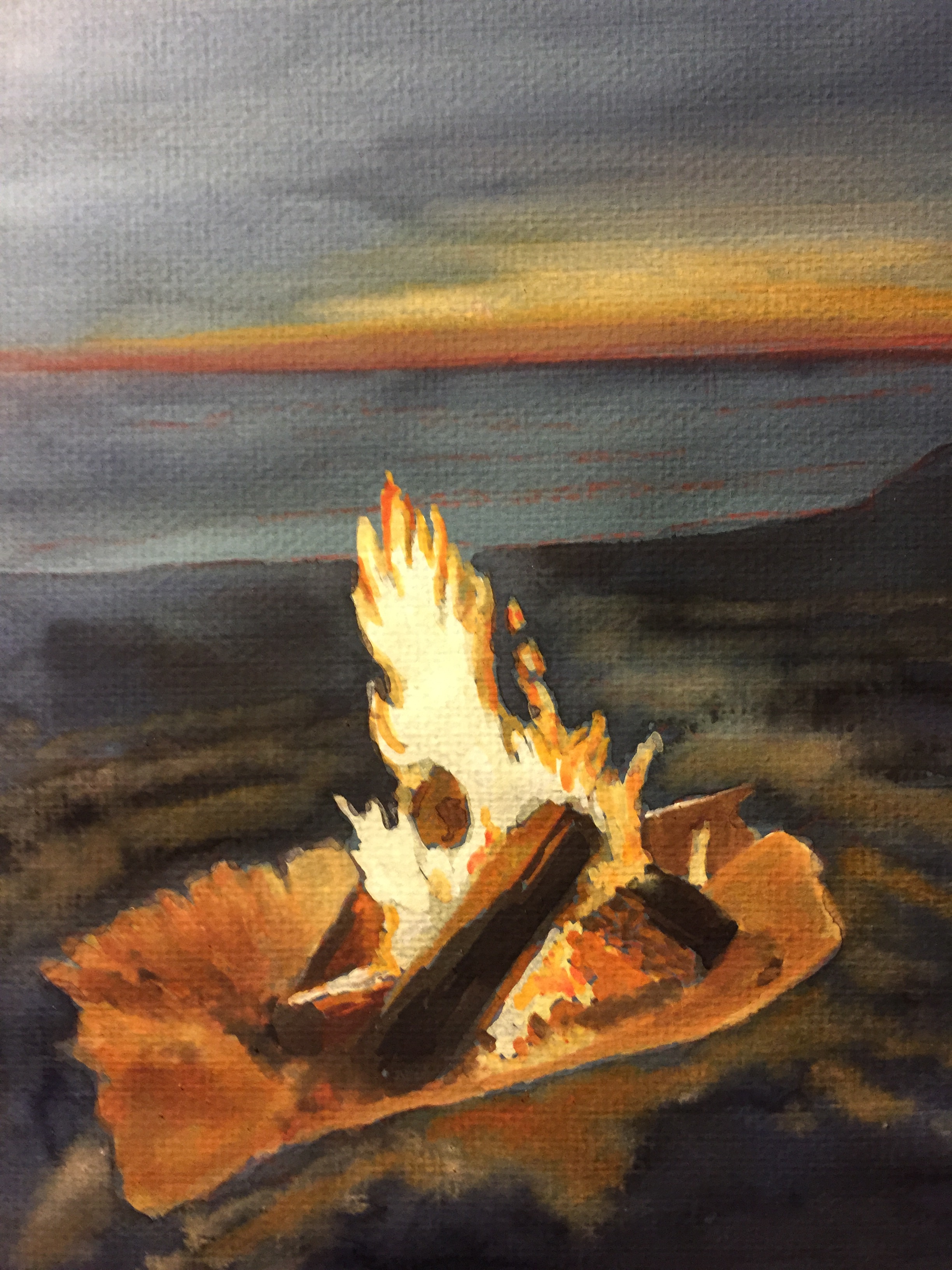
Beach fire Santa Cruz. Robin L. Chandler Copyright 2015.
Darkness appeared in the corner of my eye. The sun dawdled splashing yellow and orange in her wake. Stars like motion detectors tracked the sun’s journey. And then suddenly, almost without warning, it was night. In the beauty of the evening it was easy to neglect the rotation and forward motion of time. Ebb tide, the waves teased the shoreline, waiting, where families danced the crescendo. On the beach friends gathered sharing stories and laughter. Beach fires, first flickering, grew stronger against the night sky, a shield against the darkness, a memory of color and warmth. In this context, fire is friend, a restorative. Staring into the magical flames, I reflect and imagine, a ritual connecting humankind across the millennia. But miles from here, on this summer night of the fourth year of our drought, fire crews are on the line, feverishly working to contain an inferno, capable of erasing entire communities. Difficult to believe on this calm, still night, but scientists say this pacific ocean nurtures El Nino; the infant, powerful, bringing rain and flood to wash away our sins. We live in a fundamental time; a time of powerful extremes. It is feast or famine, flood or fire; forces are in motion changing lives forever in a matter of seconds. A minor traffic violation, becomes a struggle for power; a match is lit resulting in a conflagration of unimagined consequences. Lives are ended, families devastated, and communities entrenched. And for what? How do we heal the rift and bridge the chasm?
The renowned African American writer James Baldwin published two essays as a book The Fire Next Time, taking it’s title from a line in a Negro Spiritual, “God gave Noah the rainbow sign, no more water but fire next time.” In the first essay titled The Fire Next Time: My Dungeon Shook: Letter to My Nephew on the One Hundredth Anniversary of the Emancipation, Baldwin discusses the history of race in the United States. Baldwin argues that Americans, black and white, must step outside themselves and re-examine what they believe, understand and fear. Counseling his young nephew, Baldwin writes “know whence you came. If you know whence you came, there is really no limit to where you can go…please try to remember that what they believe, as well as what they do and cause you to endure, does not testify to your inferiority but to their inhumanity and fear…and if the word integration means anything, this is what it means: that we, with love, shall force our brothers to see themselves as they are, to cease fleeing from reality and begin to change it…you came from sturdy, peasant stock, men who picked cotton and dammed rivers and built railroads, and, in the teeth of the most terrifying odds, achieved an unassailable and monumental dignity.”
During the past 37 years (since the defeat of Proposition 6) we came out and we thrived amongst our friends, families, neighbors and co-workers; we are taking our place amongst the interwoven threads forming our country’s fabric. And we advocated for our rights. And we got a little help from our friends. In 2004, the newly elected Mayor of San Francisco, Gavin Newsom directed city officials to begin issuing marriage licenses to same sex couples. And for a brief time same sex couples were married in San Francisco. Something was coming, coming out. “Hope is never silent,” said Harvey.
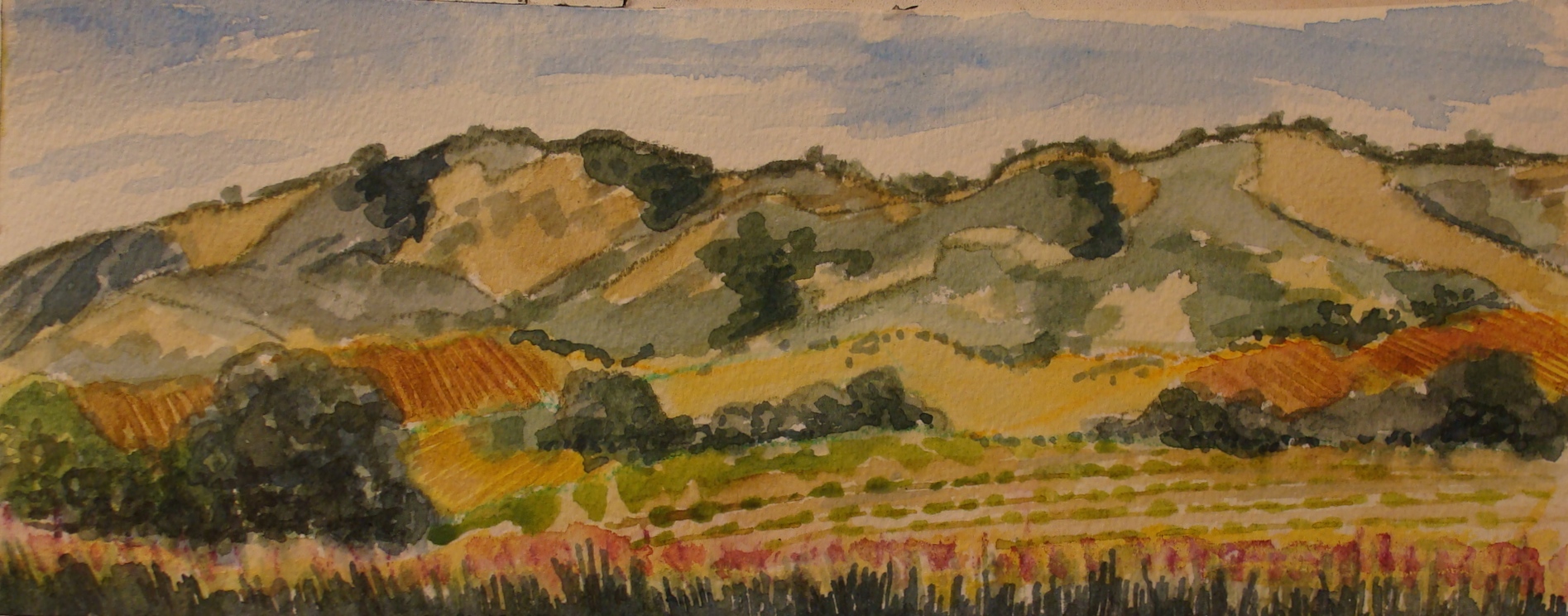
Drakes Bay. Robin L. Chandler Copyright 2015
Miraculously, in June 2015, Justice Anthony Kennedy writing the majority opinion for the Supreme Court, made same-sex marriage a right nationwide “No union is more profound than marriage, for it embodies the highest ideals of love, fidelity, devotion, sacrifice, and family. In forming a marital union, two people become something greater than once they were. As some of the petitioners in these cases demonstrate, marriage embodies a love that may endure even past death. It would misunderstand these men and women to say they disrespect the idea of marriage. Their plea is that they do respect it, respect it so deeply that they seek to find its fulfillment for themselves. Their hope is not to be condemned to live in loneliness, excluded from one of civilization’s oldest institutions. They ask for equal dignity in the eyes of the law. The Constitution grants them that right.”
Harvey said “coming out is the most political thing you can do.”
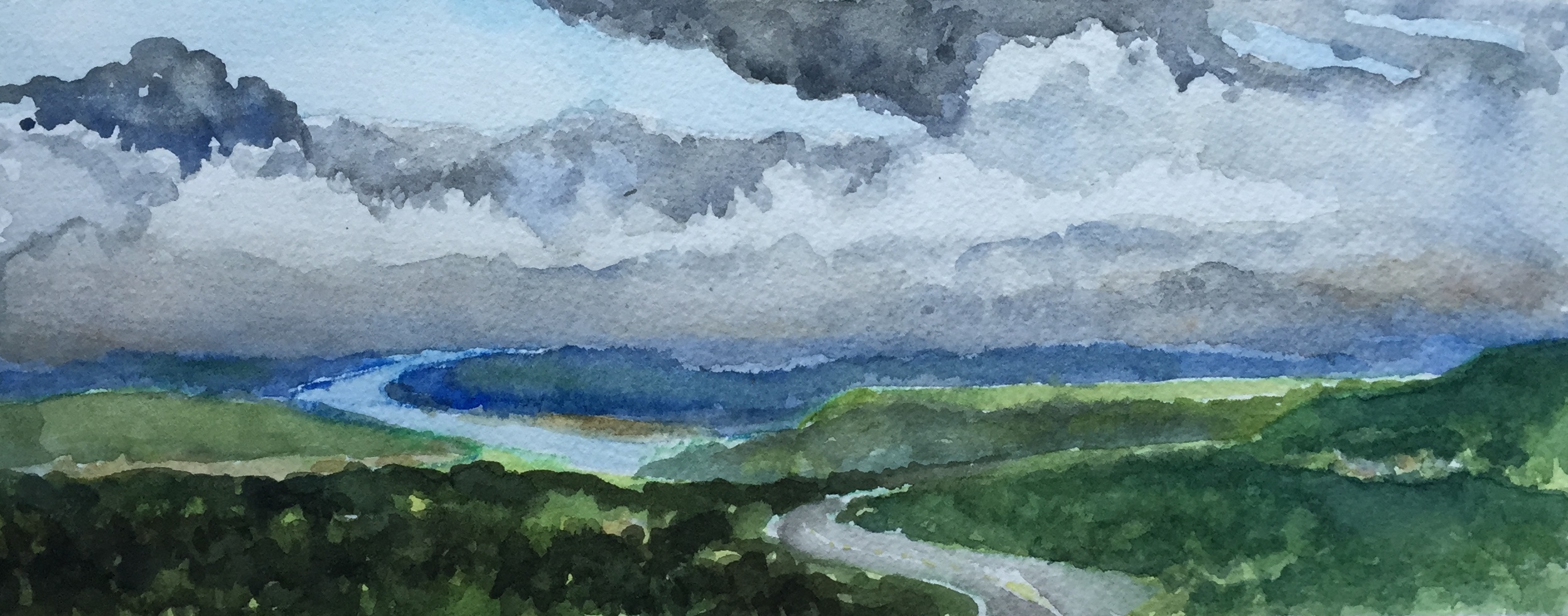
The Colorado River of Texas. Copyright Robin L. Chandler 2015.
Storm fed by New Mexican arroyos, the Colorado River winds across the Texas plains and prairies nurtured by springs, through the Hill Country and the fertile black bottom land, gathering steam as the Concho, Llano, Perdnales and San Saba rivers contribute on the journey to the Gulf of Mexico. Great forces tell the story of this country, some natural and some manmade. Wind and rain, lightening and thunder, sun and drought, the migration of creatures in the air, on the land, and through the water dialogue with man’s domestication of the landscape, wrestling nature to some kind of tenuous draw.
In a collection of essay’s Sacagawea’s Nickname: Essays on the American West, Larry McMurtry wrote “man may have seven ages, but the West has had only three: the age of Heroes (Lewis and Clark), the age of Publicity (Buffalo Bill), and the age of Suburbia, for which the preferred term is Urban Sprawl. How we got from the first age to the third, and what we have destroyed in the process, is a story historians will be worrying for a long time.”
Leaving Austin meandering the back roads towards Waco, I purposefully took a slight detour to the northwest to visit the Balcones Canyonlands National Wildlife Refuge. Spring is the perfect time to catch the wild flowers and glimpse migratory birds nesting in the Texas Hill Country. Austin’s culture of great music and good food combined with Texas’ tax incentives are attracting the computer industry and the countryside is increasingly being developed into suburban housing enclaves. My journey is a series of interstates, highways, and two-lane roads that are increasingly developed. Thank goodness the Refuge was formed in 1992 to ensure some land would forgo development and protect the habitat of two endangered birds: the Golden-cheeked Warbler and the Black-capped Vireo. And refuge it is. Although it is hard to completely loose sight or sound of the farm to market road, it is possible to loose yourself briefly in the surrounding natural history. Hiking on a ridge in the refuge, populated with juniper trees (known as cedars in Texas), I was rewarded with sightings of the nesting Warbler and a full stereophonic soundtrack of the bird’s beautiful song juxtaposed by distant thunder. My found treasure included a gorgeous view of the Colorado River of Texas with a threatening lightening storm looming on the western horizon.
I am conscious of the looming suburbs on the horizon, threatening like a storm this precious refuge. Back in the car, heading towards my Dad’s home, I queue up The Mountain on Steve Earle and Del McCoury Band’s album of the same name. I know the odds are stacked against nature; mankind’s greed and hunger scar the landscape with glacier like force. But I know we need to come to some compromise with nature, something more than this tenuous draw. We need to live and breathe stewardship; because the land helps keep us from worry and woe. As I merge onto the highway, Steve Earle sings:
“I was born on this mountain a long time ago
Before they knocked down the timber and strip-mined the coal
When you rose in the mornin’ before it was light
To go down in that dark hole and come back up at night
I was born on this mountain, this mountain’s my home
She holds me and keeps me from worry and woe
Well, they took everything that she gave, now they’re gone
But I’ll die on this mountain, this mountain’s my home”
The Poet & the Patriot pub in Santa Cruz on St. Patrick’s Day. Robin L. Chandler Copyright 2015
Language and the stories we tell about our relationships to homelands and new found lands has been on my mind. Sitting in the pub on Saint Patrick’s Day surrounded by the din of good cheer, shamrocks, and a pint of stout, I heard above the fray, a few stanzas of my favorite Irish ballad The Maid of Coolmore.
The first time I met her, she passed me by, the next time I met her, she bade me good-bye. But the last time I met her, she grieved my heart so, for she sailed down from Ireland away from Coolmore. To the north of America my love I’ll search for, for there I know no one, nor no one knows me. But should I not find her, I’ll return home no more, like a pilgrim I will wander for the maid of Coolmore
Forced to flee their homeland because of famine, the Irish immigrated to America in the 1840s bringing little but the language in their songs. The great historian Oscar Handlin wrote in his 1952 Pulitzer Prize winning book The Uprooted “only in Dublin did I discover something and that not what I expected – not the documents in the libraries, not the sight of Bloom’s city, but the lilt of the Irish language everywhere adding a magical intonation to the words, so that never again could I read a line of the writing without hearing the resonance of actual speakers’ voices, without knowing the presence of persons long gone-by but real.” With this groundbreaking book, Handlin changed how we speak about and write our nation’s story and in so doing he changed how we see ourselves in and on this land. Regardless of origin, “the common experience was one of wrenching hardship and alienation and a gradual assimilation…that changed the country as much as it changed the newcomers.” The American story was no longer the myth of the Wild West, but the idea that we were a nation of immigrants. In Handlin’s words “once I thought to write a history of the immigrant in America. Then I discovered the immigrants were American history.”
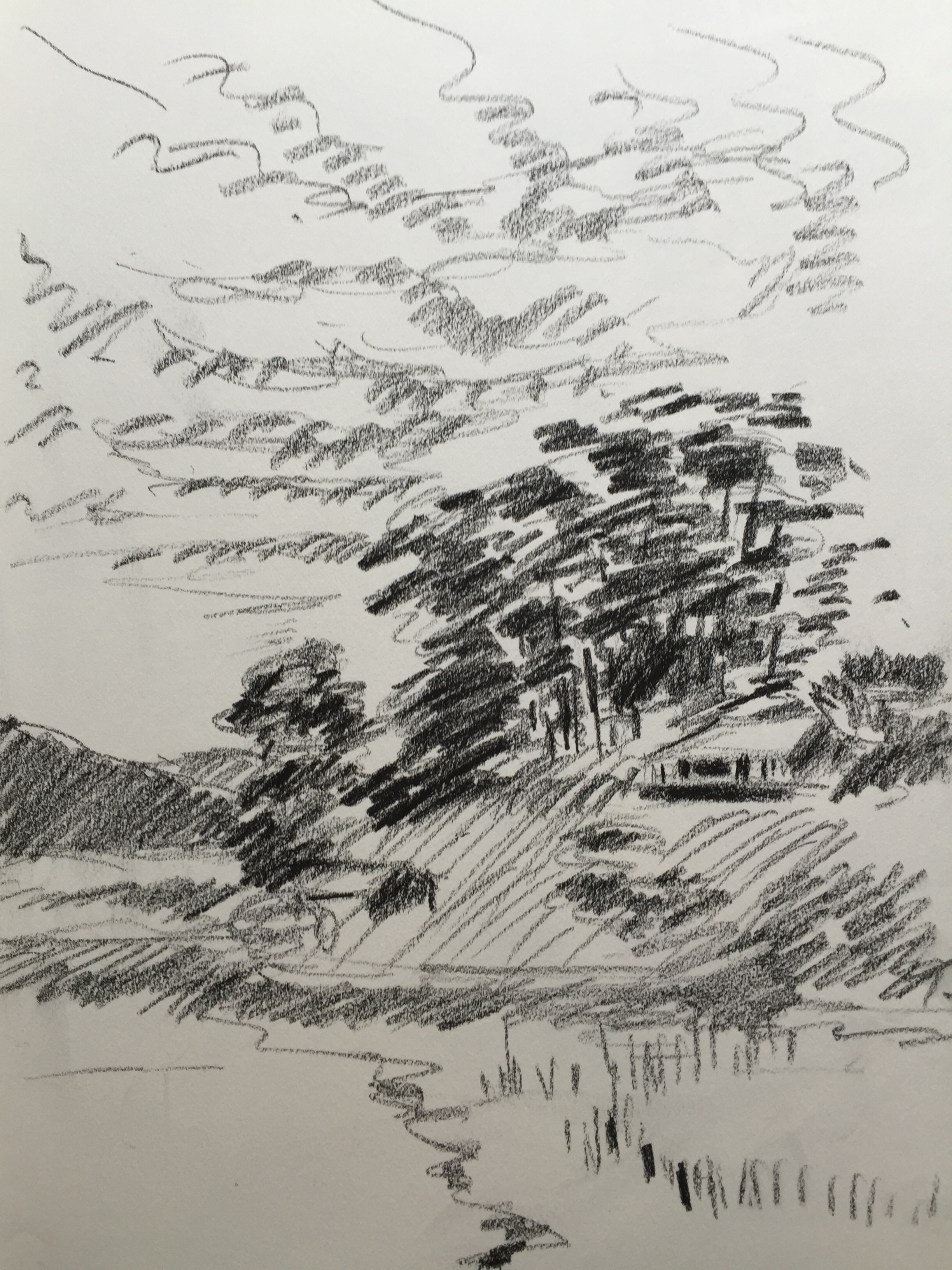
Tomales Bay looking north from Point Reyes Station, charcoal sketch. Robin L. Chandler Copyright 2015.
Last weekend, I had the great good fortune to attend Geography of Hope a biennial conference held by Point Reyes Books fostering discussion about the relationship between people and the land. The 2015 conference focused on Women and the Land, and the panelist’s made clear the power of language to assign status or empower the powerless. The keynote speaker Robin Wall Kimmerer insightfully connected the objectification of women and the land; “when language objectifies, ascribing the status “it” we loose all responsibility. It is a convenient linguistic imperialism” that allows us to exploit and destroy instead of learning from and living with a land and it’s people. Kimmerer, a scientist, member of the Potawatomi tribe, and author of Braiding Sweetgrass: Indigenous Wisdom, Scientific Knowledge, and the Teachings of Plants, called for the restoration of sacred language protocols with values of reciprocity and stewardship. Reading the Poem When Earth Became An It, by the Cherokee poet Marilou Awiakta, Kimmerer said
“When the people call the Earth “Mother,” they take with love and with love they get back, so that all may live. When the people call Earth “it,” they use her, consume her strength. Then the people die. Already the sun is hot out of season. Our Mother’s breast is going dry. She is taking all green into her heart and will not turn back until we call her by her name.”
Tomales Bay looking north from Point Reyes Station, watercolor. Robin L. Chandler Copyright 2015
One panel asked the question what are the gifts and responsibilities of women in the work against carbon catastrophe? Lauret Savoy, Professor of Environmental Studies and Geology at Mount Holyoke spoke about Wangari Maathai, first Kenyan woman to receive a Ph.D., founder of the Greenbelt Movement, and recipient of the 2004 Nobel Peace Prize. Recognizing that women are the primary caretakers of their families and their environment, Maathai established the Greenbelt Movement to plant trees and preserve watersheds, strengthening local communities’ capacity to take action against climate change; advocate for an end to government policies supporting land grabbing, deforestation and corruption; and advocate for gender livelihoods (recognizing that women’s work was critical to family survival – imagine that!). According to Savoy, Maathai’s work illustrates how cultural diversity and biodiversity are intertwined; because there is a wealth of knowledge to be tapped in people’s knowledge of the land, and their stories, their language about the land, restoring the environment goes hand-in hand with restoring cultural integrity.
Savoy also co-edited the book Colors of Nature: Culture Identity and the Natural Worldwhich features an essay by Jamaica KincaidIn History. Kincaid begins the essay asking “what to call the thing that happened to me and all who look like me? Should I call it history? If so, what should history mean to someone like me? Should it be an idea, should it be an open wound and each breath I take in and expel healing and opening the wound again and again…or is it a moment that began in 1492 and has come to no end yet?” Kincaid’s essay clearly evokes the power of language as she describes Christopher Columbus’ discovery “he couldn’t find enough words to describe what he saw before him: the people were new, the flora and fauna were new, the way the water met the sky was new, this world itself was new, it was the New World…to have knowledge of things, one must first give them a name.” Botanists from the Old World quickly began to organize the fauna. “The plants…had two names: they had a common name, that is, the name…assigned to them by people for whom these plants have value; and then they have a proper name, or a Latin name…assigned to them by an agreed-upon group of botantists…the invention of the system has been a good thing. Its narrative would begin this way: in the beginning the vegetable kingdom was chaos; people everywhere called the same things by a name that made sense to them, not by a name that they arrived at but by an objective standard. But who has interest in an objective standard? Who would need one? It makes me ask again what to call the thing that happened to me and all who look like me? Should I call it history?” Language give us the power to reimagine our destiny and rebuild our world.
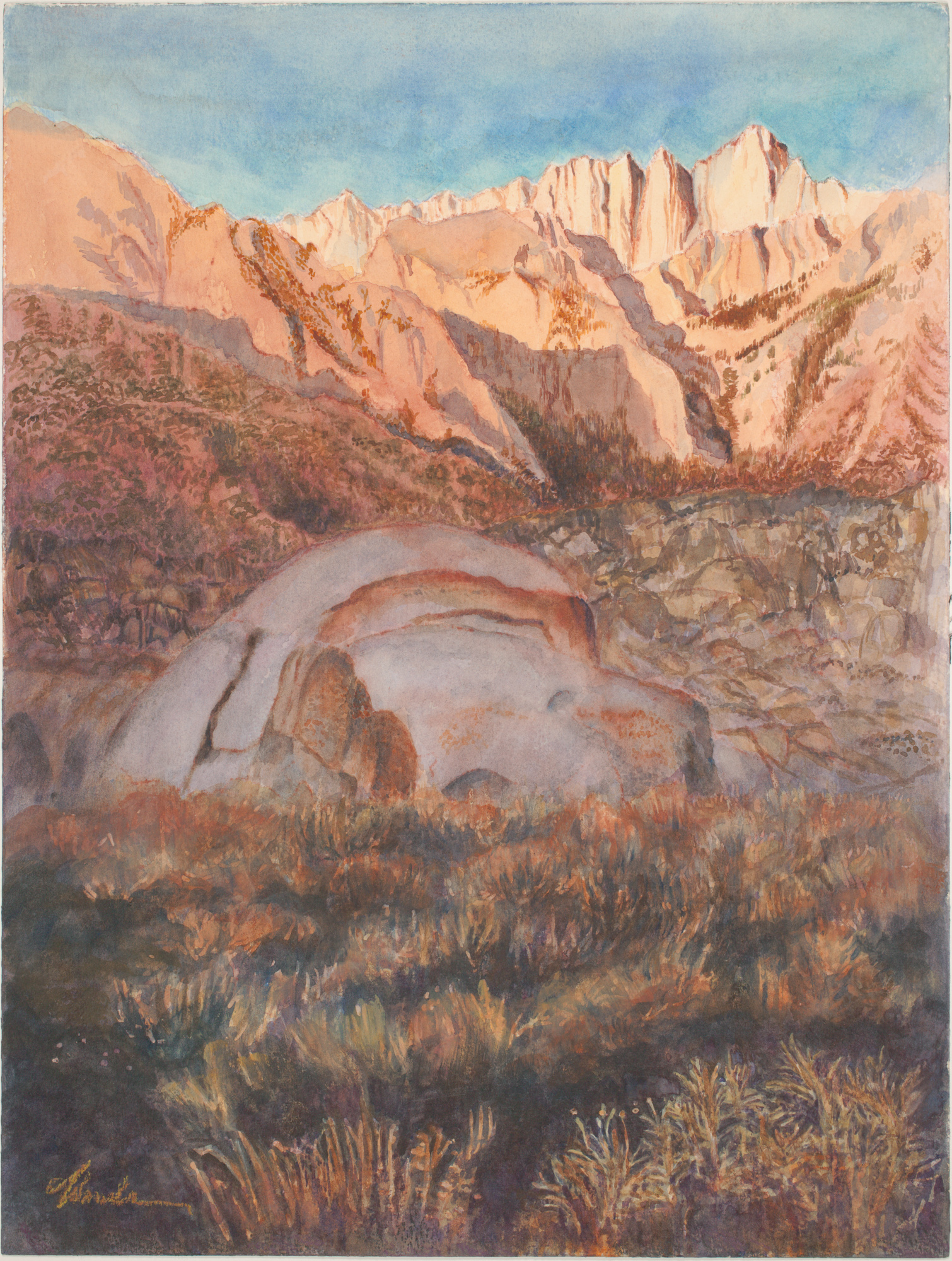
Mt. Whitney at sunrise. Robin L. Chandler copyright 2014.
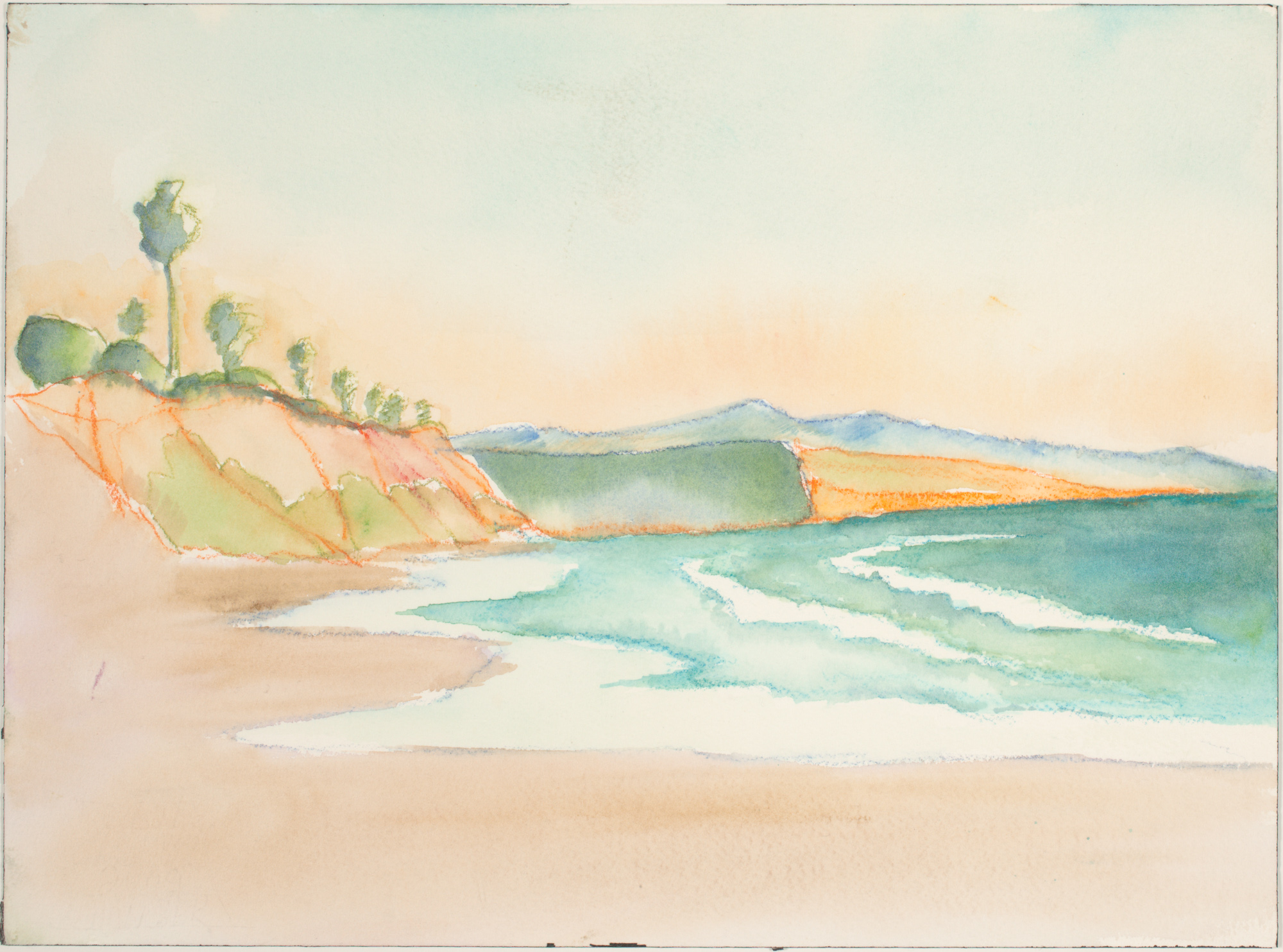
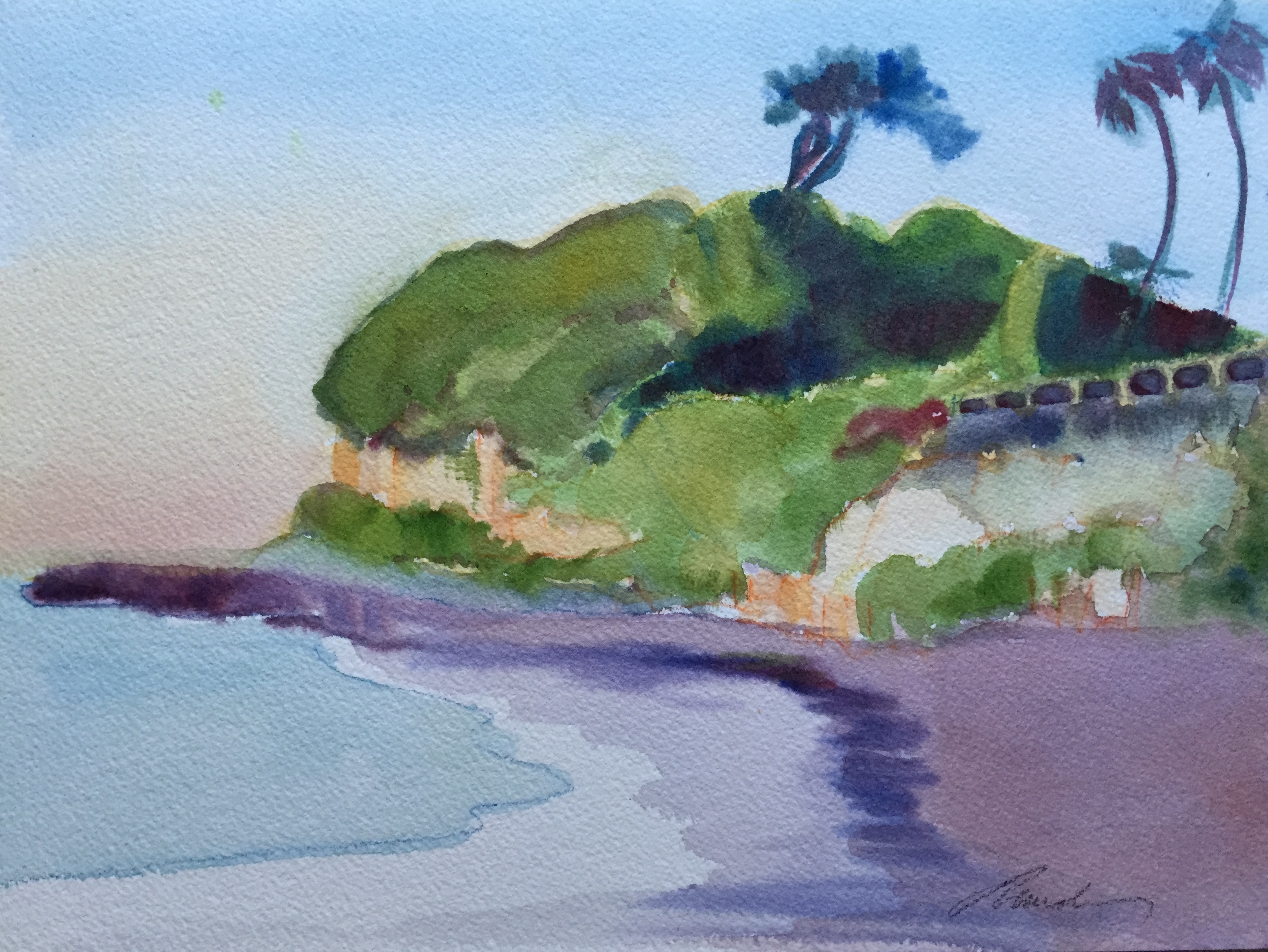
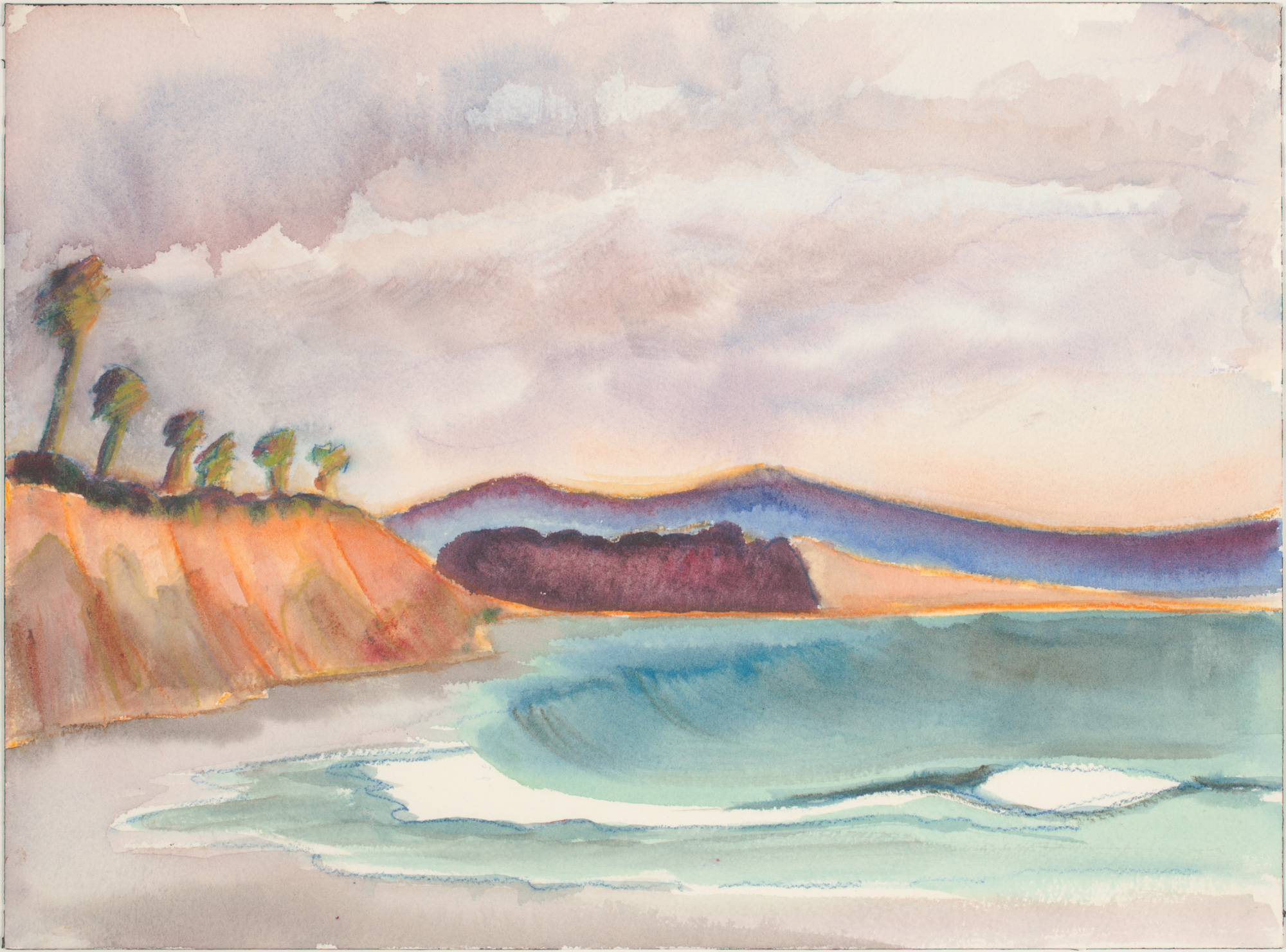
In Bernard Berenson: A Life in the Picture Trade, Rachel Cohen describes how Berenson, revolutionized art history by his beliefs that “one did not need to be steeped in history or iconography in order to respond to paintings…one could be in an active relationship with paintings…one’s own private and profound experiences of them was not just for the rich or gifted but a natural capacity of the human mind and therefore available to everybody.” Paintings, wrote Berenson, “hate people that come to them with anything but perfect abandon.” This month an exhibit of my watercolors hangs at the Sweet Adeline Bakeshop in Berkeley. Watercolors lend themselves well to my life in transit: they are light to carry, rapidly used, and quick to dry. As I walk and bike near home and work, or travel, I discover stories in the landscape. Watercolors and brushes at the ready, I stop to capture the moment with quick sketches. Some of these sketches mature into more detailed works created back in the studio.
While I firmly believe historical context is not required to enjoy art, it does, without a doubt, add to the experience. Depicting wild or urban settings, my paintings draw inspiration from the Hudson River School and Tonalism, groups of artists who expressed their experience of nature in very different terms. Hudson River School painters – including Frederic Church and Albert Bierstadt – wrought panoramic vistas celebrating the magnificence of the land in sharply defining light. Emphasizing mood and shadow, the breaking dawn, gray or misty days, or light bleaching out sharp contrasts, Tonalist painters – such as George Inness and James McNeill Whistler – softly rendered landscape forms in their paintings. Published in A Life in Photography, the painter and photographer Edward Steichen wrote “by taking a streetcar out to the end of the line and walking a short distance, I find a few wood lots. These became my stomping grounds, especially during autumn, winter and early spring. They were particularly appealing on gray or misty days, or very late in the afternoon or twilight. Under those conditions the woods had moods and the moods aroused emotional reactions that I tried to render…”For those of you unable to see the exhibit in person, I share the paintings with you now. Bring your perfect abandon and choose your perfect soundtrack to view the pictures at the exhibition. Some may choose Mussorgsky, but for today’s viewing I choose Rufus Wainright‘s Release the Stars.
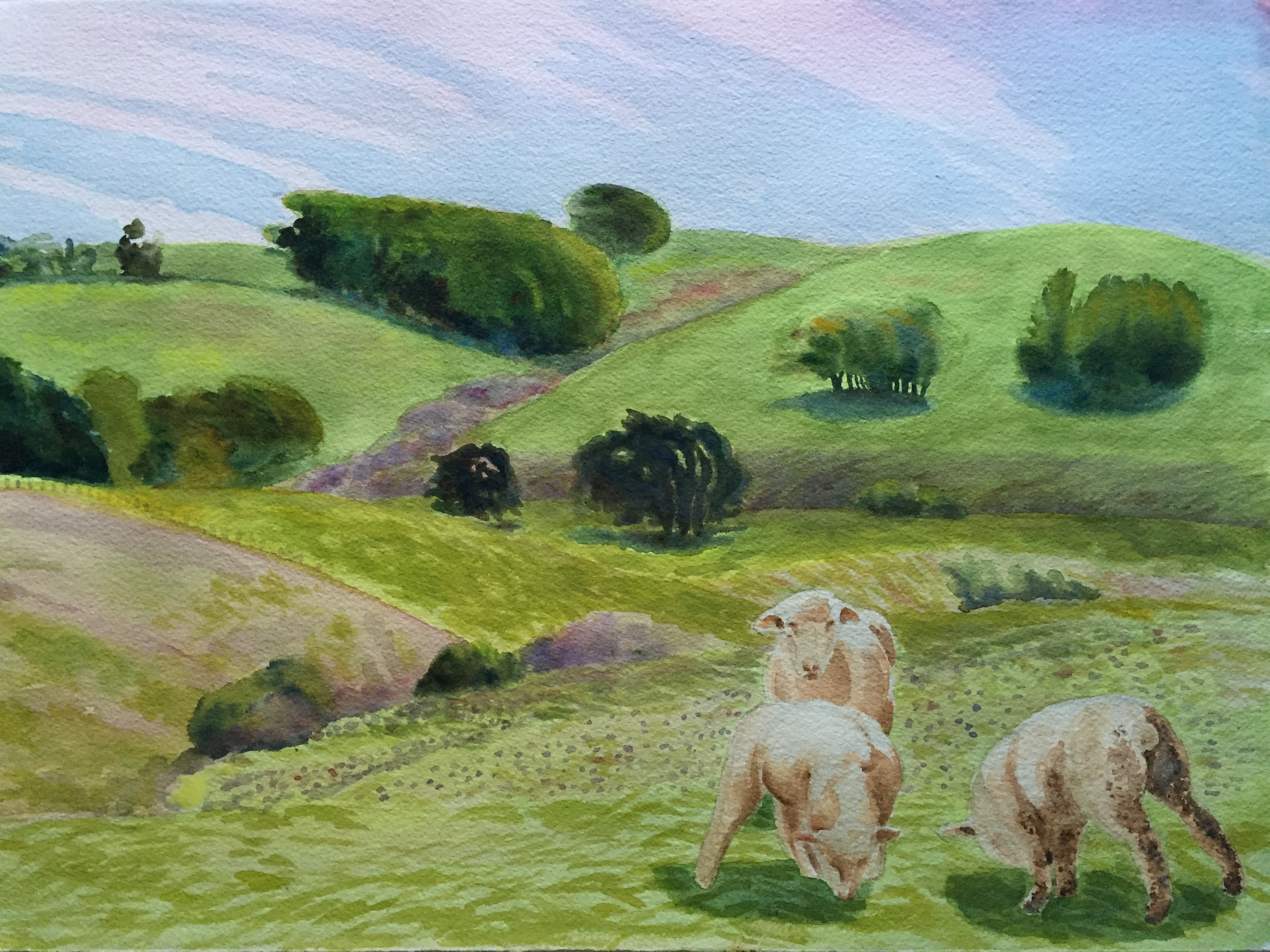
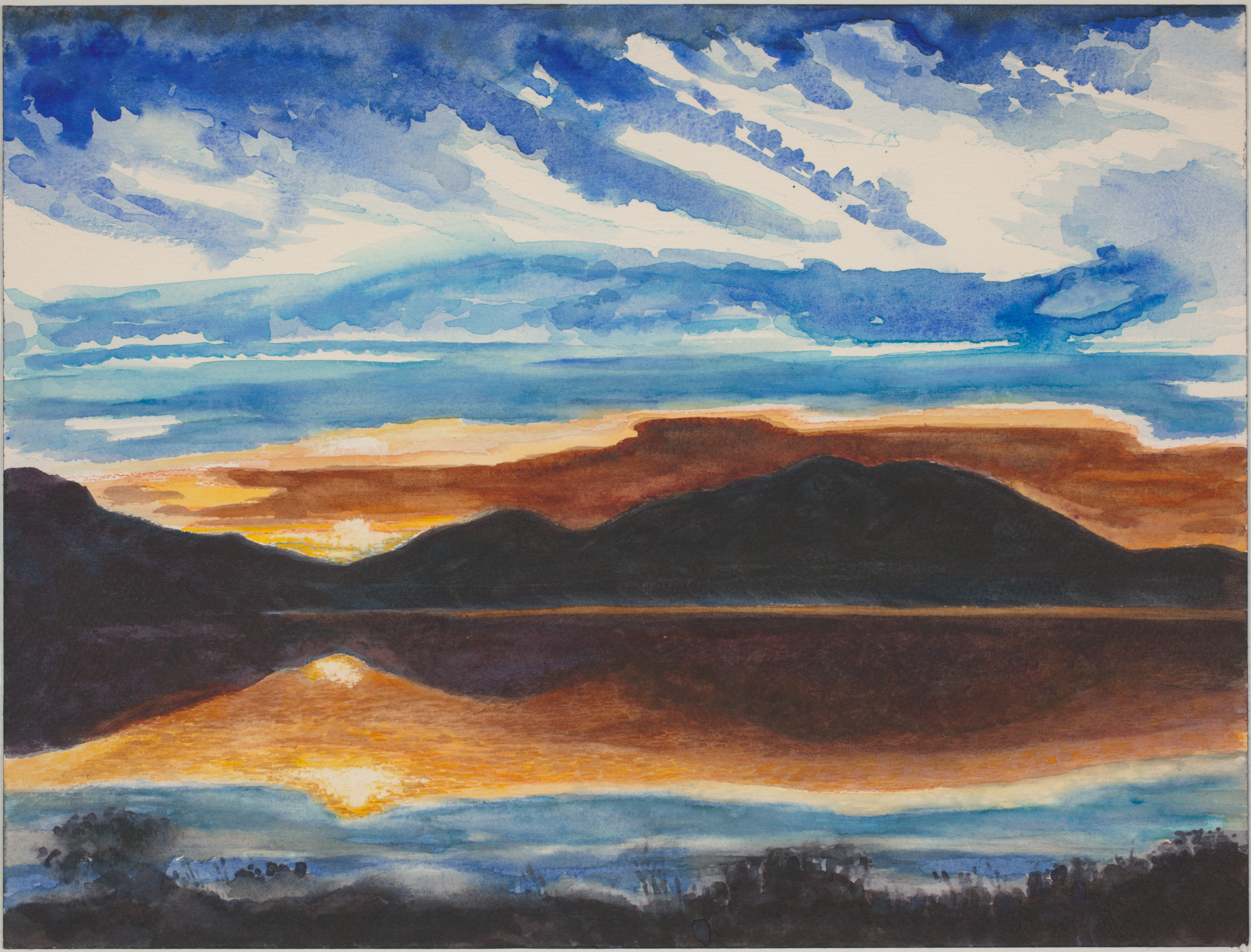
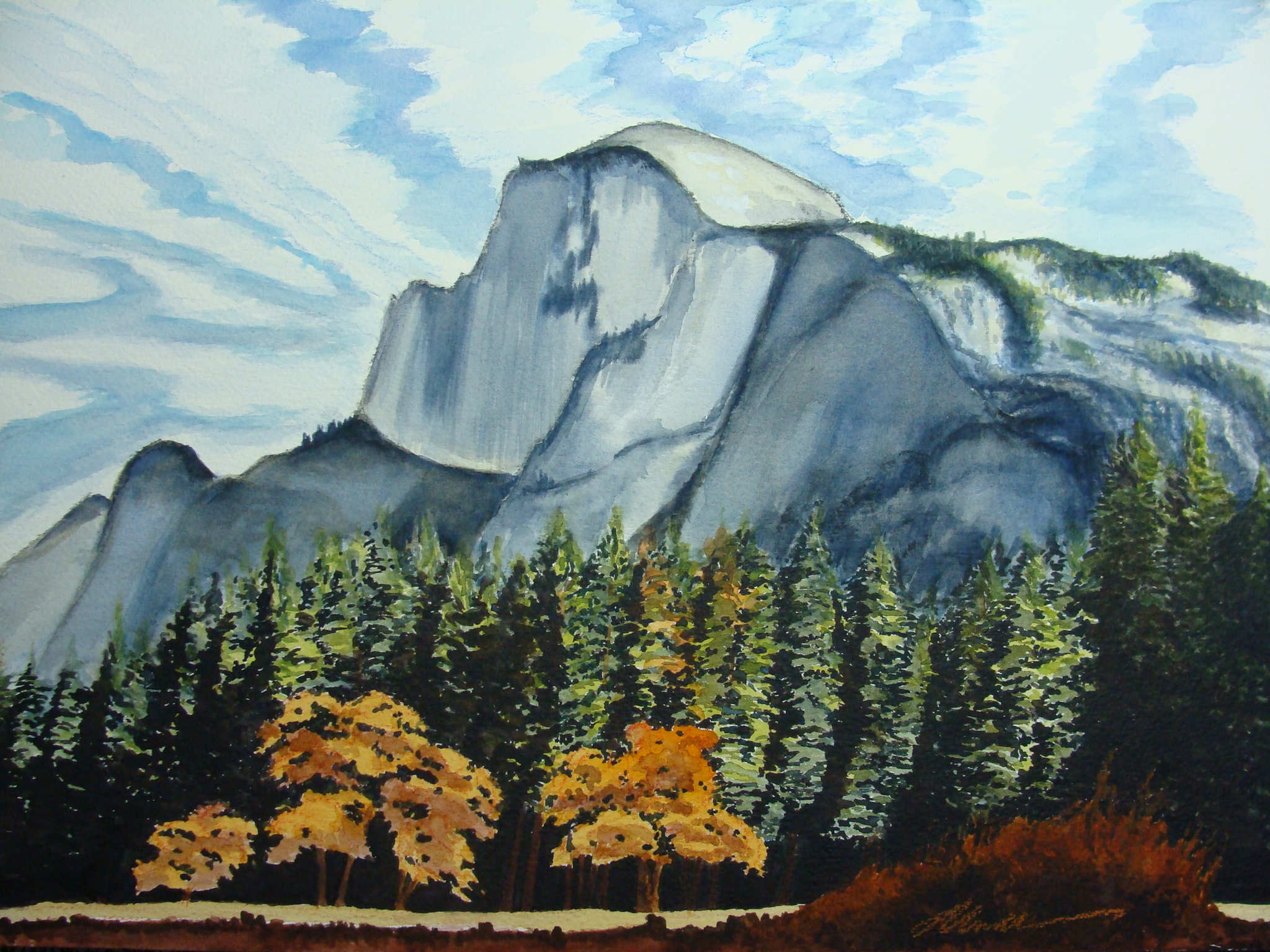
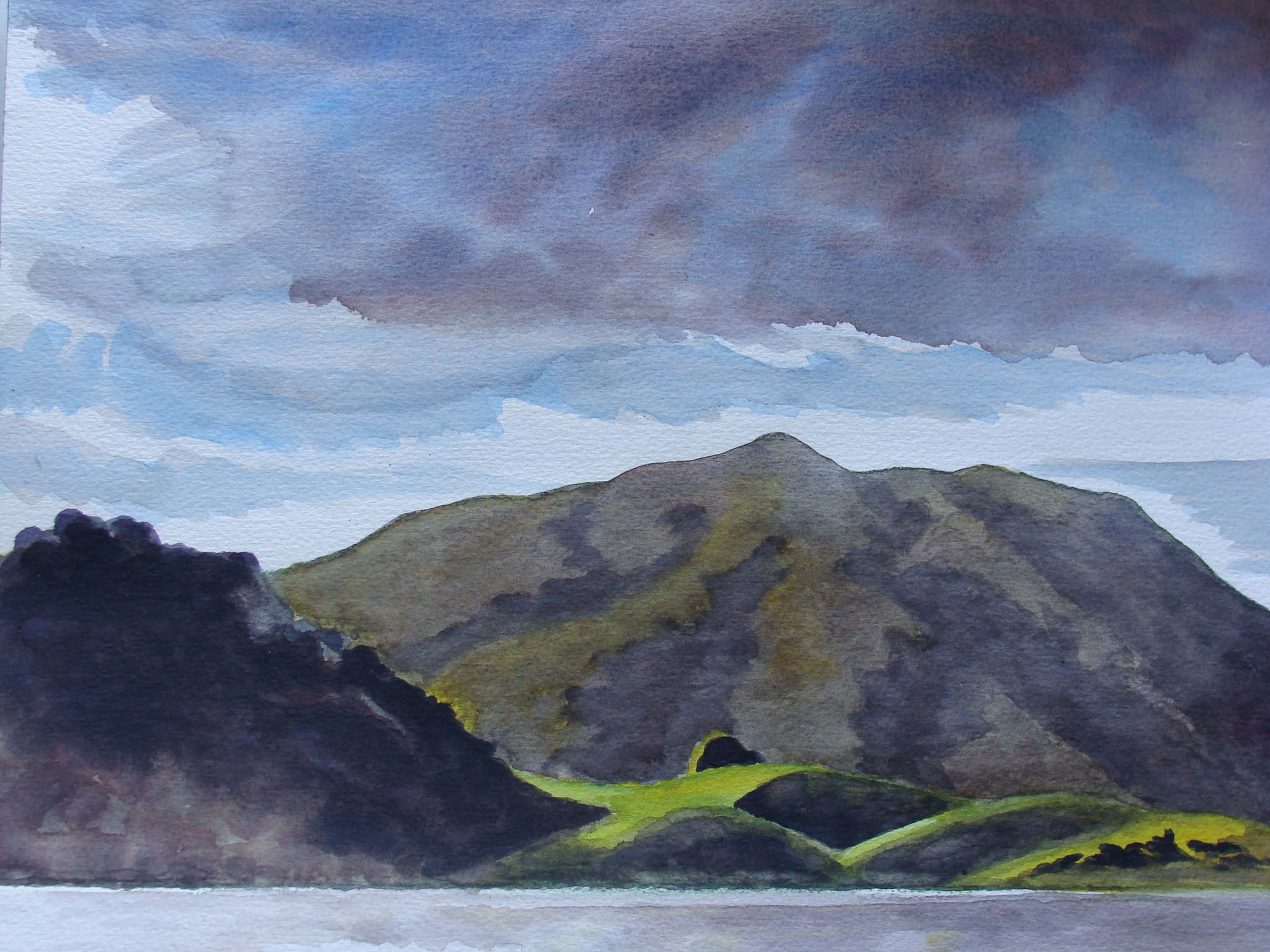
Torrey Pines early morning. Robin L. Chandler Copyright 2015.Swami’s Beach at sunset looking south. Robin L. Chandler Copyright 2014.Swami’s Beach at sunset looking north. Robin L. Chandler Copyright 2015.Swami’s Beach at sunset on a rainy day looking south. Robin L. Chandler Copyright 2014.View of Santa Cruz coastline and Monterey Bay National Marine Sanctuary. Copyright Robin L. Chandler 2014Natural Bridges late afternoon. Copyright Robin L. Chandler 2014Elkhorn Slough wetlands mid-morning. Robin L. Chandler Copyright 2014.Moss Landing at sunrise. Robin L. Chandler Copyright 2015Pt. Lobos near Carmel mid-afternoon. Robin L. Chandler Copyright 2015.Sailboats on Alameda Estuary mid-day. Robin L. Chandler Copyright 2015.Oakland Skyline mid-day. Robin L. Chandler Copyright 2015.Oakland Terminal on Alameda Estuary mid-day. Robin L. Chandler Copyright 2015.Storm over San Francisco view from Richmond wetlands. Robin L. Chandler Copyright 2015.Grazing Sheep north of Point Reyes Station high-noon. Robin L. Chandler Copyright 2015.Black Mountain late afternoon. Robin L. Chandler Copyright 2015.Nicasio Reservoir at sunset.Tomales Bay from Point Reyes Station storm moving in. Robin L. Chandler Copyright 2015.Mt. Whitney at sunrise. Robin L. Chandler copyright 2014View of Half Dome in Yosemite Valley. Copyright Robin L. Chandler 2014.
Sketch of a Coastal Live Oak in the UC Santa Cruz meadow. Robin L. Chandler, Copyright 2015.
Who could imagine a university nestled amongst stands of redwood trees and situated upon a hilltop meadow on the edge of the Monterey Bay. In this aspect, and in many other ways, UC Santa Cruz is extraordinary. Every morning I bike up the hill through the meadow to campus, a worthy challenge, and every evening, work complete for this day, I descend the pasturage, enjoying the emerging stars cast against a Technicolor ocean sunset. When I can take a midday break, I walk to the meadow and sketch. There, amazing Coastal Live Oaks, joined by their companion Bay Laurels and Buckeyes, bridge the forest and the meadow. A particularly compelling Quercus Agrifolia has caught my attention; a massive tree that must be at least sixty feet high, and could be over 250 years old. The change it has witnessed. It’s trunk is massive, contorted and gnarled, its branches an intricate web, and its crown rounded and dense. It sits majestically at the crest of the hill, the redwoods, the meadow and the bay as it’s theatrical backdrop. Beauty was the subject of my last blog and my search, blessedly continues.
It is difficult to take a break from the demands of a busy work schedule, but sketching the tree offers food for my imagination, an opportunity to refresh my soul, and ground myself before returning to my responsibilities. Henry David Thoreau danced on the edge of a Buddhist koan, with this 1859 journal entry “I have many affairs to attend to, and feel hurried these days. Great works of art have endless leisure for a background, as the universe has space. Time stands still while they are created. The artist cannot be in a hurry. The earth moves round the sun with inconceivable rapidity, and yet the surface of the lake is not ruffled.” My friend Chip Sullivan, artist and author, states in Drawing the Landscape that we “draw because it is the act of seeing and thinking clearly…it allows a concept to evolve…it resides between freedom and structure…drawing can also be a meditation…Zen art is the expression of the artist’s own inner state of going nowhere to a timeless dimension.
A few months ago, a very dear friend was reading a book about the National Archives historic photograph collection. The page was open to an iconic photograph taken by Dorothea Lange of hungry people in breadlines in San Francisco during the Great Depression. That single moment, set me on a journey of discovery, a road I still travel – reading about Dorothea and her first husband Maynard Dixon and viewing reproductions of their work in books, films and in museums. In the Fall 2014, PBS American Masters series broadcast the film Grab a Hunk of Lightning portraying the life and work of the masterful artist Dorothea Lange. A section of the film included Lange speaking about the meditative experience of making art:
“When you are working well, it is first of all, a process of getting lost, so that you live for maybe 2 – 3 hours as completely as possible the visual experience…you feel you have lost yourself, your identity, you are only an observer…all your instinctive powers are in operation and you don’t know why you are doing things really. Sometimes you annihilate yourself; that is something one needs to be able to do. There are moments when time stands still. You hope it will wait for you that fraction of a second…beauty appears when one feels deeply. Art is an act of total attention.”
Black Mountain from the Nicasio Reservoir. Copyright Robin L. Chandler 2014.
To my way of thinking, beauty and art are synonymous. Art, the creative act and our engagement with that act, stimulates thoughts, emotions, beliefs or ideas. When painting, I am participating in the creation of beauty. When I engage – my five senses – with any work of art, that is beauty too.
Last Saturday, driving home from a Point Reyes Books event through the cold December night, we talked about important work before us in the New Year, and fundraising was front and center. We had just attended a successful fundraiser for KWMR, West Marin’s Community Radio Station. Our donation allowed us to share the evening with Frances McDormand, actress and producer, in conversation with screenwriter Jane Anderson about their collaboration televising Elizabeth Strout’s Pulitzer Prize winning book Olive Kitteridge. It was a generous act for two artists to contribute their time, hearts and minds to encourage donors to help sustain a community treasure.
The evening was inspiring and priceless; stimulating thoughts, emotions, beliefs and ideas. We laughed and cried, recalling McDormand speak about “poor” Olive suffering her husband Henry’s tyrannical happiness. McDormand’s art, gave us a chance to step off the dance floor and see life from the balcony, gaining insight into our lives, from that act of beauty.
But I make a case for beauty, passionately arguing that art directly impacts life. By stimulating our thoughts, emotions, beliefs and ideas, art encourages contemplation and reflection about the precious and fleeting beautiful moments and places. Without art and beauty, what life is there to save? Beautifully rendered in prose and theatrically, Olive Kitteridge reveals “what young people didn’t know…that love was not to be tossed away carelessly, as if it were a tart on a platter with others that got passed around again…[if] she had found it burdensome, had flicked it off crumbs at a time, it was because she had not known what one should know: that day after day was unconsciously squandered.”
View of Santa Cruz coastline and Monterey Bay National Marine Sanctuary. Copyright Robin L. Chandler 2014
Reached from our hilltop campus by a swift bike descent, UCSC’s Long Marine Laboratory rests on the cliffs overlooking the Monterey Bay National Marine Sanctuary. Today I cycled part of the Empire Grade and then spun quickly back down to the sea to visit the lab’s Seymour Marine Discovery Center. A research and teaching center, “Long “is renowned for innovative marine mammal research. Walking along the cliffs searching for a spot to paint, I was greeted by the sounds of the ebbing tide and the snowy plovers dancing along the water’s edge. Hard at work in search of nourishment, sea otters and bottlenose dolphins swim in the silver-white waves below me and pelicans glide searching for fish just above the whitecaps. It was late in the afternoon and mostly overcast but from time-to-time the clouds broke and the cerulean blue sky peaked through allowing sunlight to stream from above infusing distant cliff sides with a glow seemingly from within.
My visual experience is beautifully expressed by Santa Cruz resident, writer James D. Houston, who wrote Where Light Takes Its Color From the Sea, a series of essays about place inspired by the California landscape. In an essay titled “The View from Santa Cruz” Houston wrote “in later afternoon the light turns the bay white…the sea, as much as the light, gives this curve of coast its flavor. The light takes its color from the sea, sometimes seems to be emerging from it. And the sea here is ever-present. On clear days it coats the air with a transparent tinge of palest blue that salts and sharpens every detail…the slow process of erosion has left many colored cliffs – yellow, buff, brown and ochre. Each striated layer reveals the pressed sand of beaches eons old. Sometimes in the low sun of an autumn afternoon they turn orange and glow like the horizon itself.” With his wife Jeanne Wakatsuki, Houston co-authored the memoir Farewell to Manzanar. The Japanese Internment Camp Manzanar, located in the Eastern Sierras, resides in the shadow of my majestic friend Mt. Whitney.
The Monterey Bay National Marine Sanctuary is so precious; we must ensure its continued existence through direct stewardship and consciousness raising actions. On Sunday September 21, 2014 citizens from over 150 countries took part in a consciousness raising action for the environment and social justice, participating in a global People’s Climate March. Largely ignored by the mainstream press, Ben Wikler host of MoveOn.org ‘s “The Good Fight” has chronicled the march in his podcast which can be listened to in iTunes or through the web at “inside the ginormous, huge-tastic climate march.”
Haruki Murakami’s short story characters in After the Quake confront their emptiness when the massive 1995 Kobe earthquake in Japan becomes a turning point in their lives.
“I call it Landscape with Flatiron. I finished it three days ago.
It’s just a picture of an iron in a room.”
“Why is that so tough to explain?”
“Because it’s not really an iron.”
She looked up at him. “The iron is not an iron?”
“That’s right.”
“Meaning it stands for something else?”
“Probably.”
Zen Buddhists believe that Buddha Nature – the true nature of reality and being – is impermanence, becoming, and a vast emptiness. And Satori,the sudden flash, leads to great insight into the vast emptiness. The earthquake provides Murakami’s characters with that sudden jolt providing insight into the emptiness…insight to grasp how an iron is more than an iron.
Last weekend, we visited our friends at Live Power Community Farm in Round Valley, California, where master farmers and apprentices continue in the footsteps of Alan Chadwick to sow and reap a bountiful harvest according to the principles of Biodynamic farming. Words cannot adequately describe the deep connection one forges with the land and the community when working side by side in the fields, making and sharing meals, and sleeping outside in the hay barn near to dozing horses, cows and sheep. It is sublime.
Arriving at the farm, we felt like understudies in a play whose curtain rose hours ago. We found ourselves reading lines in a well-thumbed script; and one of the acts was about this farm besieged for weeks by bobcats. Two weeks ago there were over forty egg laying chickens in the hen house; today there were less than nineteen. Eggs provide needed protein to feed the farmers. Late afternoon, we were hoeing and raking beds for planting, when news reached us that a bobcat had been caught in the trap near the horse pasture. We walked to the trap, fascinated and horrified at what we might find. There in a cage was the proud and beautiful creature, watching our every move, so alive, and so intense. This was the villain of the act in this play, but it was not really a villain, it was something else.
Our proud and beautiful bobcat would not live to see another sunrise, and that reality was like the sudden jolt of an earthquake providing insight into the true nature of reality and being, the impermanence, the becoming, and a vast emptiness. A coincidence, but a 6.0 earthquake occurred in Napa, California the next day; jolting our world with insight. And now a week later, while absent, the bobcat remains with me. And like the negative space in a painting, the absence of the subject, and not the subject itself, has become the most relevant, and the real subject of this story. It is the journey to understand the importance of impermanence, becoming and emptiness.
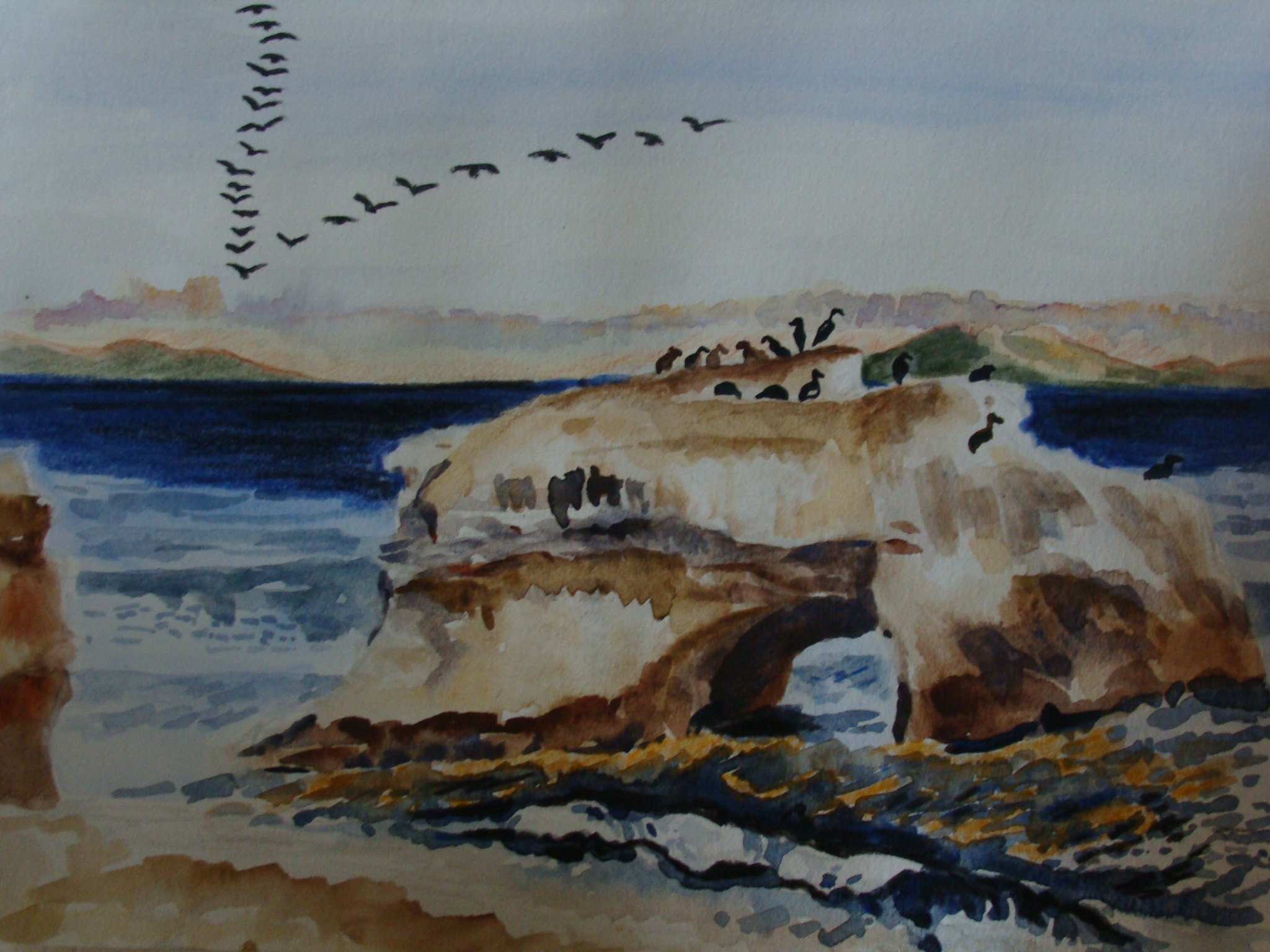
Wind and wave carved the barrel vault through which the tides pass. Frieze-like, cormorants and pelicans adorn the rock’s surface. Just offshore Santa Cruz, this nature-made arch stands proudly like a monument to stewardship of the Monterey Bay Marine Sanctuary. A bridge for centuries, the 1989 earthquake took only seconds to sculpt the arch from a span called Natural Bridges. Out in the bay waters, humpback whales feast on schools of anchovies. Early evening, living on the edge of the Pacific plate, my friend and I paint quickly attempting to capture this fleeting perfection with our brush marks. Thousands of miles away, seismic politics bring violence and death to innocents in Gaza and Ukraine airspace. All is suffering. A few lines from Robert Hass’ poem Bush’s War published in his book Time and Materials capture my sadness at this suffering:
“Someone will always want to mobilize
Death on a massive scale for economic
Domination or revenge…
Why do we do it? Certainly there’s a rage
To injure what’s injured us. Wars
Are always pitched to us that way…
The violence, it’s a taste for power
That amounts to contempt for the body…”
The history of all conflagrations ultimately includes the tallying of the dead, the wounded and the maimed. But they never tally the loss for the living. The black fonts on the white page cleanly mask the suffering. Colm Toibin’s closes The Testament of Mary with a conversation between Mary, the mother of Jesus, and a disciple, unidentified but likely John, one of the four evangelists. Mary spoke, her words brimming with her son’s suffering on the cross “I was there, I said. I fled before it was all over, but if you want witnesses then I am one and I can tell you now, when you say that he redeemed the world, I will say that it was not worth it. It was not worth it.”
Sometimes we paint to stave off despair. Chiura Obata the great Japanese American painter of Yosemite and the Sierras was interned at the Topaz War Relocation Center in Utah during WWII. Obata painted and wrote about the power of nature to absorb the scars of war. Writing about his series of Hiroshima inspired watercolors, Obata said “there is always harmony in nature, a balance between the dead and the living, between destruction and resurgence.” And so I rechristen Natural Bridges as Natural Arch, a monument to the cycle of life and to harmony, seeking balance between conquest and stewardship.












 alive in the sea of information