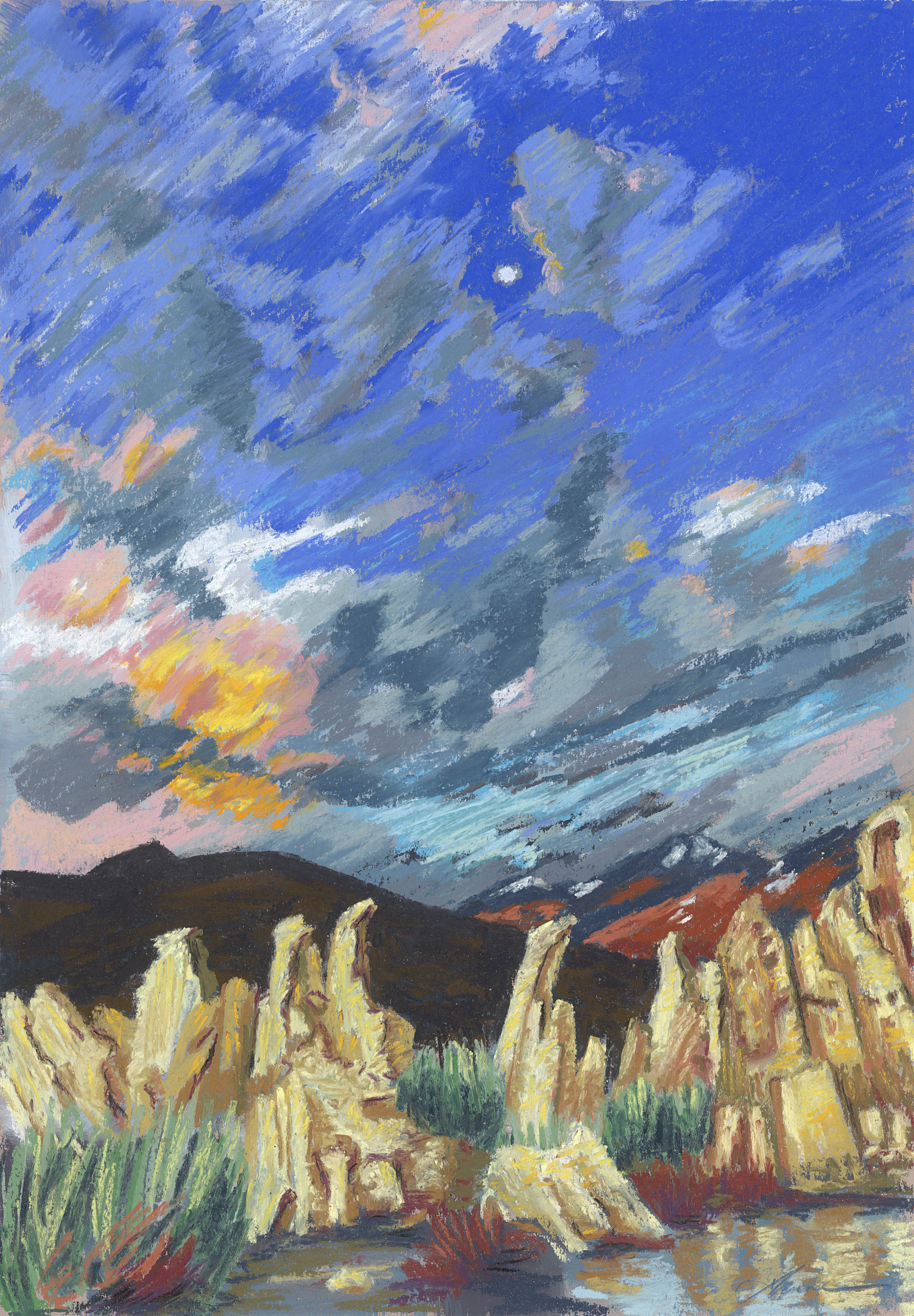
our capacity for wonder

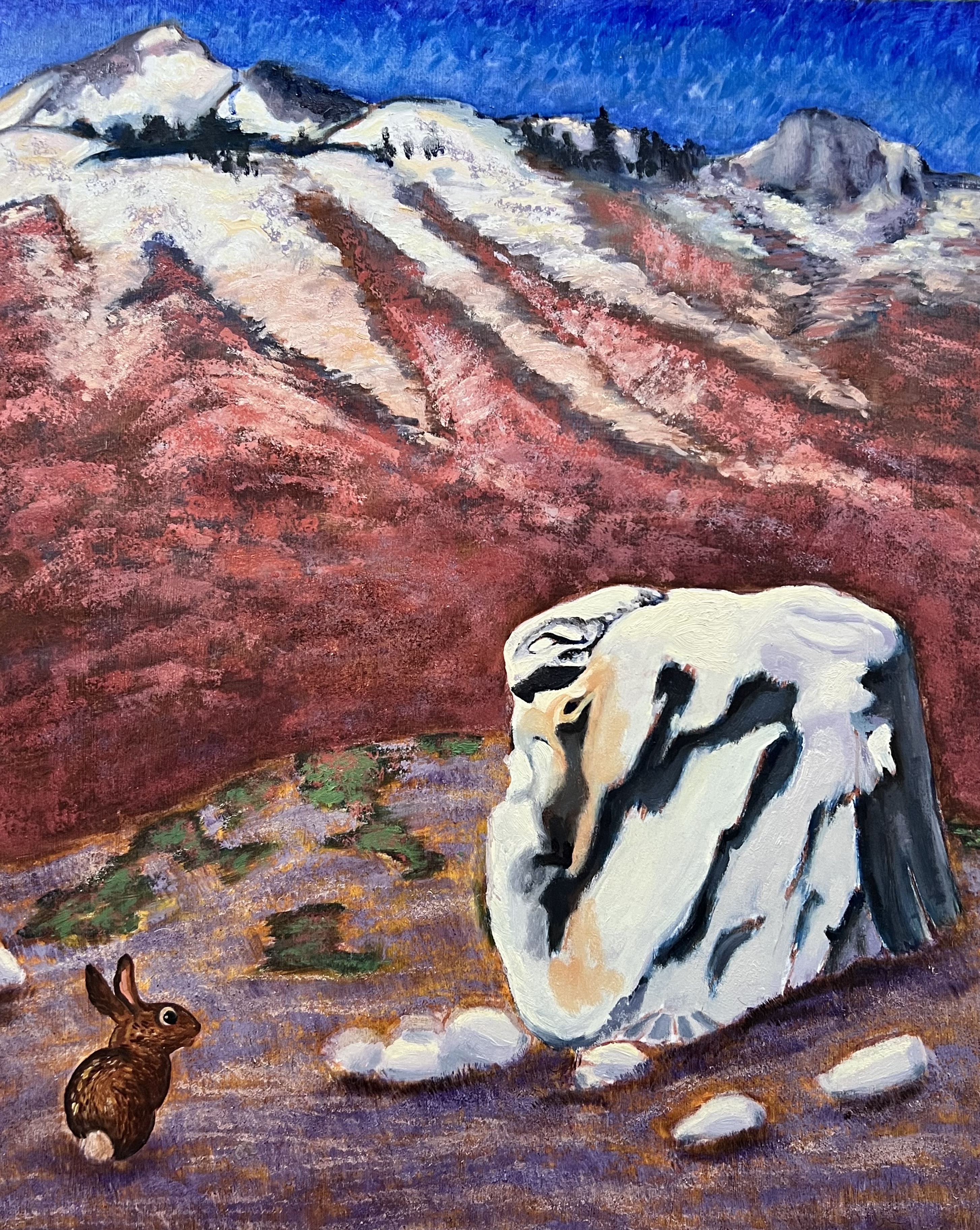
Wilderness nearby Mt. Conness. Robin L. Chandler 2023.

“If one loves the West it is sometimes deeply moving to drive along one of its rims and sense the great spread of country that lies before one: West Texas, New Mexico and Colorado, Wyoming, the Dakotas, Utah, Arizona, Montana and Idaho, Nevada, Oregon and Washington, and the long trough of California; with the names of rivers and cities and highways now binding the land like the old trails which once led to Oregon or Santa Fe – now it is Highway 40 and Highway 80 and Highway 66 that lead one from the Mississippi to the Pacific, to Cheyenne or to Denver, to Phoenix, El Paso, Los Angeles, or San Francisco.

On the rims of the West – and perhaps, in America, only there – one can still know for a moment the frontier emotion, the loneliness and the excitement and the sense of an openness so vast that it still challenges – in Gatsbian phrase – our capacity for wonder. “

Excerpt from Larry McMurtry book: In A Narrow Grave: Essays on Texas

a geography of grace

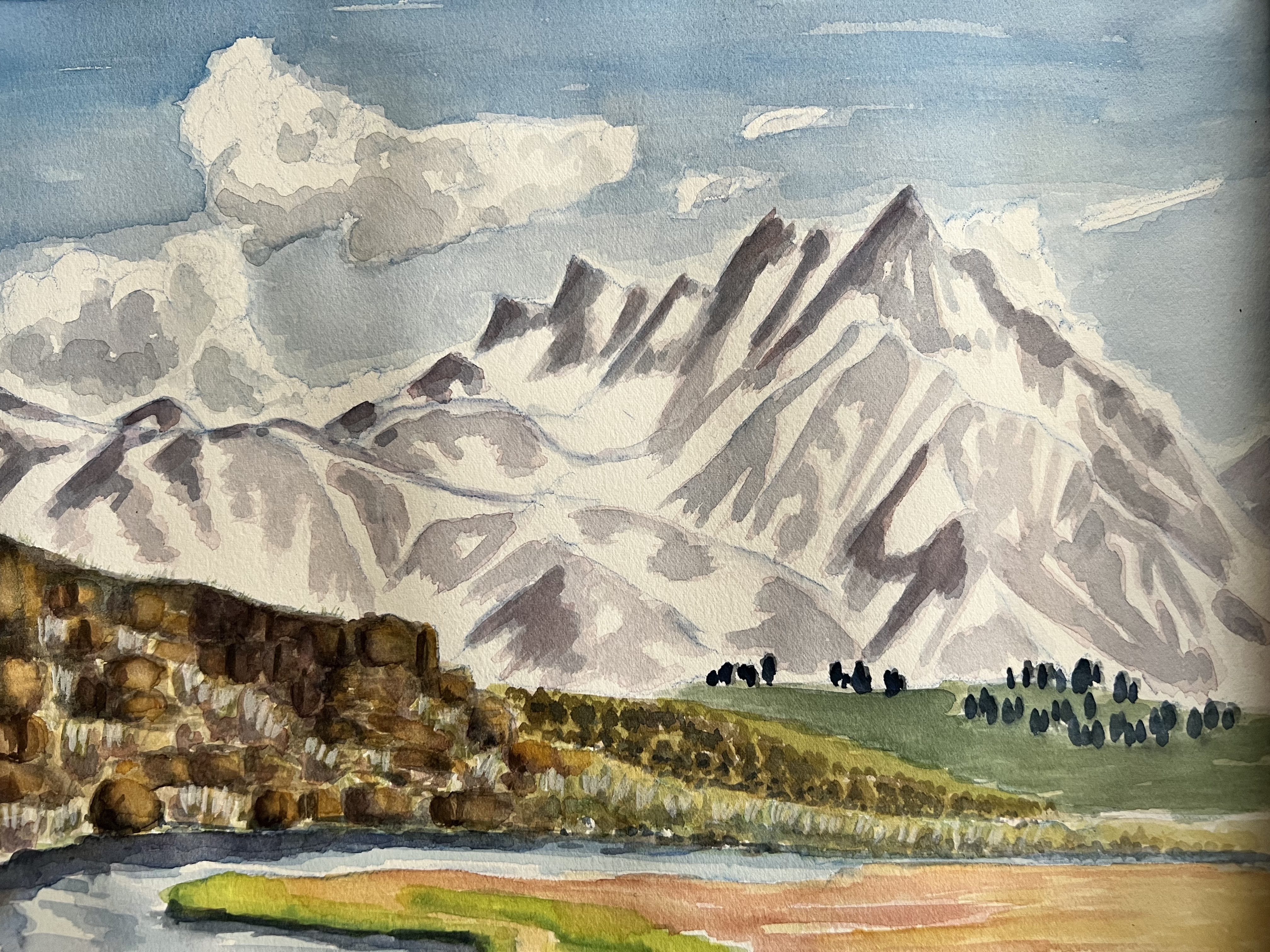
Walking along Division Creek near the Sawmill Pass Trailhead. Robin L. Chandler, 2023.

“Away from the sounds of roads and the glare of carbon-arc streetlights, it is quiet here. Some would say it is peaceful, but that is not the right word. This land throbs with life in every season and at every hour. And the quiet itself is not truly quiet. In the absence of the noise of jets and air conditioners, internal combustion engines and recorded music that blankets our perception in most of the human environments of America, ten thousand subtler voices may be heard.”

Excerpt from Joseph Bruchac’s book At the End of Ridge Road.

gazing in reverence

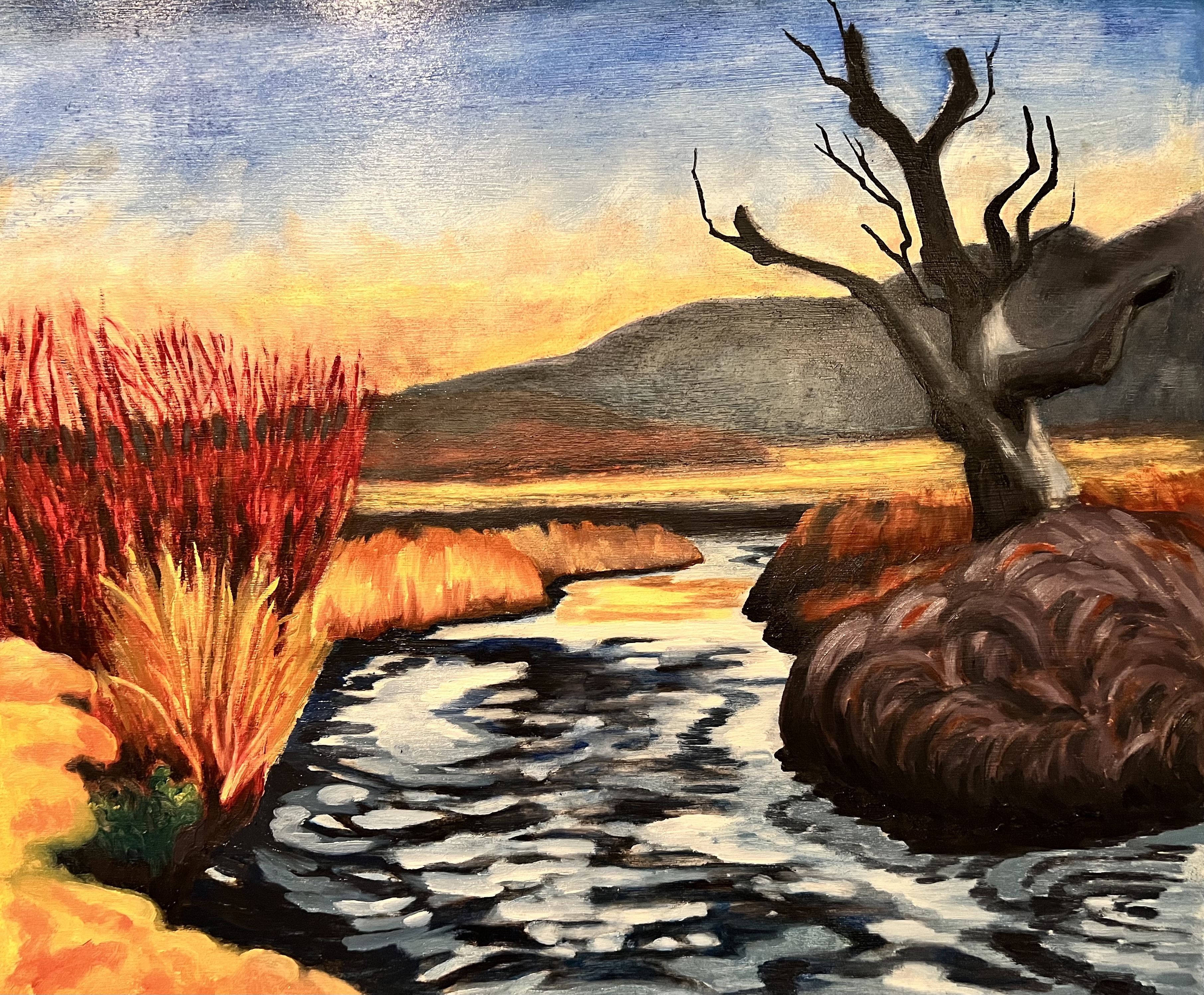
Walking the Owens River waking Mt. Tom. Robin L. Chandler, 2023

Tracing the way back home here,

I might round North Mountain

on roads hung along cliffwalls,

timbers rising in switchbacks,

or I could take the watercourse

way winding and circling back,

level lakes broad and brimming,

crystalline depths clear and deep

beyond shorelines all lone grace

and long islands of lush brocade.

Gazing on and on in reverence

across realms so boundless away,

I come to the twin rivers that flow through together.

Two springs sharing one source,

they follow gorges and canyons

to merge at mountain headlands

and cascade on, scouring sand out and mounding dunes

below peaks that loom over islands swelling into hills,

whitewater carrying cliffs away in a tumble of rocks,

a marshy tangle of fallen trees glistening in the waves.

Following along the south bank that crosses out front,

the snaking north cliff that looms behind, I’m soon

lost in thick forests, the nature of dusk and dawn in full view,

and for bearings, I trust myself to the star-filled night skies.

Poem 36 by Hsien Ling-yun (385 – 433) a buddhist poet who loved mountains and streams

from Mountain Home: The Wilderness Poetry of Ancient China

Translated by David Hinton

Sierra Holy Trinity

Sierra Holy Trinity. Robin L. Chandler, 2023

In February, I decided to see the snow. The weather broke for a week and I took advantage of blue skies and snow cleared roads to visit the East Side of the Sierras during this extraordinary California winter! The snowcapped Sierras were magnificent! Walking with my friends in the fields and along the waterway canals surrounding Bishop, we met horses, mules, and burros – for me the “holy trinity of the Sierras” – in their winter pastures, resting before their busy summer hauling supplies into the high mountains from pack stations, such as McGee Creek, Pine Creek, and Rock Creek, for hikers and fishermen to camp and sojourn alongside alpine lakes.

Writing about a summer pack into the California Sierras, Everett Ruess wrote, “much of the time I feel so exuberant, I can hardly contain myself. The colors are so glorious, the forests so magnificent, the mountains are splendid, and the streams so utterly, wildly, tumultuously, effervescently joyful that to me, at least, the world is a riot of sensual delight.”

In his Sunday, September 16, 1933, journal entry during his Sierra adventure, Ruess wrote about his day trekking with his burros Grandma and Betsy: 

Up before day. There was heavy frost on the meadow grass. I packed with surpassing adroitness and celerity. We went up the north fork of Mono creek and climbed out of the canyon by the edge of a waterfall. I quarreled with the trailmakers several times, but it seems they went in the best way, after all. We passed some lakes and climbed to Silver Pass, where I was “High in the white windy presence of eternity”…..

After lunch, when the burros had rested and eaten their fill, I packed with great rapidity and drove the burros down…..we reached a fork of the trail, and it appears that the Muir Trail does not go down Cascade and Fish Valley, but up to Mammoth Lakes. Reds Meadow and Devil’s Post Pile are my next destinations.

Instead of down, we went up hill, over two passes. We are now in terra incognita, for I do not have the Mt. Morrison quadrangle. In a valley below the second pass, I camped by a long lake that sparkled in the evening sun. I managed to have a bath and plunge before sunset, and felt the better for them. I salted the burros and had constarch pudding, lemon flavor for supper. Now the alpine glow is fading from the mountains. 

Journal entry from Everett Ruess: A Vagabond for Beauty & Wilderness Journals edited by W. L. Rusho

Mountain Home

Mt. Morrison & Owens River in April 2022 and February 2023, Robin L. Chandler.

Vast and majestic, mountains embrace your shadow;

Broad and deep, rivers harbor your voice.

T’ao Ch’ien

Home Again Among Fields and Gardens

Nothing like all the others, even as a child,

rooted in such love for hills and mountains,

I stumbled into their net of dust, that one

departure a blunder lasting thirteen years.

But a tethered bird longs for its old forest,

and a pond fish its deep waters — so now,

my southern outlines cleared, I nurture

simplicity among these fields and gardens,

home again. I’ve got nearly two acres here,

and four or five rooms in this thatch hut,

elms and willows shading the eaves in back,

and in front, peach and plum spread wide.

Villages lost across mist-and-haze distances,

kitchen smoke drifting wide-open country,

dogs bark deep among back roads out here,

and roosters crow from mulberry treetops.

No confusion within these gates, no dust,

my empty home harbors idleness to spare.

Back again: after so long caged in that trap,

I’ve returned to occurrence coming of itself.

*****

T’ao Ch’ien (365 – 427)

The rise of wilderness poetry in the early 5th century C.E. was part of a profound new engagement with wilderness that arose among Chinese artist-intellectuals for several reasons: the recent loss of northern China to “barbarians,” forcing China’s artist-intellectuals to emigrate with the government, settling in the southeast where they were enthralled by a new landscape of serenely beautiful mountains…..born into the educated aristocracy, T’ao was expected to take his proper place in the Confucian order by serving in the government. Accordingly, he took a number of government positions. But he had little patience for the constraints and dangers of official life, and little interest in its superficial rewards, so he finally broke free and returned to the life of a recluse-farmer on the family farm at his ancestral village of Ch’ai-sang (Mulberry-Bramble), just northwest of the famous Thatch-Hut (Lu) Mountain…..this was not a romantic return to the bucolic, but to a life in which the spiritual ecology of tzu-jan was the very texture of everyday experience. This outline of T’ao Ch’ien’s life became a central organizing myth in the Chinese tradition: artist-intellecuals over millennia admired and imitated the way T’ao lived out his life as a recluse, though it meant enduring considerable poverty and hardship…..this commitment, so central to the rivers-and-mountains tradition in poetry, was the one honorable alternative to government service for the artist-intellectual class…..represented a commitment to a more spiritually fulfilling life in which one inhabits the wilderness cosmology in the most immediate day-to-day way…..if Tao’s poems seem bland, a quality much admired in them by the Sung Dynasty poets, it’s because they are never animated by the struggle for understanding. Instead they begin with the deepest wisdom.

Verse, poem, and biography from Mountain Home: The Wilderness Poetry of Ancient China translated by David Hinton

outside laws

White Mountains outside Laws, 2023. Robin L. Chandler

“During the more than thirty years that I did not make my home in Kentucky, much that I did not like about life in my home state (the cruel racist exploitation and oppression that continued from slavery into the present day, the disenfranchisement of poor and/or hillbilly people, the relentless assault on nature) was swiftly becoming the norm everywhere. Throughout our nation the dehumanization of poor people, the destruction of nature for capitalist development, the disenfranchisement of people of color, especially, African-Americans, the resurgence of white supremacy and with plantation culture has become an accepted way of life. Yet returning to my home state all the years that I was living away, I found there essential remnants of a culture of belonging, a sense of the meaning and vitality of geographical place (p.23) .”

Excerpt from bell hook‘s Belonging: A Culture of Place in the essay Kentucky is My Fate (2009)

“In ring composition, the narrative appears to meander away into a digression (the point of departure from the main narrative being marked by a formulaic line or stock scene), although the digression, the ostensible straying, turns out in the end to be a circle, since the narration will return to the precise point in the action from which it had strayed, that return marked by the repetition of the very formulaic line or scene that had indicated the point of departure…..interlocked narratives, each nested within another in the manner of Chinese boxes or Russian dolls (p.13)…..so we will leave our wanderer there and not bother him with all this history, the vast chain of events that has brought him back to the coastline where all the myths began, because, as we know, obscurity has its uses, too: can be as solid and productive, as concrete and real, as illumination is. We do not want to distract him. Now it is time for this exile to set upon his great work, a book that will begin with an account of a technique that is as old as Homer, known as ring composition: a wandering technique that yet always finds its way home, a technique which, with its sunny Mediterranean assumption that there is indeed a connection between all things, the German Jew Erich Auerbach – no doubt forgivably just now, given the awful and twisted route that has brought him here, the dark road, which yet, as he will one day finally admit, made his book possible – considers a little too good to be true (p.113).”

Excerpts from Daniel Mendelsohn‘s book Three Rings: A Tale of Exile, Narrative, and Fate (2020).

lenticularis

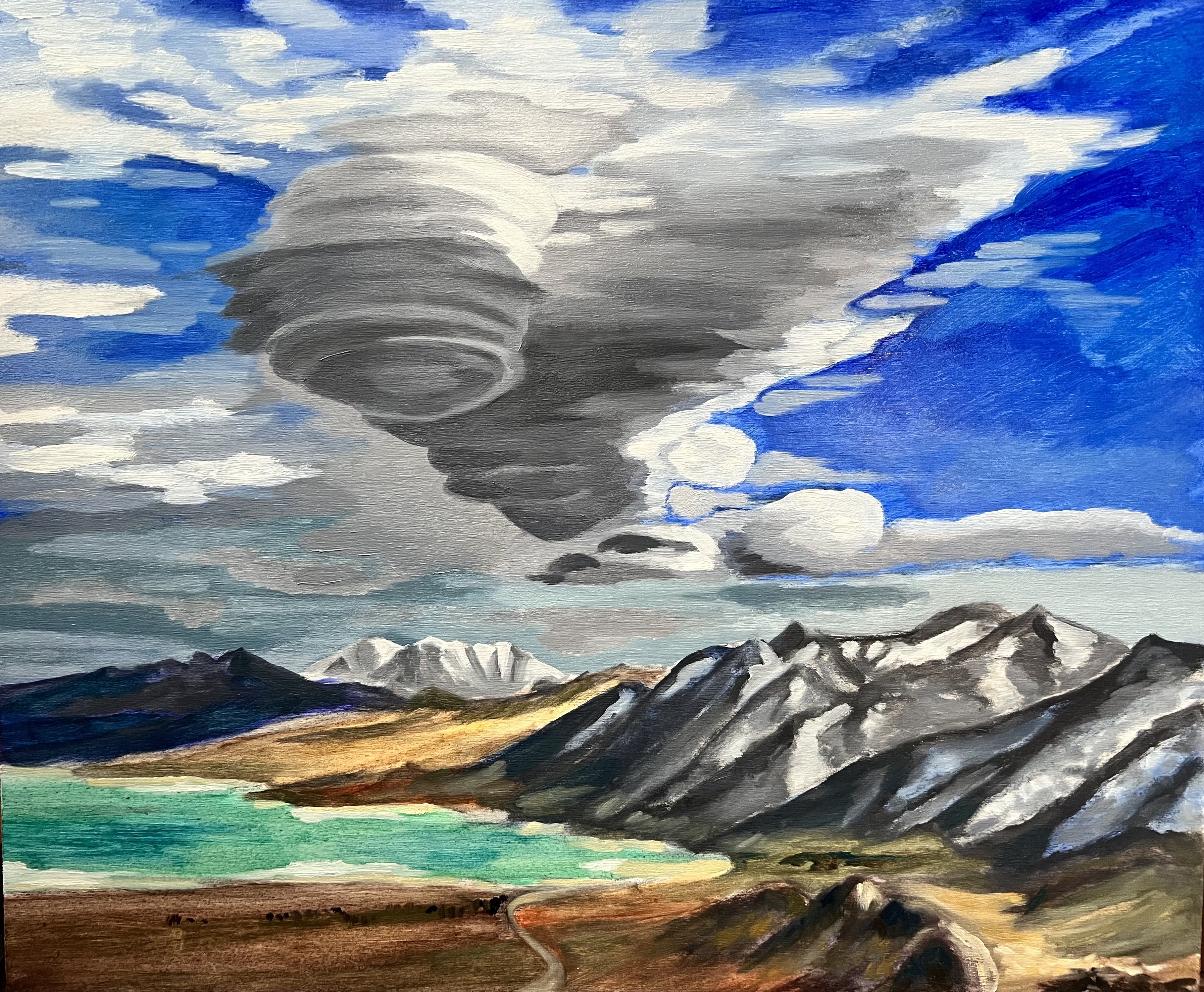
Lenticular clouds above Mono Lake. Robin L. Chandler, 2022.

harsh winter wind

again and again

soul deep snowfall

holding earth

shades of black and gray

among barren landscapes

the mind may know

a springtime of green coming

still in the present

the inescapable now

bitter cold buries secrets

put away

all promises of resurrection

Poem 62. from Appalachian Elegy: Poetry and Place by bell hooks

Profundo

Five Bridges looking south towards Bishop. Robin L. Chandler, 2022.

“It is only after the European invasion and the installation of the colonial regime that the country becomes ‘unknown territory’ whose contours and secrets need to be ‘discovered.’ The viewpoint of the colonizer ignored the profound ancestral perspectives of the [first peoples] who saw and understood this land, in the same way that it ignored the [first peoples] experience and memory.” From Mexico Profundo: Reclaiming a Civilization by Guillermo Bonfire Batalla

“Difference between what you need and what you want is what you can put on a horse.” Eli Whipp, member of the Pawnee Nation, The English

Panum Crater / obsidian

View of the Sierras from Panum Crater. Robin L. Chandler, 2022.

“…..Obsidian, however, was everywhere: clusters of it every hundred yards or so, and individual chips scattered everywhere we looked. Clearly people had lived here. People just like us, not in some general way, but in the sense of having exactly the same DNA…..I tried to see it as it had been: a little village, with big oval huts standing here and there in knots of trees. People sitting around talking, prepping food, working on tools and clothing, eating meals together. Columns of smoke rising from campfires. Village life. It had been like that. They had not been on summer vacation; they were nomads, living in the right place for that time of year, perfectly at home…..That afternoon was a very different experience from our first discovery on the moraine mound. That first time, my feeling was one of joy: they were here! This time, seeing the meadow that had held a high village for thousands of years, my feeling was more complex, and suffused with sorrow. They were here, yes; but now they aren’t…..I’ll just say that to see those black chips of glass on the land is to feel something deep. We all are descended from people who evolved in Africa, some of whom walked out of Africa around 120,000 years ago, and kept walking. It’s important to remember that. Sometimes I think when you are walking all day, it’s easier to remember that, and to imagine what it must have been like. Possibly that’s one of the greatest values of walking up there [in the High Sierras]. It’s a chance to imagine the deep time of human history, and feel it in one’s body, in the act of walking all day.”

An excerpt from Kim Stanley Robinson‘s The High Sierra: A Love Story

inyo

Alpenglow. Mt. Tom sunrise from the North Fork of Bishop Creek. Robin L. Chandler, 2022.

…to east and west roll up the purple ranges,

Foot bound about by leopard-colored hills;

From east to west their serrate shadow changes;

From west to east stream down the tumbling rills.

Mocking the shadeless slopes and sullen ledges,

Through the sunburnt wastes of sage and yellow sand,

Run down to meet thy willows and thy sedges,

O lonely river in a lonely land!

Excerpt from Mary Austin’s poem Inyo