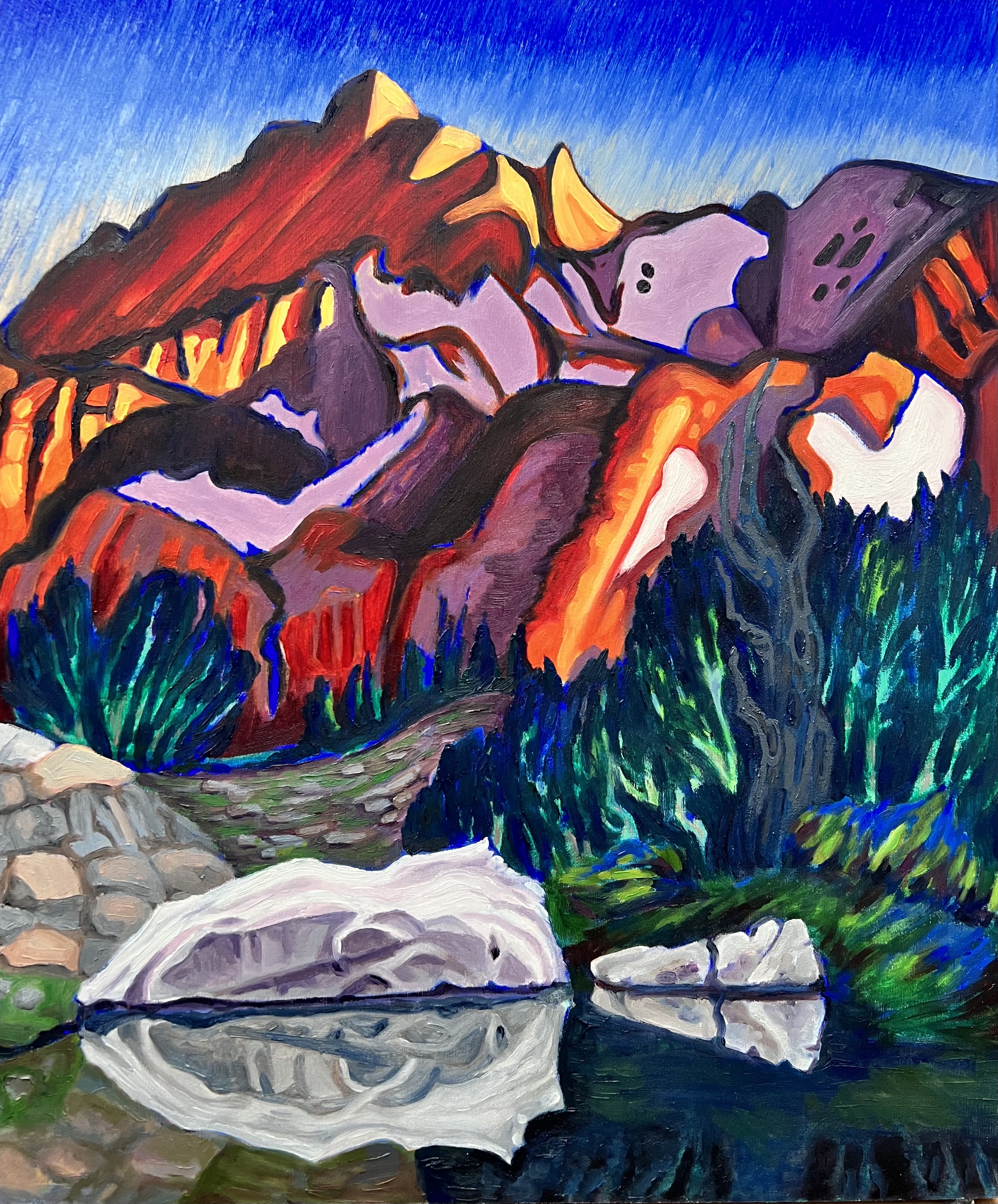
“So is ecology a kind of art? And, of course, art, like anything humans (or members of other species) do, is one kind of “interaction” between us and our environment. The logical conclusion from these definitions is inescapable: art is one aspect of human ecology, and ecological science is a kind of art. And since art is a kind of behavior, it may be an example of ecologically adaptive behavior…..if the art of Audubon and the Hudson River School painters has helped save parts of our biosphere, I’d say they are contributing to human survival – and that’s by definition, adaptive.” (p. 63-64)
“Most forms of Western ethics view persons as independent egos, centers of individual choice and action. But the Buddhist “dependent co-arising” view doesn’t see persons in that way. Ecology and evolutionary biology don’t either. The ethics that inspired these differing views – the Western ego-self view versus the Buddhist eco-self view – come out to be quite different. Aldo Leopold argued articulately, from an ecological perspective, for this broader view of self and community. He believed that ethics depend on the premise that the individual is a member of a community of interdependent parts. His “land ethic” enlarged the concept of this “community” to include soils, waters, plants, and animals.” (p.174)
“When it comes to actions and lifestyles, a world of total interdependence has both a negative and a positive side. On the negative side, anything that a person does can affect the whole system. Our ego-selfish actions have a global reach. But the positive side of total interdependence is that our actions and our choices, no matter how small, can send ripples of healing through the whole system.” (p. 175)”
Excerpts from Bruce A. Byers‘
The View From Cascade Head: Lessons for the Biosphere from the Oregon Coast
 alive in the sea of information