Be Alert! Deer Crossing the Roadway!

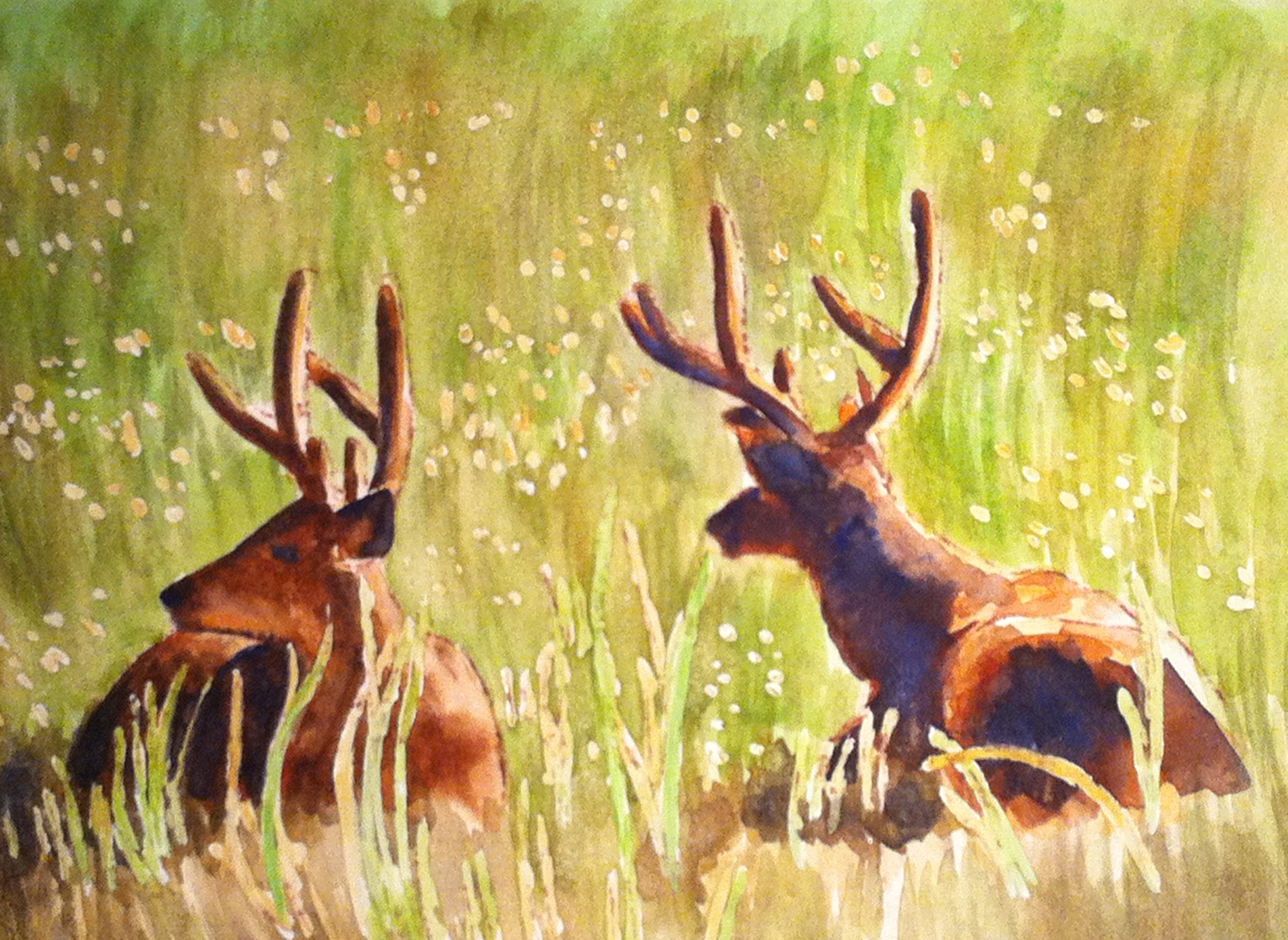
Young deer in the Santa Cruz meadow. Copyright 2013 Robin L. Chandler.

UC Santa Cruz is a special place; where else would you find a traffic sign flashing bright orange “be alert…deer crossing the roadway.” Cycling into work, I laughed lovingly acknowledging both the practical advice and the deeper meaning of mindfulness. Situated on a mountain overlooking the Pacific, the campus is replete with rolling meadows and coastal forests of tanoak, bay laurel, Pacific madrone and the regal Redwoods. An ecosystem intimately shared by animals, plants and people. After a quiet summer, September signals major events in certain campus populations: the academic cycle migration of homo sapiens and the advent of the breeding season for California mule deer. The traffic signal brings some needed intervention to manage the humans and deer inhabiting this space. All summer the bucks have roamed the meadows as a herd while their antlers grew big and strong preparing to compete for a mate. Next spring, fawns begin the cycle anew. Riding up the bike path through the thirsty meadow, I wonder from where the mountain lion watches these migrations and lifecycles. Will I ever see one?

Right mindfulness, an element of the Buddhist eight-fold path, teaches adherents to be alert, present, building awareness of the moment…the path to enlightenment. Earlier this year, I received a gift from the wife of a landscape painter whose work I greatly admire; she connected me to the work of Peter Matthiessen, Buddhist and writer of fiction and many well-respected books about the environment including the National Book Award winner The Snow Leopard.  Trekking through Nepal with the ancient Buddhist shrine Shey Gompa on Crystal Mountain as their destination, Matthiessen and the field biologist George Schaller were seeking research data on the Blue Sheep and the Snow Leopard.  Truly a book about his spiritual journey, Matthiessen finds the revered Lama of Shey who blesses him with a koan “Have you seen the snow leopard? No. Isn’t that wonderful!”  Matthiessen writes “I feel great gratitude for being here, for being, rather for there is no need to hike oneself to the snow mountains in order to feel free.  I am not here to seek the “crazy wisdom;” if I am, I shall never find it. I am here to be here, like these rocks and sky and snow, like this hail that is falling down out of the sun…the absurdity of a life that may well end before one understands it does not relieve one of the duty (to that self which is inseparable from others) to live it as bravely and generously as possible.”

It is the season when deer are on the minds of many. Last weekend we attended the fundraiser for the journal West Marin Review held by Point Reyes Books. Two great women poets read from their work: Kay Ryan and Jane Hirshfield and ironically among the many poems they read, they both chose to read works about deer. Selecting a poem from her book The Best of It, Ryan read “a buck looks up: the touch of his rack against wet bark whispers a syllable singular to deer; the next one hears and shifts; the next head stops and lifts; deeper and deeper into the park.” Hirschfeld choose a poem from The Lives of the Heart and read “a root seeks water. Tenderness only breaks open the earth. This morning, out the window, the deer stood like a blessing, then vanished.

The Swanton Loop

Swanton Pacific Ranch. Copyright 2013 Robin L. Chandler

June and we are blessed again with strawberries. It’s after 5:30PM when I leave work, but the summer sun remains sky high moving towards the solstice. Driving north from Santa Cruz towards Davenport, the Pacific flashes brilliantly on this clear and hot day; along the coast farmers are irrigating their crops. The infinite horizontality brings mindfulness; the day falls away and clarity about the scheme of things returns.  Listening to the Blessed Are album, and I find the Woody Guthrie track Deportee and I softly sing with Joan Baez:

 Is this the best way we can grow our big orchards? Is this the best way we can grow our good fruit? To fall like dry leaves to rot on my topsoil. And be called by no name except “deportees.”

Swanton Berry Farm is my destination. Founded in 1989 by UC Santa Cruz graduate Jim Cochran, Swanton’s is the first commercial organic strawberry farm in California; it is also the first certified organic farm in the United States to sign a labor contract with the United Farm Workers (UFW). The farm stand, where I purchase my two pints of bright red strawberries, proudly displays the UFW flag bearing the black eagle on a field of red.  The UFW was formed as a result of Cesar Chavez’s organizing of Mexican-American and Fillipino American farmworkers to engage in boycotts, hunger strikes and strikes (all based on pacifism) to gain their rights.  The successful 1965 Delano grape strike is the most famous effort. The strawberries are amazing; a delight to see, smell, and taste the sweet and tart delight grown in the sandy soils of the coastline routinely kissed by the sea air. Last year, when Irene Reti’s & Sarah Rabkin’s oral history Cultivating a Movement was published, I read about Jim Cochran’s sustainable practices. Jim described using the Brassica family of plants— broccoli, cauliflower and mustard greens— in crop rotation to improve soil health instead of traditional strawberry farming practices using methyl bromide and Chloropicrin to kill soil disease. At Swanton’s you will never see the plastic covering the fields of commercial growers, indicating chemical fumigation is underway.

This month is also the 38th anniversary of the California Agricultural Labor Relations Act that became law on June 5, 1975 giving farm workers the right to collective bargaining and ensuring “peace in the agricultural fields by guaranteeing justice for all agricultural workers and stability in labor relations.” The act allowed union organizers to meet with farm workers in the fields and for farm workers to select representation by unions such as the UFW to engage in collective bargaining to negotiate conditions of employment.

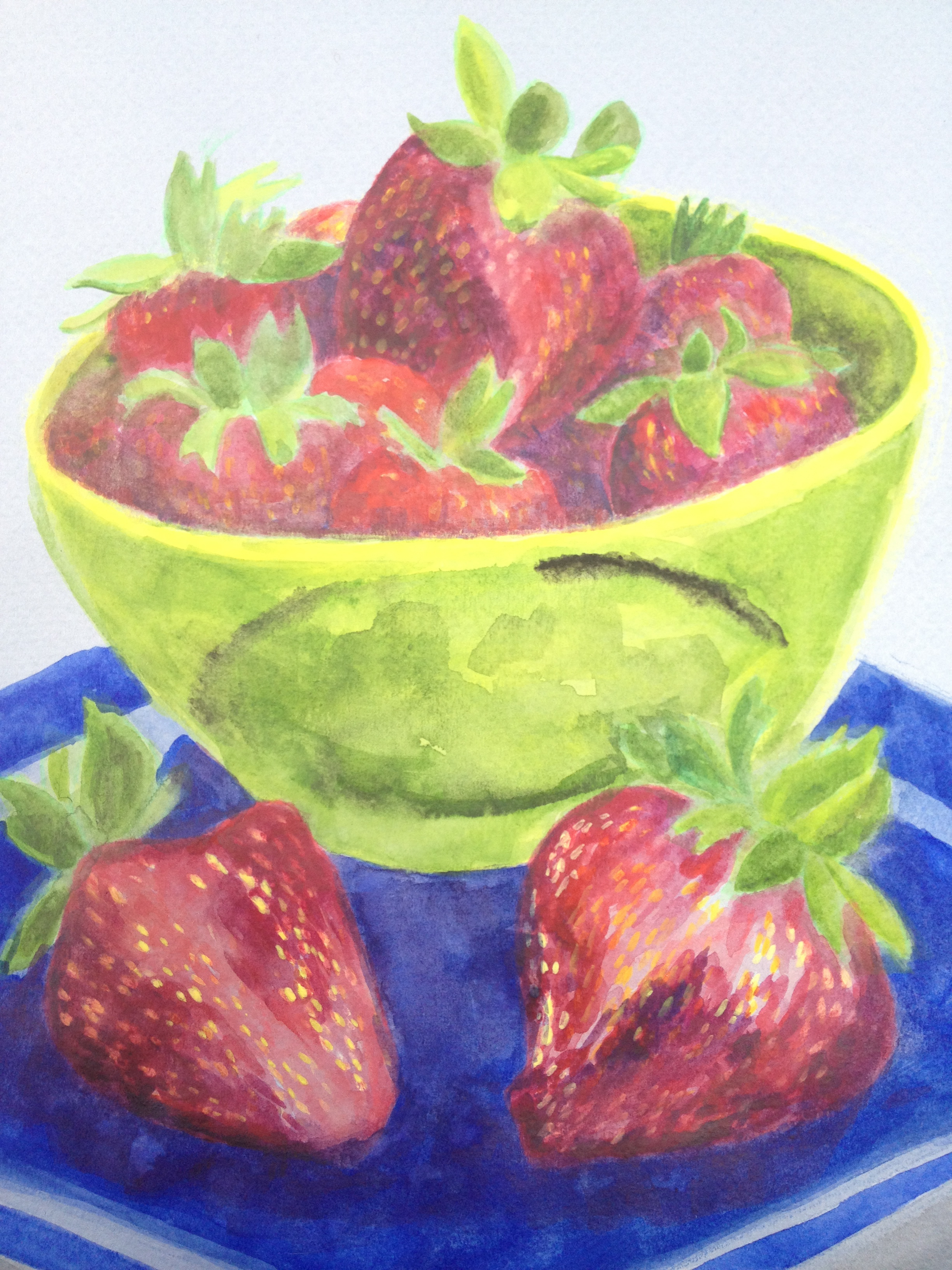
Strawberries. Copyright 2013 Robin L. Chandler

After purchasing my strawberries, I drive out Swanton Road a beautiful loop curving through the Swanton Pacific Ranch, crossing Scott Creek a riparian corridor for Coho Salmon and Steelhead Trout, and winding through forests of Redwoods, Douglas Fir, and Monterey Pine. Surfers say the waves where Scott Creek estuary greets the ocean are the same as Swami’s Beach in San Diego County. The Ranch is beautiful. The furrows nestled amongst the coastal ecosystem; mankind’s geometric abstractions seeking to tame the wilderness topography. Recently I learned about the plein-air painter Sheridan Lord whose inspiring works are with us in the book Things in Place. Sheridan’s farm paintings are pictures “of breathtaking simplicity: the whole surface is occupied by the towering sky and broad fields, which are separated by a mere strip of trees.” Lord’s paintings evoke the environmental writer Peter Matthiessen who quotes the Ojibwa people in his book Nine-Headed Dragon River writing “sometimes I go about in pity for myself, and all the while a great wind is bearing me across the sky.”  Mindfulness is found in many ways: in a song, in a vista, in a painting, in a koan, or in a strawberry.

it must have been the roses

American Beauty. Copyright 2012 Robin L. Chandler

Two years ago, I came to the UC Santa Cruz University Library to manage the project team building GDAO, the Grateful Dead Archive Online.  The petals have all unfolded and the roses are now in bloom. On June 29, 2012 –  just another day at Redwoodstock – we celebrated the opening of the Grateful Dead Archive and the Dead Central Exhibit space  and the launching of GDAO. We sang the song electric for the living archive of all things dead. From the attics of their lives, full of cloudy dreams unreal, all lights all eyes can see, all that’s still unsung.  In just over twenty-four hours, almost ten-thousand visitors from around the world from China to Iran have browsed and searched GDAO and contributed content.  Building GDAO, has been a long strange trip taken with some amazing pranksters dedicated to digitizing the collection, creating metadata, designing the website, considering fair use, searching for rights holders, programming GDAO’s functions and building the virtual machine.  So, as this spectacular tour comes to a close, we know another show lays ahead just a little further down the road.  Update from goin’ down the road and feelin’ “glad”: electronic records archivist Jeanne Kramer-Smythe blogged so sweetly about GDAO in her recent entry Grateful Dead Archive Online: First Impressions  Yee Hah!

Tell me a story Siri

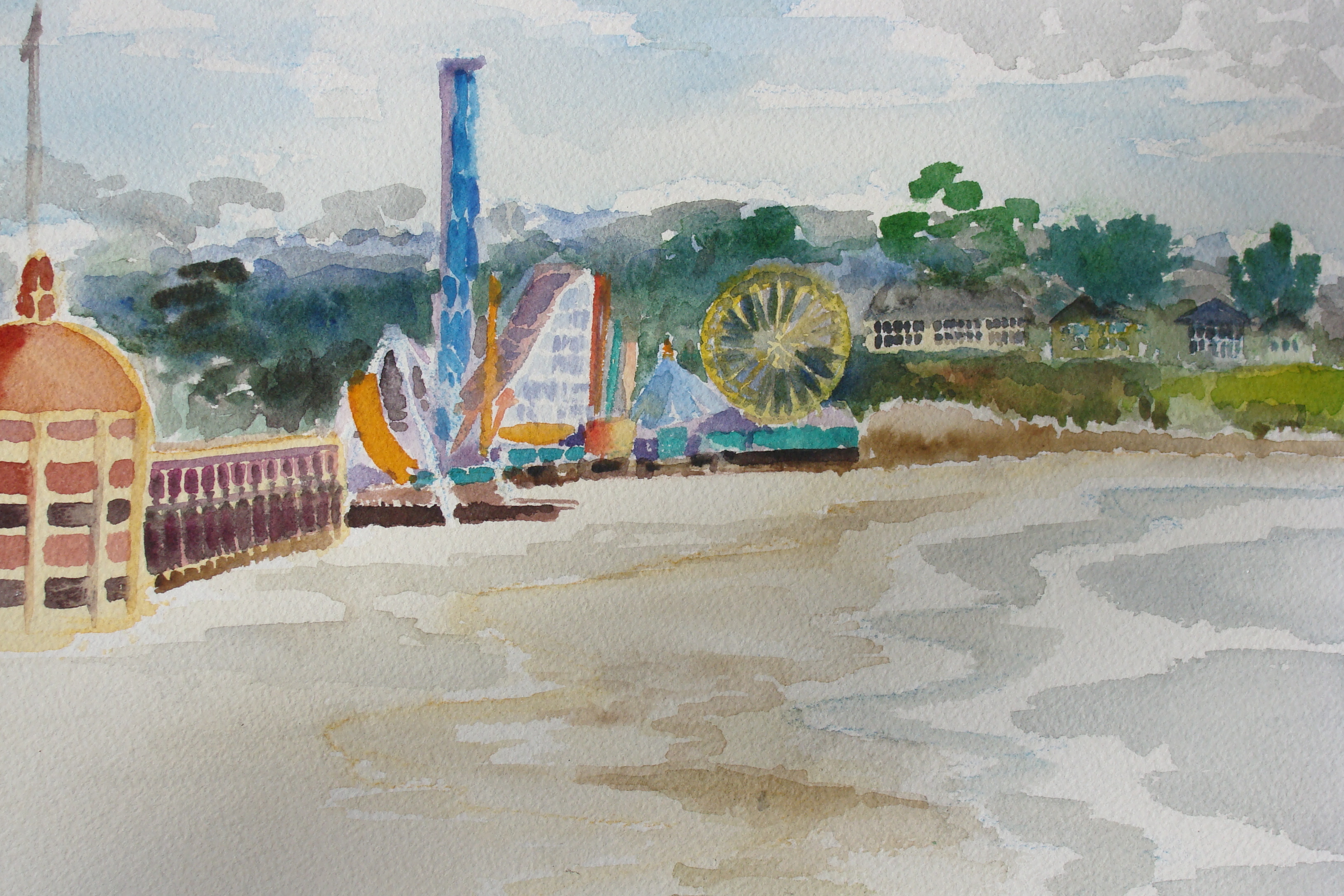
Santa Cruz Boardwalk Copyright 2012 Robin L. Chandler

Nearly every morning I meet my good friend at Java Junction and we bike to work at UC Santa Cruz along the boardwalk and finally up the hill and through the great meadow and the redwood trees. It’s a special way to spend the early morning: connecting with a great friend while cycling in such a beautiful place.  The eight miles pass quickly always made fun by the stories we tell each other.  My friend says “its all about the conversation,” and she is so right; life is all about sharing our stories.

In this age –  our moment in time – it’s all about sharing our stories of the past, present and future and staying connected.  Facebook, Google+, Linkedin, Twitter, WordPress, Yelp and YouTube make this possible. Its also about having the tools to make sense of all this information – to gather, organize, comment, enhance and recommend this information using tools like Digg, Reddit, RSS feeds, Storify, Tumblr, TweetDeck and Unilyzer to name but a few.  My life in archives and libraries is all about collecting, preserving and making accessible our culture’s stories – and it is a broad range of stories – published and unpublished, formal and casual, analytical and subjective.

At the recent WebWise 2012 conference we learned about many exciting projects funded by the Institute of Museum and Library Services (IMLS) to help individuals and groups create, share and preserve “stories” and build tools to make sense of and use this information. Simply put its about making it easier to make connections.  Dave Isay founder of StoryCorps spoke passionately about his belief in the power of the microphone.  A simple, straightforward format places two people in front of a microphone for forty minutes and their stories are recorded.  While it does not take the place of formal oral history, StoryCorps capture an important snapshot of people’s lives in space and time.  In over eight years, StoryCorps has captured over 40,000 interviews with over 70,000 people that are now archived in the Library of Congress.   David Klevan of the US Holocaust Museum described the sobering but important work of the Remember Me? Project which uses Facebook and Twitter to release photographs of children (now adults) orphaned by the Holocaust and World War II with the goal of reuniting them with surviving family members worldwide.  Eileen McAdam of the Hudson Valley Sound and Story Project described her project’s work to share sections of formal oral histories using new technologies synchronizing oral history snippets with GPS enabled mobile apps.  Doug Boyd of the University of Kentucky Digital Library Project to create the Oral History Metadata Synchronizer to dynamically index audio and video digital files creating access points to collections of oral histories.

Today’s technology is increasingly about sharing and staying connected.  We have a world of knowledge at our fingertips and a world populated with individuals we can tap into <and they to us> in an instant 24/7.  As in past revolutions, our emerging technologies provide new opportunities to share and learn about each other.  Creating new opportunities to build tolerance and patience, and perhaps empathy for one another. To make a connection.  It is a promising story with promise to fulfill.

Just off the beaten path….our precious California State Parks

New Brighton State Beach. Copyright 2011 Robin L. Chandler

On May 21st we started our journey at the Salinas River National Wildlife Refuge and ended some eight hours later at the wharf in Monterey.  On three sequential Saturdays some fifty adventurers hiked thirty miles in the distinguished company of Sandy Lydon, Historian and Cabrillo College faculty, and Gary Griggs, Director of UC Santa Cruz Institute of Marine Science. Today would be the final ten-mile leg of  Monterey Bay Walk 3. May 7th we hiked from New Brighton State Beach in Capitola to just north of the Pajaro Dunes.  May 14th we ambled from Zmudowski State Beach to the Salinas River.  This morning a flock of Caspian Terns greeted us by the riverbank as we walked through the refuge to the beach. All was beautiful: endless sky, sea and sand.  My day’s walk would be measured by miles of words and punctuated by meters of awed silence –  awe inspired by the magnificent Monterey Bay. My companions on this adventure included my amazing friends Irene Reti and Sarah Rabkin.  Both passionate environmentalists, they have shared their love of nature, understanding of human frailty and hopes for the future in their recent books: Reti’s Kabbalah of Stone and Rabkin’s What I Learned at Bug Camp: Essays on Finding a Home in the World.   I am grateful for all the knowledge they shared with me about the human and natural history of lands between Santa Cruz and Monterey on these special  Saturdays in May.

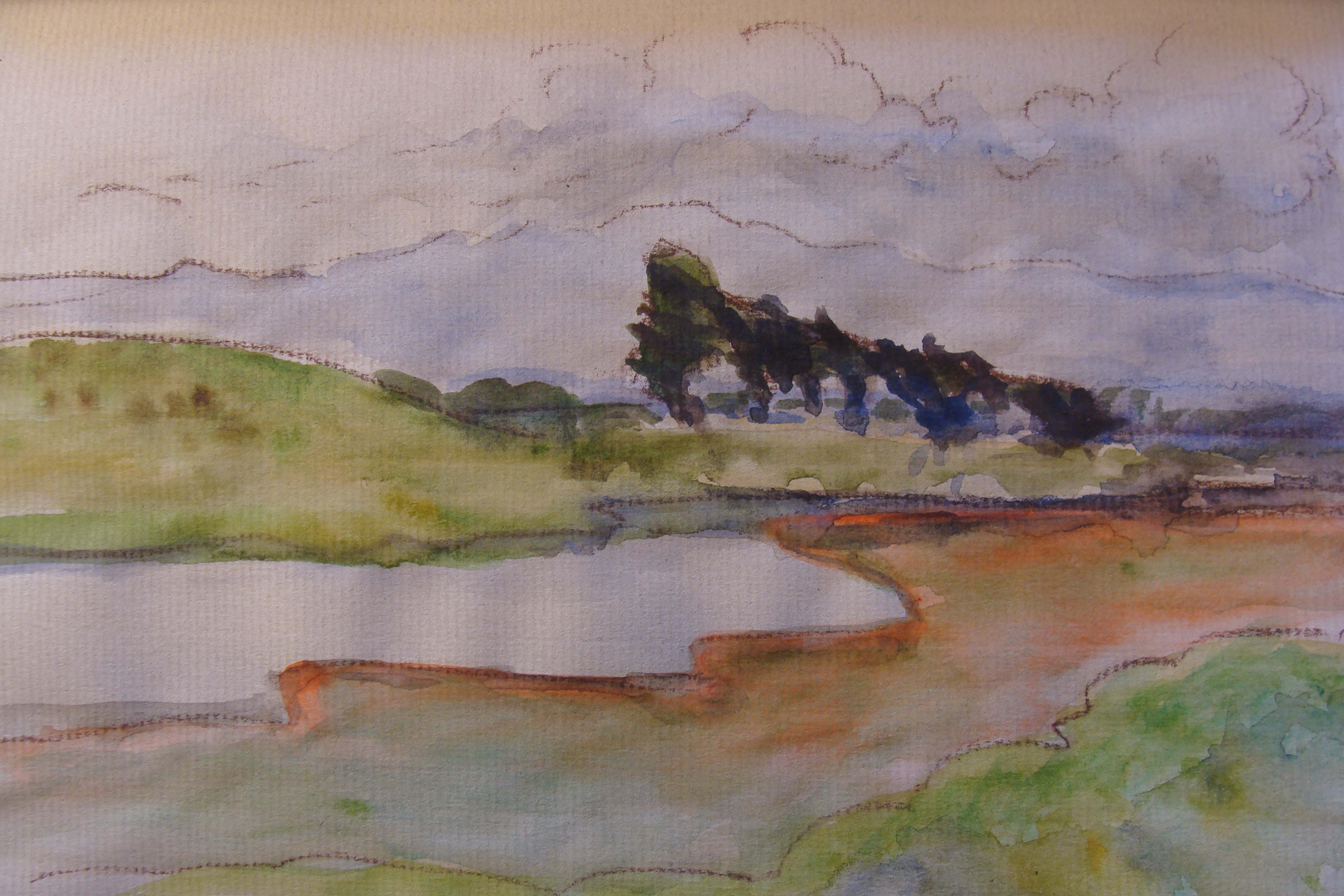
Sandholdt State Park. Copyright 2011 Robin L. Chandler

Reflecting on the walks, many images delight my mind — images conjured by the stories of Sandy and Gary, the two  trip leaders: the realization that Monterey Bay is not a pristine environment, no location on the Bay has been spared the impact of humankind; the image of Chinese fishing sampans on the beach now known as New Brighton; the impact of earthquakes, erosion and tidal forces on the coastline; the story of Gaspar de Portola and his Spanish troops walking what would become the El Camino Reale as he searched in vain for Monterey Bay; developers’ insistence on building at the ocean’s edge, imperiously disregarding the cycle of el nino and la nina climate patterns on urban planning; the mother gray whale and her baby breaking the surface with their spouts; the enormous American bullfrog, an invasive species found on the shore of the Salinas River; the bachelor otter pod at Moss Landing; the snowy plovers guarding their nests and chicks on the beaches near to Monterey; and the clouds: light fogs at a far distance resting lightly on the water — quickly burning back leaving a brilliantly bright day where sunlight danced crisply on the waves, or the dramatic bands of clouds moving fast north to south, precursors of the front that would bring unseasonal rain from Santa Cruz to San Diego.

Fort Ord State Park. Copyright 2011 Robin L. Chandler

For thirty miles from Santa Cruz to Monterey we walked on the beach  – a pathway formed from a patchwork of California State Parks and Federal Wildlife Refuges  — a ring of bright white sand circling the Monterey Bay Marine Sanctuary.  Seventy California State Parks will be closed because of our state budget crisis.  Four of these parks are beach parks found along the shores of Monterey Bay, and two of them we crossed during our bayside journey: Zmudowski State Beach and Moss Landing State Beach.  In November 2010, the majority of California’s citizens elected NOT to  pass Proposition 21, a referendum proposing an annual $18.00 vehicle license fee.  Such a small price to pay for so much beauty….. just off the beaten path…..our precious California State Parks.

Dark, salt, clear, moving, utterly free*

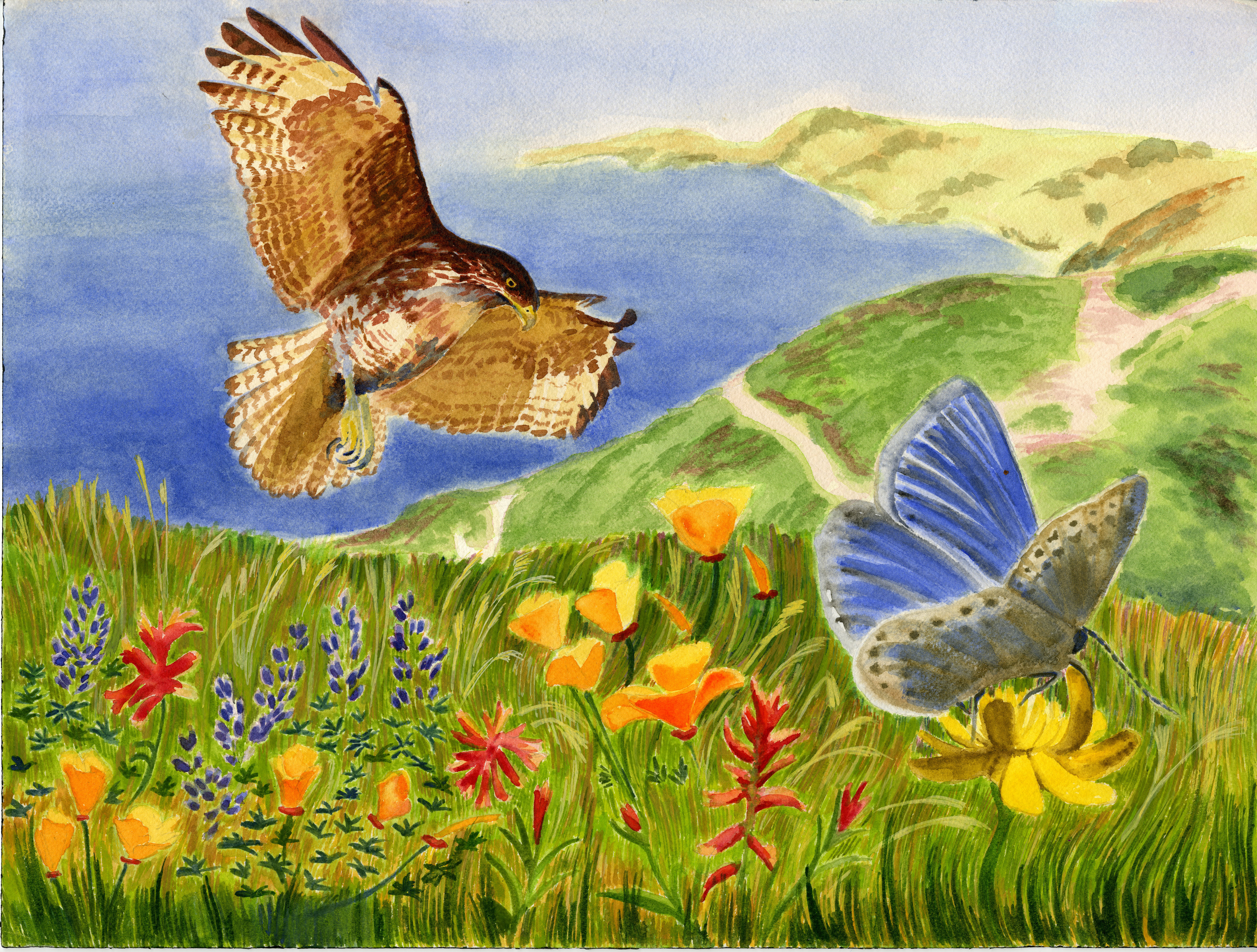
Marin Headlands on the Pacific Ocean. Created by Robin L. Chandler. Copyright 2010 National Park Service.

In Moby Dick, Herman Melville described the Pacific Ocean as the “tide-beating heart of the earth that makes all coasts a bay in it.”   Describing the interconnectedness of the lands ringing the Pacific Rim he wrote “the same waves wash the moles of the new-built Californian towns, but yesterday…..lave the faded but still gorgeous skirts of the Asiatic lands, older than Abraham; while all between float milky-ways of coral isles, and low-lying, endless, unknown Archipelagoes, and impenetrable Japans.”  On Friday March 11, 2011, mankind was humbled by a 9.0 magnitude quake striking the northeastern coast of Japan and triggering a Tsunami whose force quickly silenced thousands of voices near Sendai and damaged harbors – including Crescent City and Santa Cruz –  5,000 miles to the east along the North American coastline.  Nature will always bind what man’s competitive psyche seeks to distance.  Hokusai’s woodblock print “The Great Wave” part of his  series Thirty-six Views of Mt. Fuji has long been a favorite of mine; mesmerized by the beauty of the wave, it is only now, newly humbled, that I truly grasp the precarious position of the fishing boats depicted in the print.

Last weekend I attended the Point Reyes Book’s third Geography of Hope conference bringing together people, place and literature to discuss water as both a life-giving and a life-taking force.  As rain poured outside in biblical proportions, the Japanese people were never far from our consciousness in this community located on the San Andreas Fault so near the Pacific Ocean.   An inspiring  gathering, we listened rapturously to poets, writers and scientists – including Robert Hass, Brenda Hillman, William Least Heat Moon, Tim Palmer, Philip Fradkin, Eddy Harris, Peter Gleick, Evelyn Reilly and Julia Whitty —  speak about rivers, lakes and oceans and their hopes and fears for the health of our planet.  The desire to teach children  – through art, literature and science – about the connections between humans and nature was a major theme, but concerns about the potential of social media and hand-held technology to disconnect society from the natural world was an undercurrent of the gathering.

My work as a digital archivist working in academic libraries fosters my belief that social media can be leveraged to enhance our connections with and understanding of the natural world.  If any good can be drawn from the tragedy of the Japanese earthquake and Tsunami, it is the knowledge that this is  likely the best documented disaster in recent history, and this information will be repurposed for constructive use. Numerous digital images and video recordings of the Tsunami’s destructive power were captured by survivors of these events and uploaded for sharing on social media sites. This week a BBC article published on March 21, 2011 “Japan Tsunami to Help Predict Future Waves” reported  how scientists will use this data to study Tsunamis. At the 2011 Institute for Museum and Library Services (IMLS) Webwise conference, Dr. Francine Berman, Vice President for Research at the Rennslaer Polytechnic and Dr. Joshua Greenberg, Director of Digital Information Technology and Dissemination of Knowledge Program at the Sloan Foundation delivered keynote addresses making several complimentary points: the role of the “crowd and the social network” in the generation of observational research data; the need for a macroscopic approach to gather comprehensive data sets and analyze and visualize data at scale; and the need for archivists, librarians and museum professionals to be central players in data curation workflows to appraise, manage, preserve and provide access to data supporting ongoing research.  Its important to note that this kind of work is underway.  The National Science Foundation (NSF) funded DataONE a multi-institutional and cross-discipline collaboration of universities and organizations including the California Digital Library to lay the foundation for a distributed framework and sustainable cyberinfrastructure that meets the needs of science and society for open, persistent, robust, and secure access to well-described and easily discovered Earth observational data.

Webwise also featured workshops and sessions on Libraries and Museums engaged in STEM (Science, Technology, Engineering and Mathematics) Learning.  STEM is part of President Obama’s program “Educate to Innovate,” a campaign to improve the participation and performance of America’s students in these disciplines.  Teachers, librarians and museum staff are developing many fun and engaging learning modules using social media and technology.  One particular module — Habit Tracker – caught my eye; I saw a demo of the prototype at the conference.  Using the Apps developed for iPhone and iPad2 technology, Habitat Tracker will help students learn about the nature of science by learning to ask their own questions about the natural world, recording observations, performing analysis and participating in peer review with fellow students.

A humble respect, enjoyment and love of the natural world and a belief in the utility of social media technology and services are not mutually exclusive.  They can be symbiotic and when so joined the resulting analysis can support greater understanding of the natural world and our place in the cycle of life.  It is my hope that technology advancements – like social media –  will bring individuals greater engagement with nature and help humankind shoulder the stewardship responsibilities required to ensure the natural world survives for future generations.

*From the poem At the Fish Houses by Elizabeth Bishop read by Eric Karpeles at the Geography of Hope Conference

part of something greater

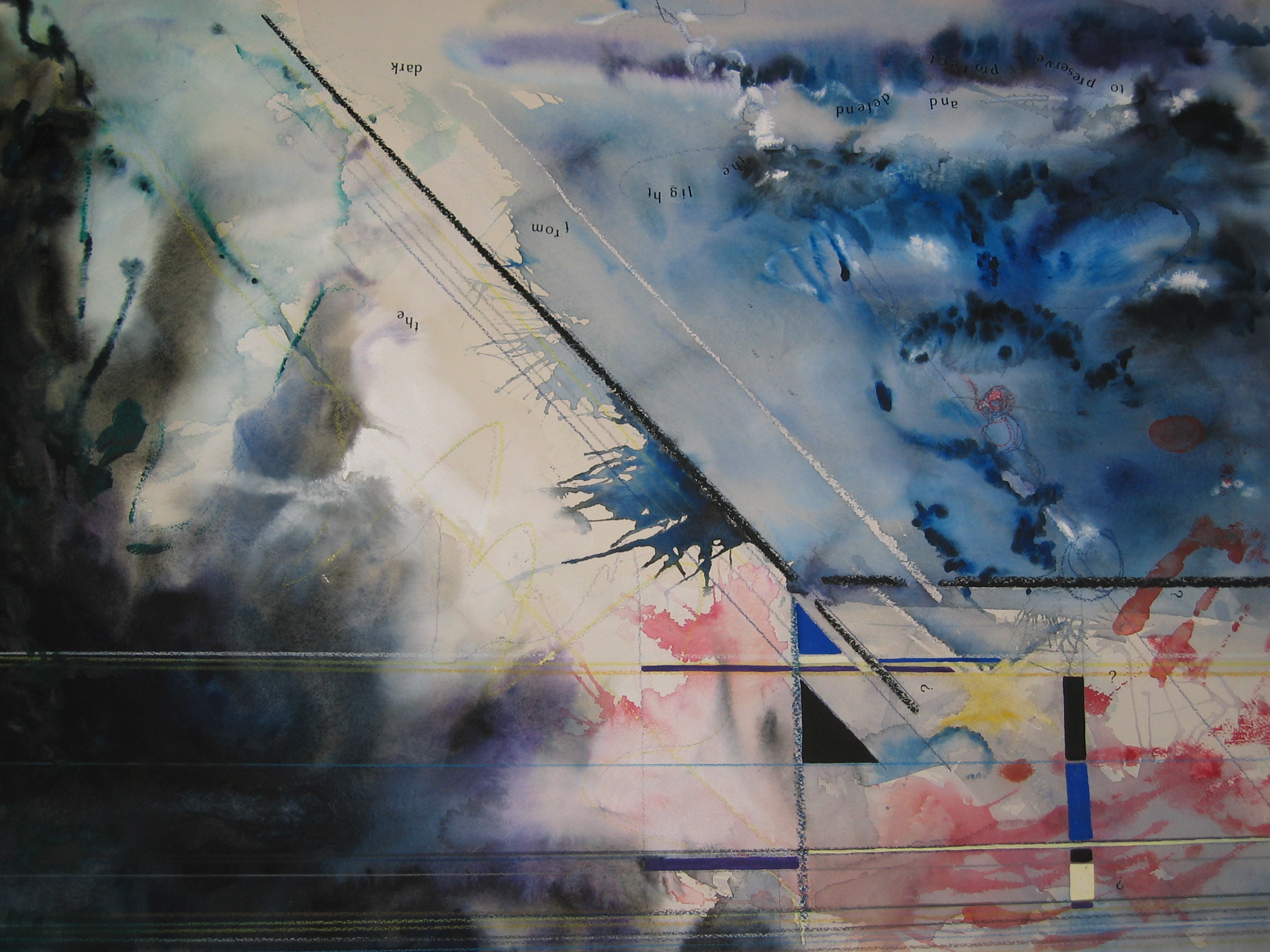
Between the Dark and the Light. Copyright 2010 Robin L. Chandler

The Rabbi’s words from Psalm 23 hang in the stillness of the First Congregational Church.  Her clear strong soprano sings “yeah that I walk through the valley of death, I shall fear no evil, for you are with me.”  Some two hundred voices join her singing the prayer; my voice cracks a little, overcome with feelings I didn’t realize were buried.  On January 13, I attended the “American Unity Town Hall” in Santa Cruz hosted by the Honorable Sam Farr seventeen term Member of Congress from 17th Congressional District of California.  The church’s pastor opened the meeting with the words “I need to be with a group of people tonight for healing and growth.”  Congressman Farr followed reflecting on Congresswoman Gabriele Giffords “for all the wrong reasons, the world is now aware of how special you are” and “our children are being raised on hate talk…..a democracy based on negative talk cannot survive.”

A community gathered that night in an ecumenical setting to seek meaning from tragedy and reaffirm belief in our republic’s democratic process.  Wendell Berry wrote in The Way of Ignorance “our religious principles are justice, mercy, peaceableness, and loving kindness toward fellow humans and the gifts of nature, as our political principles are freedom confirmed in law, honesty, and public accountability.  These are not the principles of a party. These are our free inheritance as human beings and citizens living under the Constitution of the United States.”

The senseless shooting of Congreswoman Giffords and the deaths of six others in Tucson are a tragedy;  the impact of that moment resonates in Santa Cruz in many ways.  We lost Gabe Zimmerman, Director of Community Outreach for Congresswoman Giffords; he was a University of California, Santa Cruz (UCSC) 2002 graduate in Sociology.  UCSC Professor Paul Lubek said “Gabe fulfilled the ideals of the University….he engaged in public service to perform social justice.” A few days after we absorbed the events in Tucson,  campus administration announced the threat of a possible active shooter at UCSC on January 18.  Living with guns and acquiring the skills to survive an active shooter attack are sadly becoming the norm, and I ask: was this the intended outcome of our Constitution’s Second Amendment the right of the people to keep and bear arms shall not be infringed?  Sometimes it feels like Frederick Jackson Turner ‘s historical thesis has been revised:  the American Frontier was closed, but now it’s officially reopened! Life is mimicking the final scenes from Gunfight at the OK Corralthe great vendetta myth of the American West. Yeah, that was in Tombstone….Arizona. Irony or foreshadowing?

In the last week my healing has begun, but as January – the gateway to the new year —  closes I wonder what the rest of the year will bring.  Ever hopeful, I walk through the doorway inspired to climb the mountains ahead and committed to being a better listener  and more attuned to sufferings around me.  Speaking at the Memorial Service in Tucson, President Obama quoted from the Book of Job “I looked for light and found darkness” and he asked us all  “to expand our moral imaginations” and “to talk with each other in a way that heals, not in a way that wounds.” Because “how we treat one another is entirely up to us” and  “the forces that divide us are not as strong as the forces that unite us.”  And in his State of the Union address, he said “amid all the noise and passion and rancor of our public debate, Tucson reminded us that no matter who we are or where we came from, each of us is part of something greater – something more consequential than party or political preference…..we are still bound together as a people [and] what we can do  – what America does better than anyone else – is spark the creativity and imagination of our people…..we do big things.” We can climb the mountains ahead of us.