San Francisco seen from the Port of Oakland. Robin L. Chandler Copyright 2015.
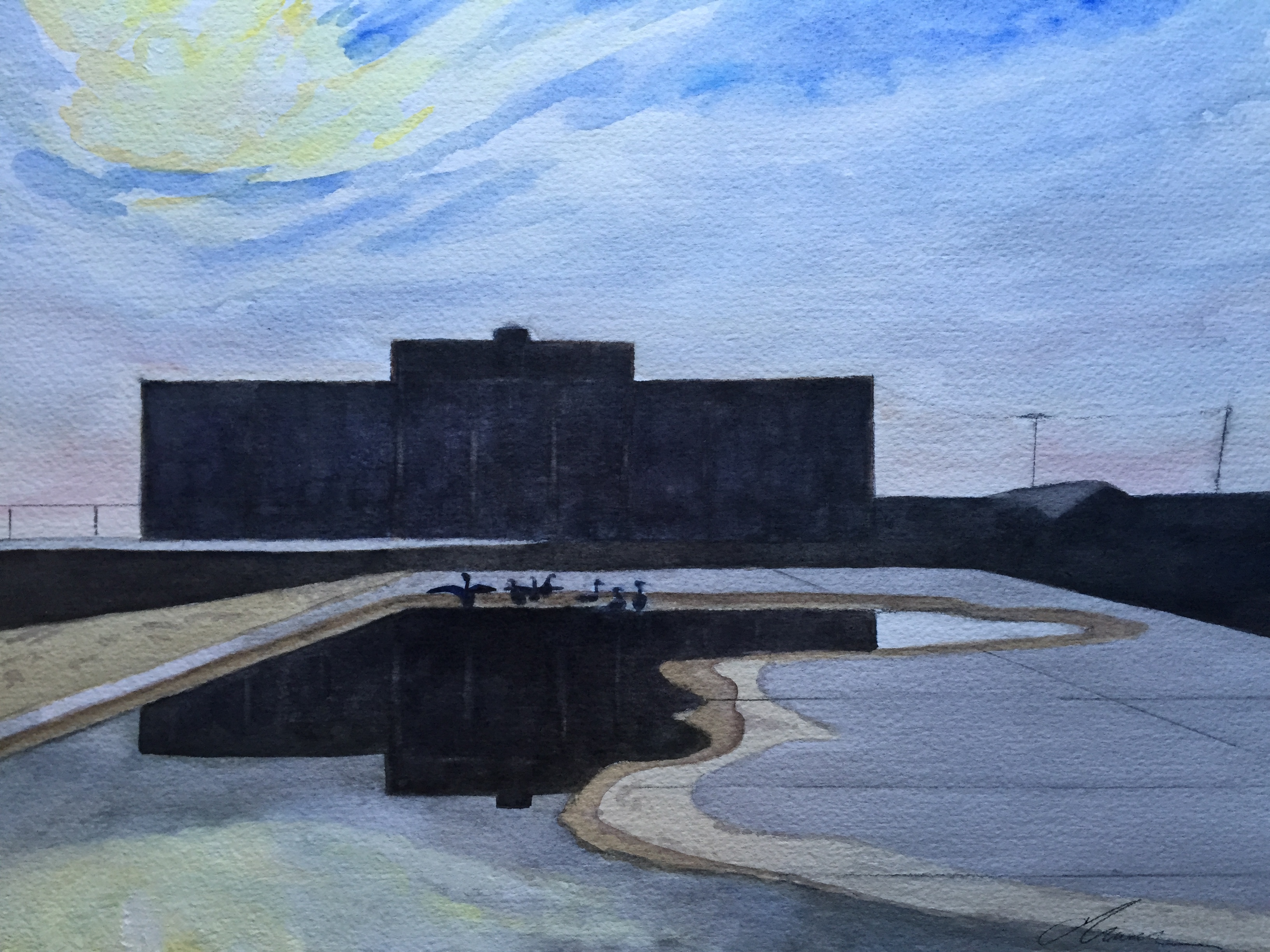
Saturday morning we woke to rain. It was a happy shock, given California’s drought. Dropping off the car for an oil change, I asked the mechanics to install new wiper blades. Overreaction? Overly optimistic? Only time will tell. Regardless, the skies put on a tremendous show as the front pushed across the region. It was an opportunity to paint a special place where sky, sea and scape meet with spectacular results. Shoreline Park operated by the Port of Oakland offered a grand stand to capture the atmospheric show: cumulous clouds towering over the San Francisco skyline situated on a bay reflecting the sun’s blinding light. It is a rare gift to live near a city blessed with the drama of sea and sky providing artists an opportunity to capture light reflective and translucent.
J. M. W. Turner lived along the London’s river Thames and visited Venice with its Grand Canal. This summer the De Young Museum hosted an exhibit “Painting Set Free” sharing Turner’s landscapes drawn from the last fifteen years of his career. It is a show not to be missed. Peter Ackroyd’s biography of Turner explains the artist’s first encounter with Venice in 1819: “his first thoughts on seeing the floating city are not recorded but we may imagine the response of one who was so deeply attuned to the movement of water, to the passage of light, and the intermingling of the sun among the waves…..he stayed for only five days on this occasion but the city seized his imagination; he filled some 160 pages of his sketchbooks with drawings and groups of drawings. He also executed some wonderful watercolors of the Venetian morning, where the translucent and ethereal light of the city is evoked in washes of yellow and blue. That sense of light never left him. It irradiates much of the rest of his work.”
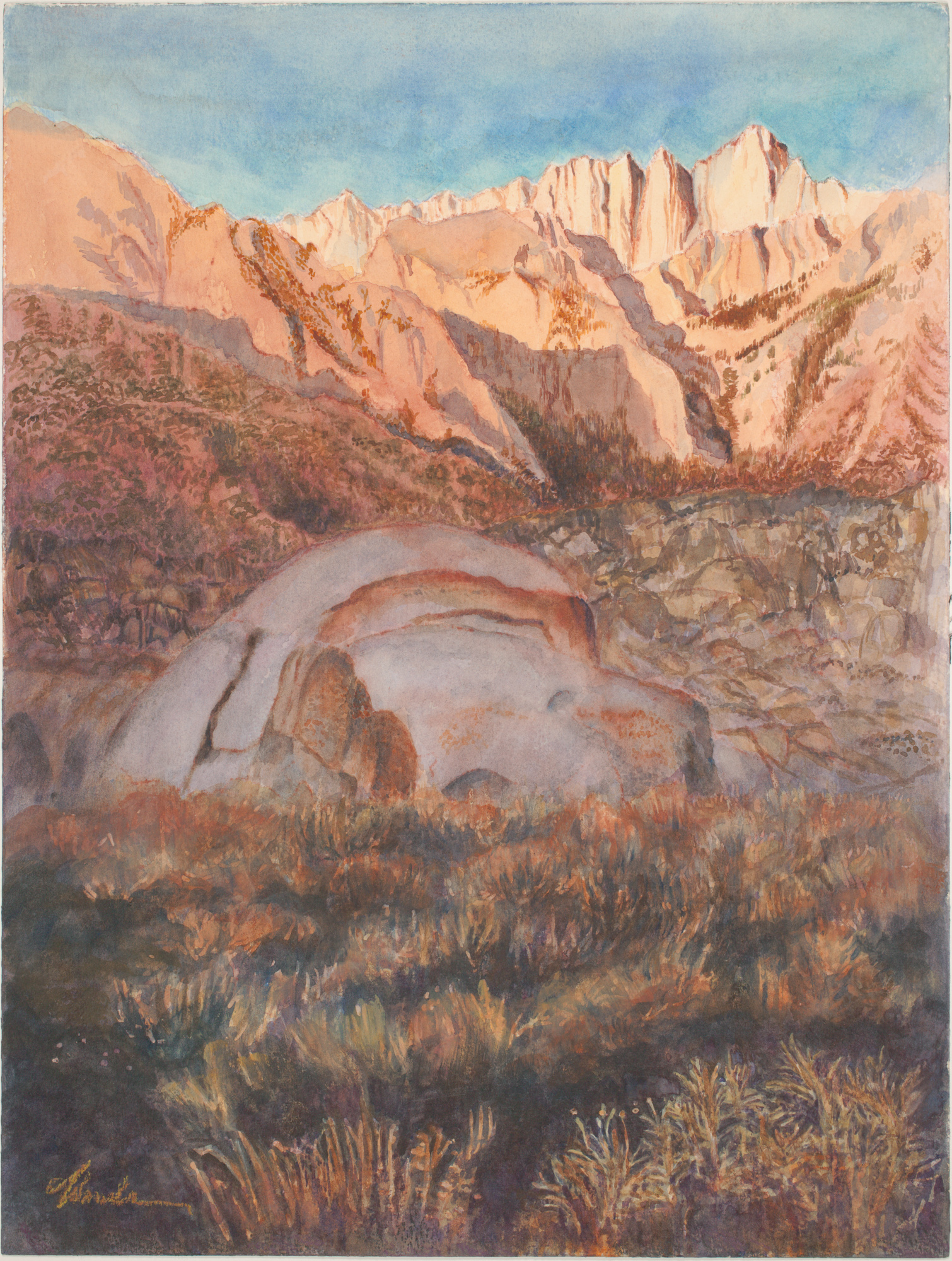
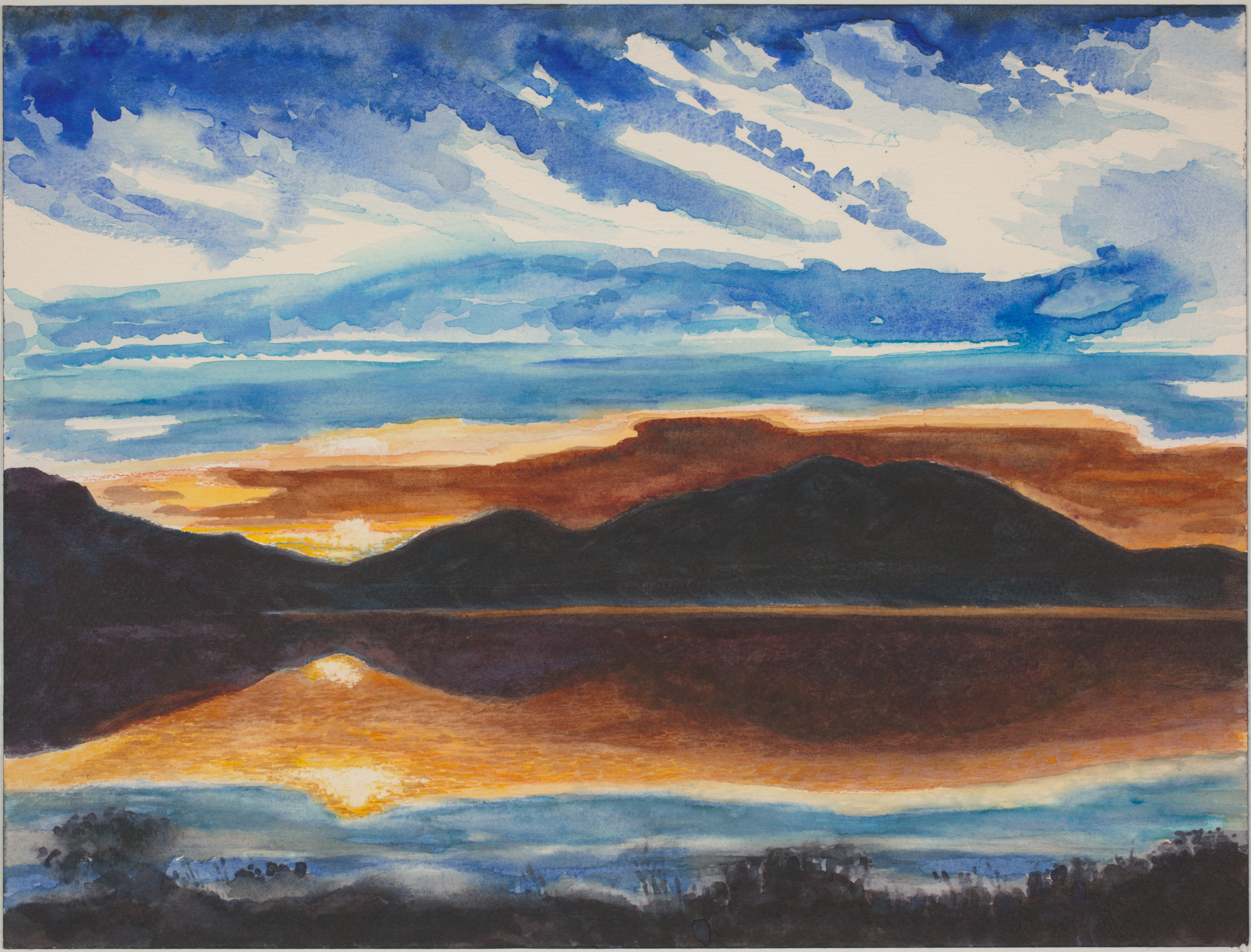
Mt. Whitney at sunrise. Robin L. Chandler copyright 2014.
In Bernard Berenson: A Life in the Picture Trade, Rachel Cohen describes how Berenson, revolutionized art history by his beliefs that “one did not need to be steeped in history or iconography in order to respond to paintings…one could be in an active relationship with paintings…one’s own private and profound experiences of them was not just for the rich or gifted but a natural capacity of the human mind and therefore available to everybody.” Paintings, wrote Berenson, “hate people that come to them with anything but perfect abandon.” This month an exhibit of my watercolors hangs at the Sweet Adeline Bakeshop in Berkeley. Watercolors lend themselves well to my life in transit: they are light to carry, rapidly used, and quick to dry. As I walk and bike near home and work, or travel, I discover stories in the landscape. Watercolors and brushes at the ready, I stop to capture the moment with quick sketches. Some of these sketches mature into more detailed works created back in the studio.
While I firmly believe historical context is not required to enjoy art, it does, without a doubt, add to the experience. Depicting wild or urban settings, my paintings draw inspiration from the Hudson River School and Tonalism, groups of artists who expressed their experience of nature in very different terms. Hudson River School painters – including Frederic Church and Albert Bierstadt – wrought panoramic vistas celebrating the magnificence of the land in sharply defining light. Emphasizing mood and shadow, the breaking dawn, gray or misty days, or light bleaching out sharp contrasts, Tonalist painters – such as George Inness and James McNeill Whistler – softly rendered landscape forms in their paintings. Published in A Life in Photography, the painter and photographer Edward Steichen wrote “by taking a streetcar out to the end of the line and walking a short distance, I find a few wood lots. These became my stomping grounds, especially during autumn, winter and early spring. They were particularly appealing on gray or misty days, or very late in the afternoon or twilight. Under those conditions the woods had moods and the moods aroused emotional reactions that I tried to render…”For those of you unable to see the exhibit in person, I share the paintings with you now. Bring your perfect abandon and choose your perfect soundtrack to view the pictures at the exhibition. Some may choose Mussorgsky, but for today’s viewing I choose Rufus Wainright‘s Release the Stars.
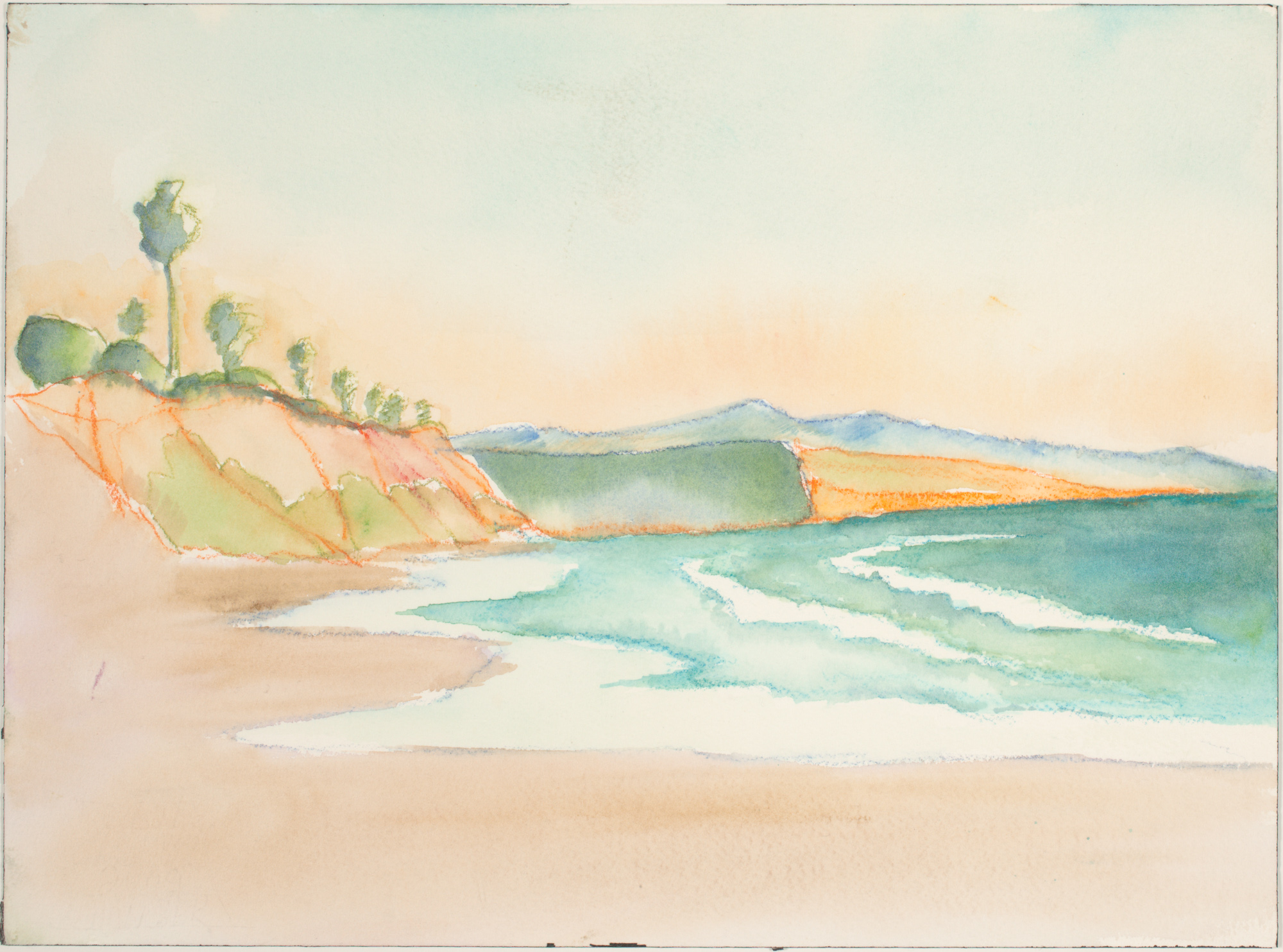
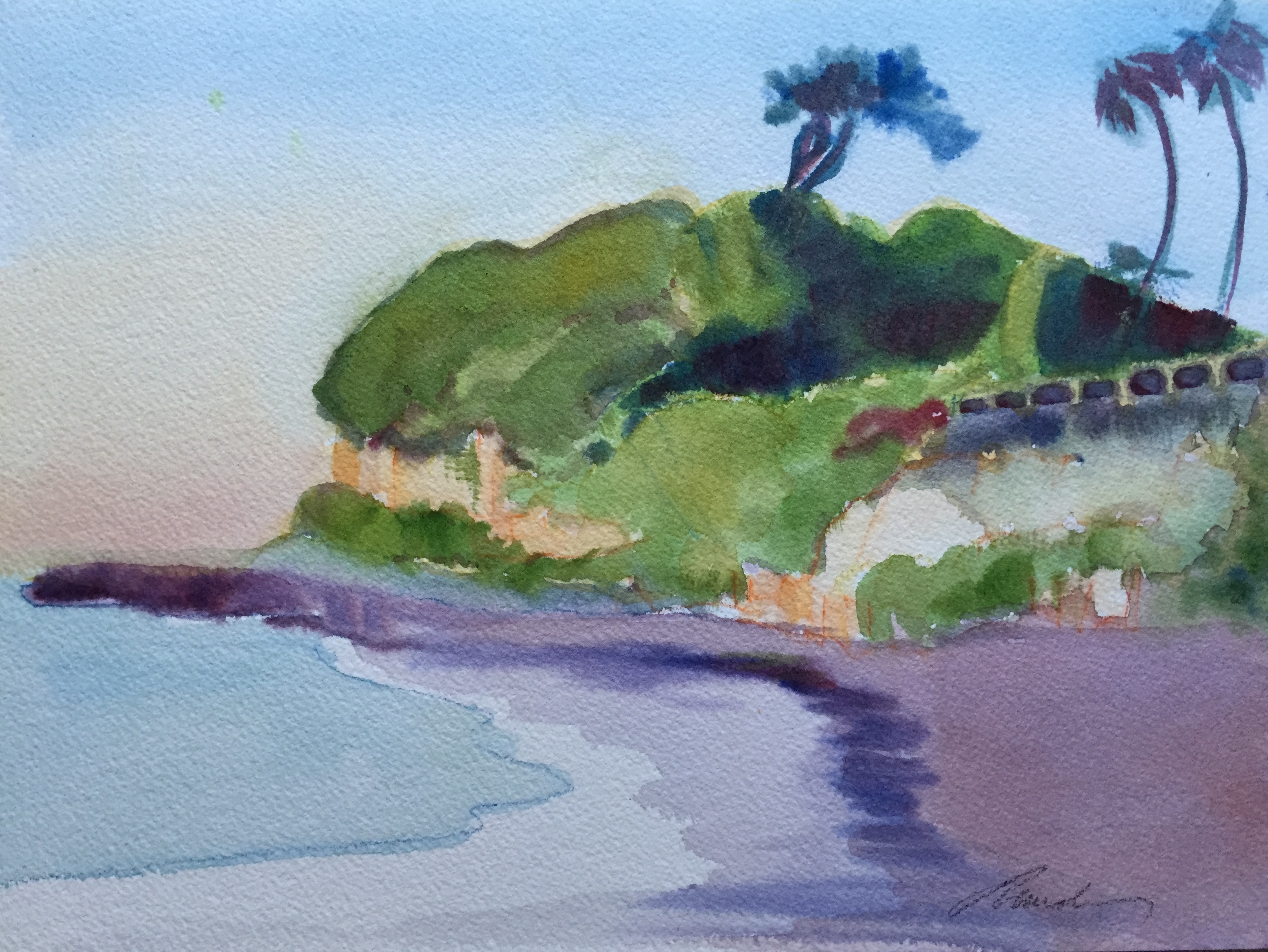
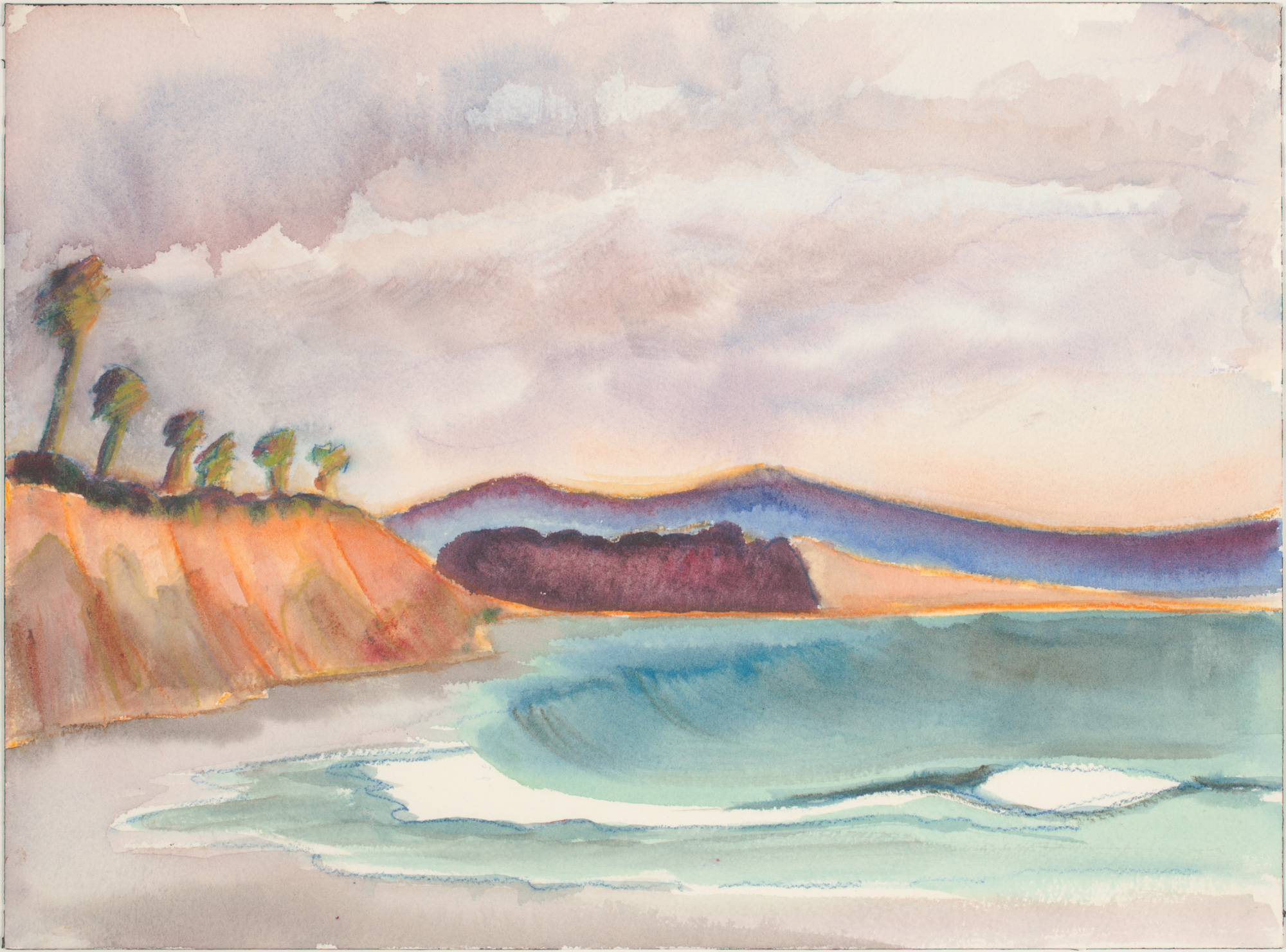
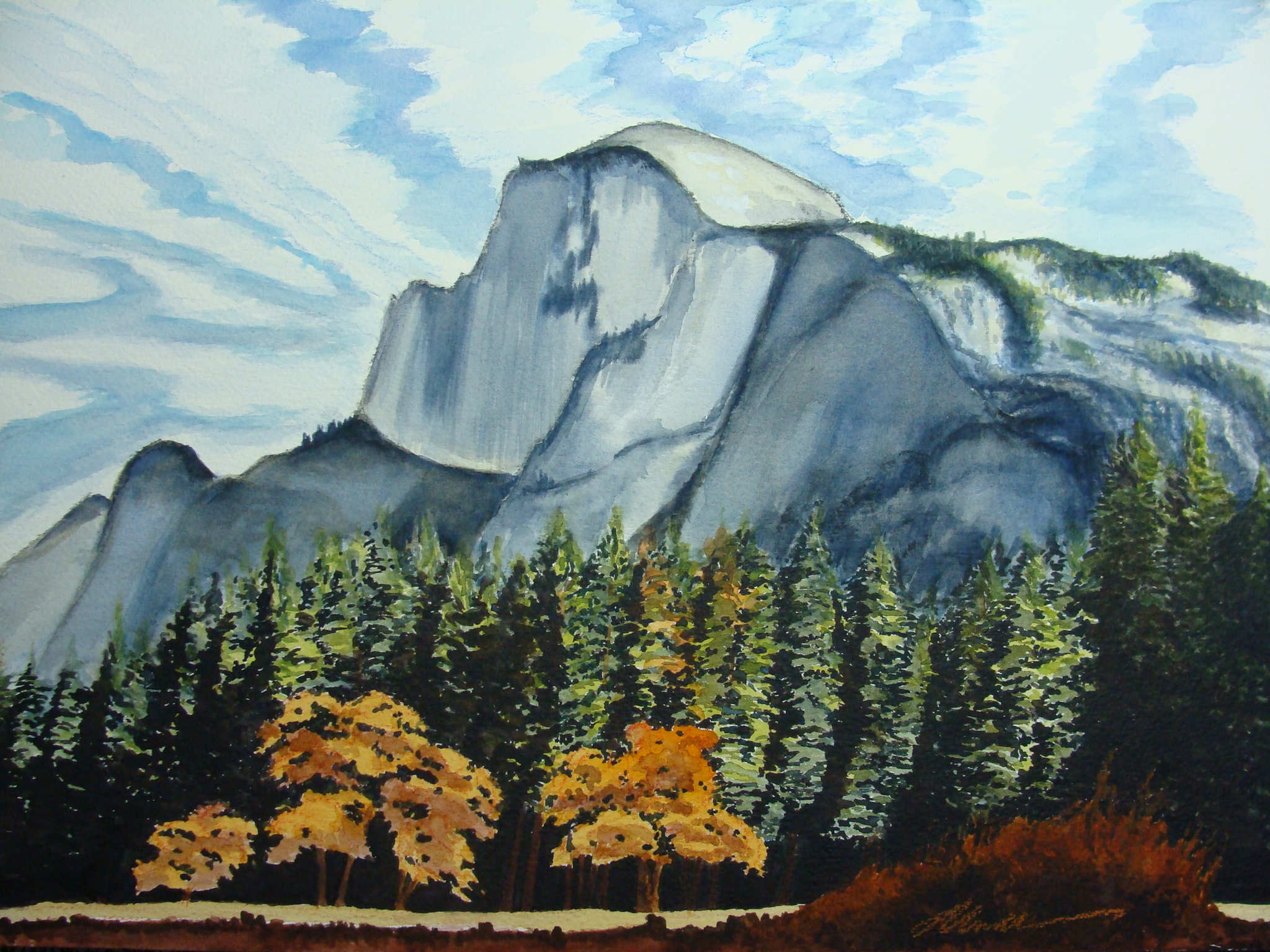
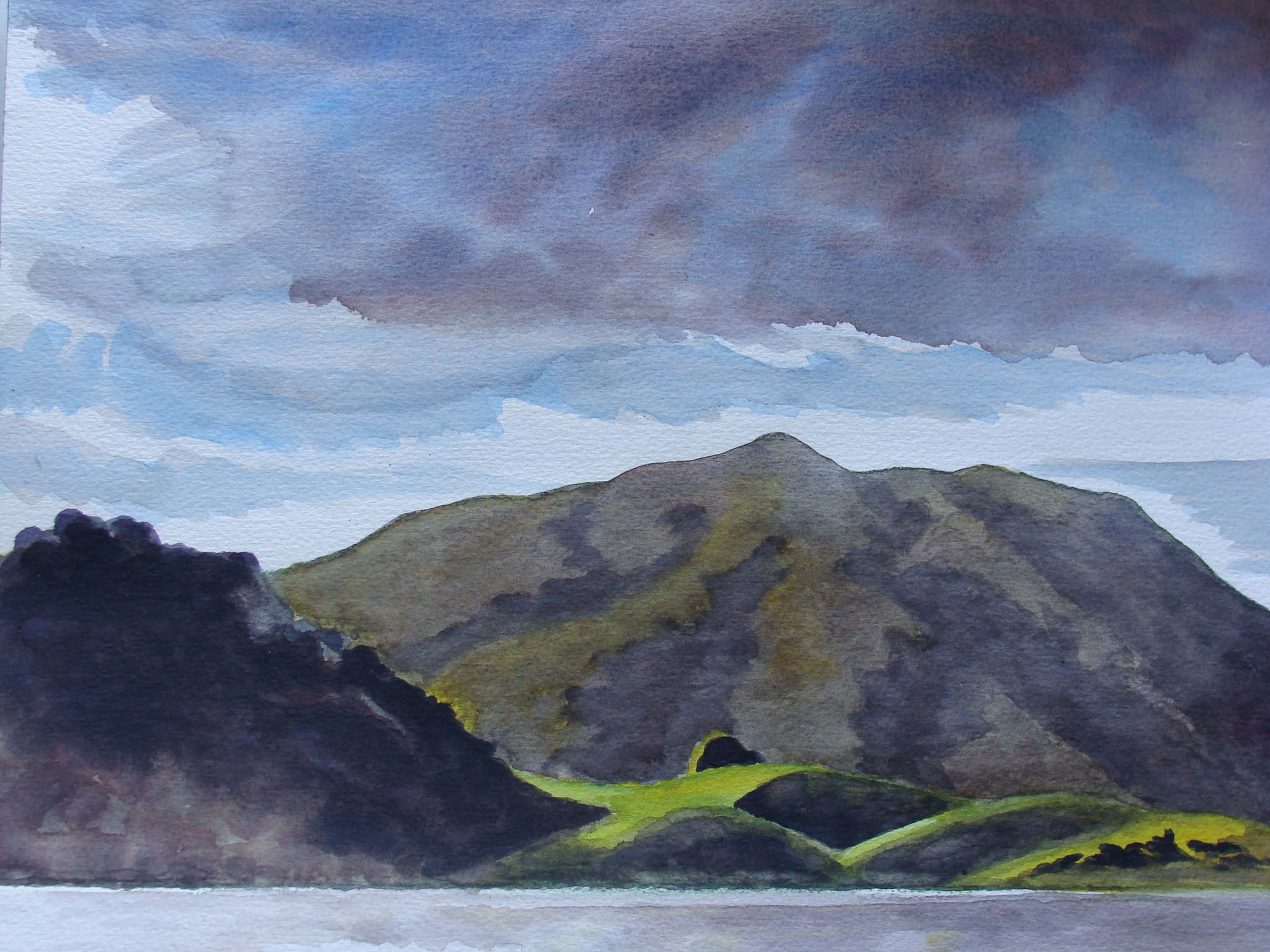
Torrey Pines early morning. Robin L. Chandler Copyright 2015.Swami’s Beach at sunset looking south. Robin L. Chandler Copyright 2014.Swami’s Beach at sunset looking north. Robin L. Chandler Copyright 2015.Swami’s Beach at sunset on a rainy day looking south. Robin L. Chandler Copyright 2014.View of Santa Cruz coastline and Monterey Bay National Marine Sanctuary. Copyright Robin L. Chandler 2014Natural Bridges late afternoon. Copyright Robin L. Chandler 2014Elkhorn Slough wetlands mid-morning. Robin L. Chandler Copyright 2014.Moss Landing at sunrise. Robin L. Chandler Copyright 2015Pt. Lobos near Carmel mid-afternoon. Robin L. Chandler Copyright 2015.Sailboats on Alameda Estuary mid-day. Robin L. Chandler Copyright 2015.Oakland Skyline mid-day. Robin L. Chandler Copyright 2015.Oakland Terminal on Alameda Estuary mid-day. Robin L. Chandler Copyright 2015.Storm over San Francisco view from Richmond wetlands. Robin L. Chandler Copyright 2015.Grazing Sheep north of Point Reyes Station high-noon. Robin L. Chandler Copyright 2015.Black Mountain late afternoon. Robin L. Chandler Copyright 2015.Nicasio Reservoir at sunset.Tomales Bay from Point Reyes Station storm moving in. Robin L. Chandler Copyright 2015.Mt. Whitney at sunrise. Robin L. Chandler copyright 2014View of Half Dome in Yosemite Valley. Copyright Robin L. Chandler 2014.
Black Mountain from the Nicasio Reservoir. Copyright Robin L. Chandler 2014.
To my way of thinking, beauty and art are synonymous. Art, the creative act and our engagement with that act, stimulates thoughts, emotions, beliefs or ideas. When painting, I am participating in the creation of beauty. When I engage – my five senses – with any work of art, that is beauty too.
Last Saturday, driving home from a Point Reyes Books event through the cold December night, we talked about important work before us in the New Year, and fundraising was front and center. We had just attended a successful fundraiser for KWMR, West Marin’s Community Radio Station. Our donation allowed us to share the evening with Frances McDormand, actress and producer, in conversation with screenwriter Jane Anderson about their collaboration televising Elizabeth Strout’s Pulitzer Prize winning book Olive Kitteridge. It was a generous act for two artists to contribute their time, hearts and minds to encourage donors to help sustain a community treasure.
The evening was inspiring and priceless; stimulating thoughts, emotions, beliefs and ideas. We laughed and cried, recalling McDormand speak about “poor” Olive suffering her husband Henry’s tyrannical happiness. McDormand’s art, gave us a chance to step off the dance floor and see life from the balcony, gaining insight into our lives, from that act of beauty.
But I make a case for beauty, passionately arguing that art directly impacts life. By stimulating our thoughts, emotions, beliefs and ideas, art encourages contemplation and reflection about the precious and fleeting beautiful moments and places. Without art and beauty, what life is there to save? Beautifully rendered in prose and theatrically, Olive Kitteridge reveals “what young people didn’t know…that love was not to be tossed away carelessly, as if it were a tart on a platter with others that got passed around again…[if] she had found it burdensome, had flicked it off crumbs at a time, it was because she had not known what one should know: that day after day was unconsciously squandered.”
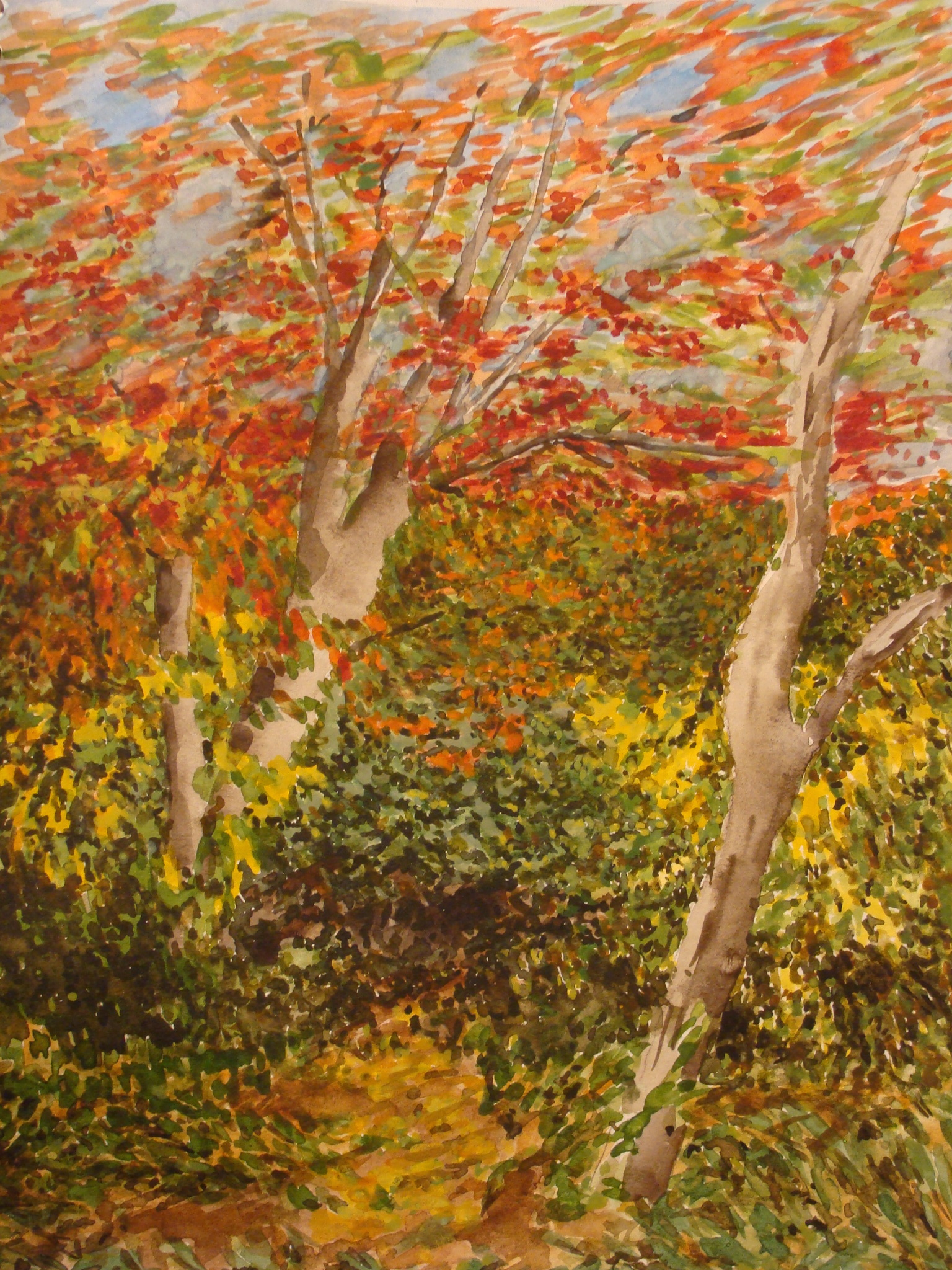
The Orange of October in Westchester County, New York. Copyright 2014 Robin L. Chandler
Two nights ago the San Francisco Giants won their third World Series in five years. Can you believe it? We had witnessed first-hand the 17-0 drubbing a visiting Los Angeles Dodgers had delivered to our boys in mid-September; and as the season drew to a close, those same Dodgers claimed the Division title, and the wild card berth was the last glimmer of hope for our Giants. Our boys in orange and black were not blessed with the dominating pitching rotation that had secured their crowns in 2010 and 2012, so we silently feared their post season appearance would be brief. We had an ace this year, Madison Bumgarner, but it seemed unlikely a team’s destiny could rest with the arm of one young southpaw. But Madison’s teammates got something started. First came Brandon Crawford’s grand slam in the National League Wild Card elimination game against the Pittsburgh Pirates. And then came the 18-inning game with the Washington Nationals where a fastball crushed in the late night by Brandon Belt became a walk off home run. Of course there was Senor Octobre, aka The Panda, himself. And our spark plug The Preacher, Sasquatch (as I nicknamed Michael Morse) and the rest of the “killer Ps,” and last but not least, one of the greatest situational managers on record, Bruce Bochy. Steadily, game by game, we began to believe. Maybe there was something to that little voice in my head…”they always win it all in even years.” I started humming Don’t Stop Believin’ and We Are The Champions.
After defeating the “Nats,” the Giants dueled with the St. Louis Cardinals for the National League Pennant. During the Pennant race, we visited New York City once home to Harlem’s Polo Grounds and Brooklyn’s Ebbets Field; these mighty stadiums, the historic homes of the Giants and Dodgers until expansion brought their rivalry to California in 1957. In 2014, Cardinals had won their Pennant race berth by defeating the Los Angeles Dodgers most feared pitcher, Clayton Kershaw. We enjoyed the cultural delights of New York City by day and found neighborhood pubs by night to soak up the play by play of the Giants and Cards matchup. Maybe it was the experience of those previous Series, but the Giants had something extra. Calm and focused, battling against the odds, they came to play every day. Even when the night before was a crushing defeat – a fabric appearing torn beyond repair, they never gave into despair. And then Travis Ishikawa, who almost hung up his cleats this summer, eclipsed Bobby Thompson‘s 1951 “Shot Heard Round the World” with his pennant winning homer. The Giants kept working together as a team, and each game was a fresh start, a new dialogue, a renewed bargain.
Tom Stoppard’s play about love and relationships The Real Thing is on Broadway this October. In the play, Charlotte, a divorcee, tells her former husband Henry “there are no commitments, only bargains. And they have to be made again every day. You think making a commitment is it. Finish. You think it set like a concrete platform and it’ll take any strain you want to put on it. You’re committed. You don’t have to prove anything. In fact you can afford a little neglect, indulge in a little bit of sarcasm here and there and isolate yourself when you want to. Underneath it’s concrete for life.” Charlotte implies relationships are not static, they are dynamic; they are a negotiation and you must keep working at them and through the wear and tear of daily life, bringing your “A” game every day.
Relationships are never static. This theme surfaced in an exhibit of Cy Twombly’s work currently on display at the Morgan Library and Museum entitled Treatise on the Veil. The series of paintings and drawings were inspired by French composer Pierre Henry ‘s work The Veil of Orpheus. Working in the style of music known as “music concrete” (music based on collecting random sounds and abstracting their musical values often by manipulating recordings on magnetic tape), Henry evoked the journey of Orpheus to the underworld to rescue his wife, Eurydice as the sound of tearing fabric. The composer references the moment at which Orpheus loses his bride forever by transgressing the gods’ command and gazing upon her before leaving Hades. Twombly visualized “the sound of a relationship ending” as a study of subtle variations of gray – like concrete – mapped over time on a canvas nearly thirty-three feet long. Sitting before Twombly’s painting, I was struck by three artists grappling with the juxtapositions of concreteness and fragility; static and dynamic; commitments and bargains. And I meditated on relationships, battered by the strains of daily life. We cannot assume relationships are concrete, able to withstand any storm. They are fragile fabrics susceptible to wear and tear, neglect and strain. Relationships, just like baseball teams playing in the World Series, thrive by renewing the daily bargain…by never giving over to defeat and despair. Yes, they suffer frays and tears, but no matter how bad, the negotiation – the bargaining – begins anew with the windup and delivery at the top of the first. When asked if the season was over, Yogi Berra replied “it ain’t over ’til it’s over.” And if anybody made us believe that, it’s the 2014 San Francisco Giants!
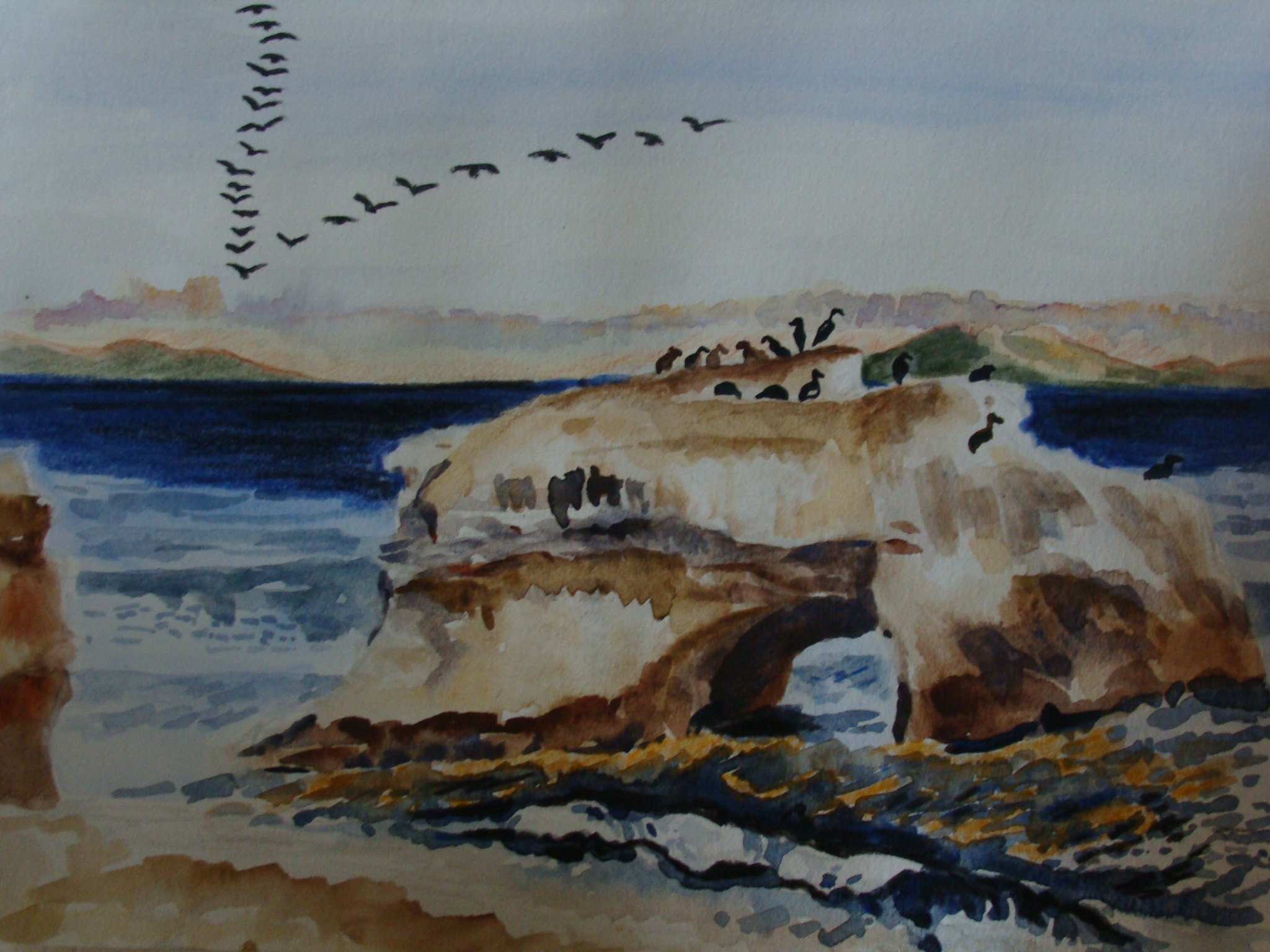
Wind and wave carved the barrel vault through which the tides pass. Frieze-like, cormorants and pelicans adorn the rock’s surface. Just offshore Santa Cruz, this nature-made arch stands proudly like a monument to stewardship of the Monterey Bay Marine Sanctuary. A bridge for centuries, the 1989 earthquake took only seconds to sculpt the arch from a span called Natural Bridges. Out in the bay waters, humpback whales feast on schools of anchovies. Early evening, living on the edge of the Pacific plate, my friend and I paint quickly attempting to capture this fleeting perfection with our brush marks. Thousands of miles away, seismic politics bring violence and death to innocents in Gaza and Ukraine airspace. All is suffering. A few lines from Robert Hass’ poem Bush’s War published in his book Time and Materials capture my sadness at this suffering:
“Someone will always want to mobilize
Death on a massive scale for economic
Domination or revenge…
Why do we do it? Certainly there’s a rage
To injure what’s injured us. Wars
Are always pitched to us that way…
The violence, it’s a taste for power
That amounts to contempt for the body…”
The history of all conflagrations ultimately includes the tallying of the dead, the wounded and the maimed. But they never tally the loss for the living. The black fonts on the white page cleanly mask the suffering. Colm Toibin’s closes The Testament of Mary with a conversation between Mary, the mother of Jesus, and a disciple, unidentified but likely John, one of the four evangelists. Mary spoke, her words brimming with her son’s suffering on the cross “I was there, I said. I fled before it was all over, but if you want witnesses then I am one and I can tell you now, when you say that he redeemed the world, I will say that it was not worth it. It was not worth it.”
Sometimes we paint to stave off despair. Chiura Obata the great Japanese American painter of Yosemite and the Sierras was interned at the Topaz War Relocation Center in Utah during WWII. Obata painted and wrote about the power of nature to absorb the scars of war. Writing about his series of Hiroshima inspired watercolors, Obata said “there is always harmony in nature, a balance between the dead and the living, between destruction and resurgence.” And so I rechristen Natural Bridges as Natural Arch, a monument to the cycle of life and to harmony, seeking balance between conquest and stewardship.
Sketch of Salvadore Dali statue in surreal Cadaques, Catalonia. Copyright Robin L. Chandler 2013.
Maybe it’s gravity, centrifugal force, or just the force of my own nature, but I always find a comfortable place to anchor, while traveling amongst the new. No surprise confession here, but I love comfortable places where friends talk over wine and beer, and in Barcelona, I will add Els Quatre Gats to my list. Of course given my current obsessions with cycling, it helps a lot that the café features a mural size art nouveau style painting of two cyclists on a tandem by Ramon Casas. Opened in 1897, Els Quatre Gats was a home to the artists and intellectuals participating in Barcelona’s Modernisme movement. It was a favorite place of Picasso, who came to Barcelona to study painting, laying the foundation for his Blue Period. Picasso had strong connections to this region, personally requesting that the Museo Picasso be built in Barcelona. Over glasses of cava and grilled calamari, we talked about our day visiting the northern Catalonia towns of Figures, Cadaques and Port Lligat on the “Salvadore Dali Trail,” and mused about the two artists and their context within the Spanish Civil War.
Painted in 1937, Picasso created Guernica in response to the then recent bombing and destruction of the Basque village by German and Italian warplanes allied with Franco’s forces fighting the Spanish Republic’s Popular Front. Guernica was first exhibited in June 1937 at the Paris International Exposition by the Spanish Republican Government and then travelled to England and the United States with the hope of raising awareness and sympathy for the elected government of the Spanish people. Picasso, who died in 1973, never returned to Spain while Franco was dictator.
Sketch of harbor near Dali’s home in Port Lligat, Catalonia. Copyright Robin L. Chandler 2013.
In 1936, Salvador Dali painted Soft Construction with Boiled Beans(Premonition of Civil War). Known as a Surrealist, Dali worked in what he described as the paranoiac critical method to access the subconscious for greater artistic creativity. While sketches for the painting are dated to 1934, Dali felt the painting described the many hardships endured by Spaniards during the Spanish Civil War. In 1934, Dali was expelled from Surrealism by Andre Breton and the other Surrealists allegedly because of his ambiguous position on the relationship between politics and art. Dali returned to Spain in 1949, living in Port Lligat until his death in 1989 fully embracing Franco’s dictatorship.
Swanton Pacific Ranch. Copyright 2013 Robin L. Chandler
June and we are blessed again with strawberries. It’s after 5:30PM when I leave work, but the summer sun remains sky high moving towards the solstice. Driving north from Santa Cruz towards Davenport, the Pacific flashes brilliantly on this clear and hot day; along the coast farmers are irrigating their crops. The infinite horizontality brings mindfulness; the day falls away and clarity about the scheme of things returns. Listening to the Blessed Are album, and I find the Woody Guthrie track Deporteeand I softly sing with Joan Baez:
Is this the best way we can grow our big orchards? Is this the best way we can grow our good fruit? To fall like dry leaves to rot on my topsoil. And be called by no name except “deportees.”
Swanton Berry Farm is my destination. Founded in 1989 by UC Santa Cruz graduate Jim Cochran, Swanton’s is the first commercial organic strawberry farm in California; it is also the first certified organic farm in the United States to sign a labor contract with the United Farm Workers (UFW). The farm stand, where I purchase my two pints of bright red strawberries, proudly displays the UFW flag bearing the black eagle on a field of red. The UFW was formed as a result of Cesar Chavez’s organizing of Mexican-American and Fillipino American farmworkers to engage in boycotts, hunger strikes and strikes (all based on pacifism) to gain their rights. The successful 1965 Delano grape strike is the most famous effort. The strawberries are amazing; a delight to see, smell, and taste the sweet and tart delight grown in the sandy soils of the coastline routinely kissed by the sea air. Last year, when Irene Reti’s & Sarah Rabkin’s oral history Cultivating a Movement was published, I read about Jim Cochran’s sustainable practices. Jim described using the Brassica family of plants— broccoli, cauliflower and mustard greens— in crop rotation to improve soil health instead of traditional strawberry farming practices using methyl bromide and Chloropicrin to kill soil disease. At Swanton’s you will never see the plastic covering the fields of commercial growers, indicating chemical fumigation is underway.
This month is also the 38th anniversary of the California Agricultural Labor Relations Act that became law on June 5, 1975 giving farm workers the right to collective bargaining and ensuring “peace in the agricultural fields by guaranteeing justice for all agricultural workers and stability in labor relations.” The act allowed union organizers to meet with farm workers in the fields and for farm workers to select representation by unions such as the UFW to engage in collective bargaining to negotiate conditions of employment.
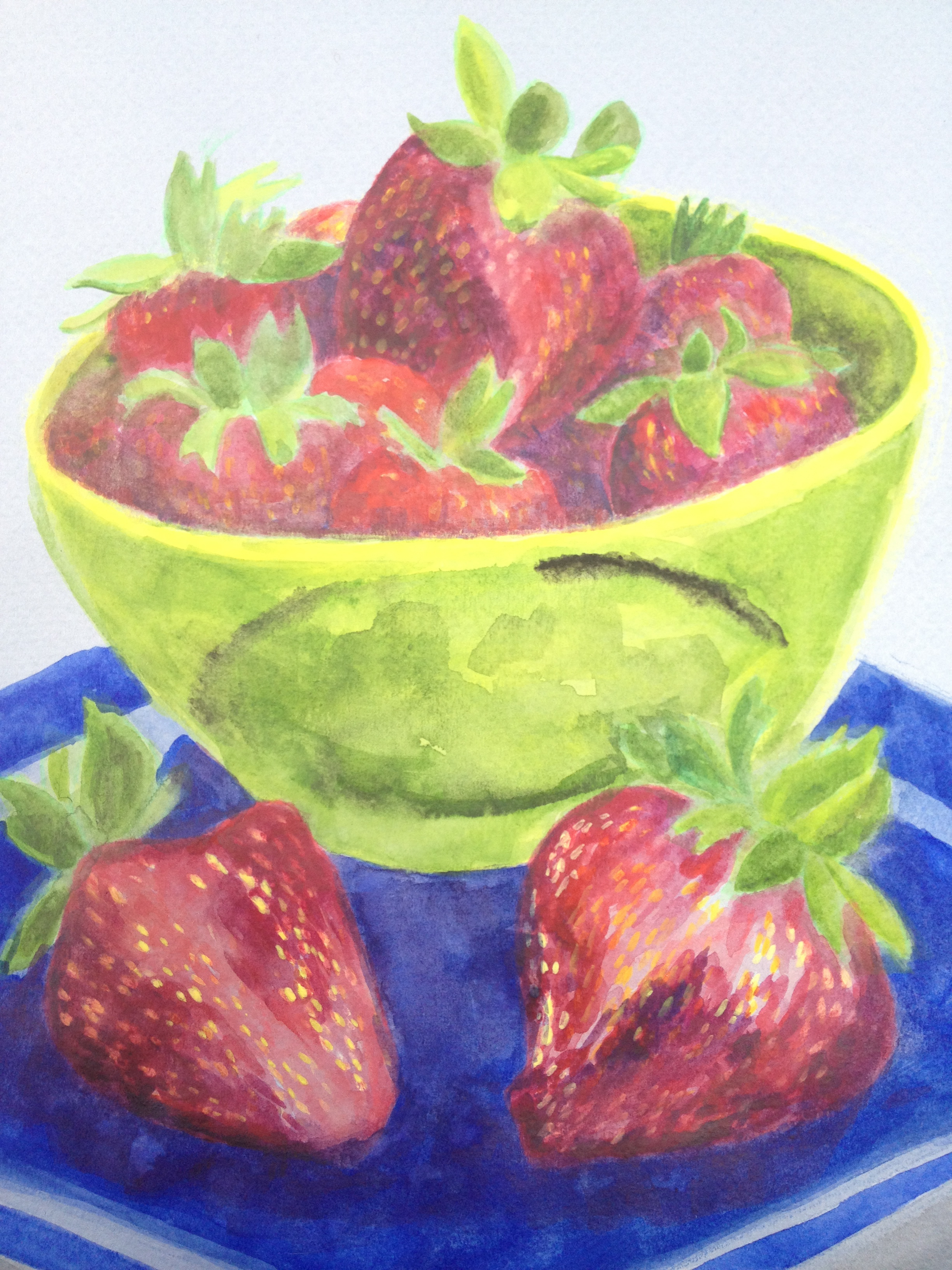
Strawberries. Copyright 2013 Robin L. Chandler
After purchasing my strawberries, I drive out Swanton Road a beautiful loop curving through the Swanton Pacific Ranch, crossing Scott Creek a riparian corridor for Coho Salmon and Steelhead Trout, and winding through forests of Redwoods, Douglas Fir, and Monterey Pine. Surfers say the waves where Scott Creek estuary greets the ocean are the same as Swami’s Beach in San Diego County. The Ranch is beautiful. The furrows nestled amongst the coastal ecosystem; mankind’s geometric abstractions seeking to tame the wilderness topography. Recently I learned about the plein-air painter Sheridan Lord whose inspiring works are with us in the book Things in Place. Sheridan’s farm paintings are pictures “of breathtaking simplicity: the whole surface is occupied by the towering sky and broad fields, which are separated by a mere strip of trees.” Lord’s paintings evoke the environmental writer Peter Matthiessen who quotes the Ojibwa people in his book Nine-Headed Dragon River writing “sometimes I go about in pity for myself, and all the while a great wind is bearing me across the sky.” Mindfulness is found in many ways: in a song, in a vista, in a painting, in a koan, or in a strawberry.
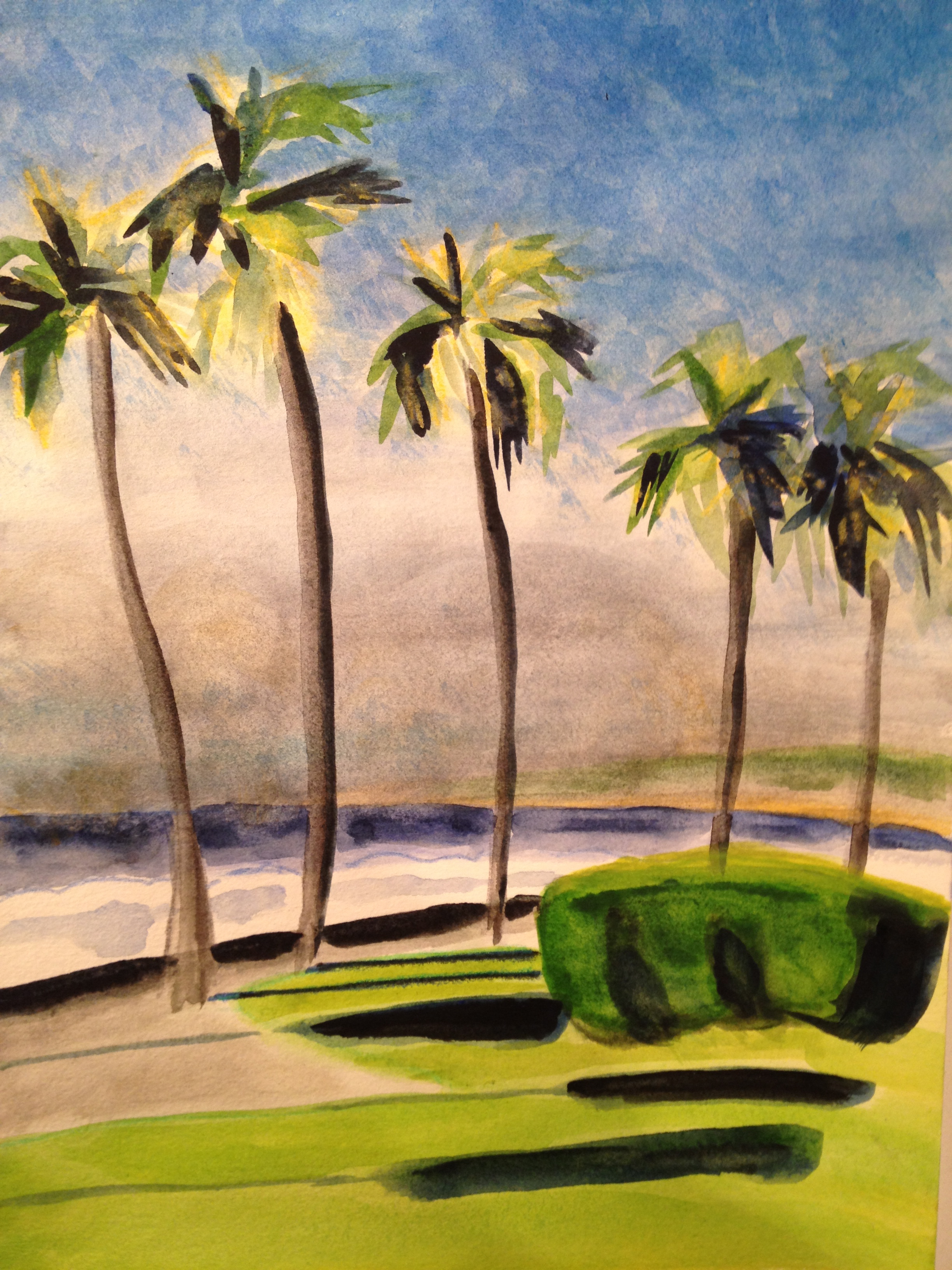
Ocean Park: La Jolla Shores. Copyright 2013 Robin L. Chandler
With our meeting finished, I took the opportunity to visit the beach near La Jolla Shores. Late in the afternoon on a beautiful spring day, I thought perhaps with luck I’d see the Green Flash, described in Wikipedia, as the optical phenomena that can occur after sunset for no more than a second or two. Emerging from the car, I was greeted by another kind of green flash. The angle of the sun this late in the afternoon brought dramatic lighting to the park by the beach. Rows of palms stretching towards the blue sky, cast dramatic deep shadows on the verdant green grass flashing before me. As I stood there, inhaling the sweet smell of the sea air touching the desert landscape, my eyes immediately focused on the dramatic colors and the strong verticals and horizontals. It was a beautiful moment – a quintessential moment when one feels blessed to be alive. Perhaps this kind of scene – my green flash – is what caught Richard Diebenkorn’s imagination inspiring him to create the paintings now known as the Ocean Park Series. Robert Henri’s words from The Art Spirit passed through my mind too: “the sketch hunter moves through life as he finds it, not passing negligently the things he loves, but stopping to know them, and to note them down in the shorthand of his sketchbook.” Would I be up to the task of sketching this scene? I decided it was worth the risk and that I would hold on to the basic elements that first intrigued me. Painting is like life, it is all to easy too get lost in the details. Try to find what is important – your magnetic north – and hold your course. As Henry David Thoreau wrote in Walden, “Our life is frittered away by detail…..simplicity, simplicity, simplicity! I say, let your affairs be as two or three, and not a hundred or a thousand.”
Washington Square by night. Copyright 2013 Robin L. Chandler.
After a memorable dinner at Lupa on Thompson Street, we walked quickly through the brisk night eager for the warmth of a bus leaving the village. Fittingly, we find ourselves precisely on President’s Day at this place facing the monument shimmering in the darkness. The Washington Square Arch was built to celebrate the 100th anniversary of our first President’s inauguration. And here we are, at the square on George Washington’s Birthday looking uptown from the base of Fifth Avenue, where patriotic colors of red, white and blue playfully adorn the Empire State Building in celebration of this day. Its cold and late, but I reach for my watercolors and brushes. The night skyline is framed so perfectly by the arch, I just can’t let this moment go by without trying to paint it. I’m not the first to succumb to this impulse and frankly I’m in great company. Watercolourist and blogger Poul Webb wrote inspiringly about some of these painters who captured the noble arch round-the-clock in all seasons.
Designed by architect Sanford White, in the early 20th century, the Washington Square Arch was situated in a wealthy enclave bordering working-class neighborhoods. The monument captivated members of New York’s Ashcan School, painting in the early 1900’s, including William Glackens, George Luks, Everett Shinn, and John Sloan. Robert Henri, the group’s teacher encouraged his students to paint the dynamic of the street: its beauty and its brutal reality. One of the Ashcan group, George Bellows, is the subject of an exhibition, recently at the Met and soon to travel to London, providing the first comprehensive survey of Bellow’s work in almost fifty years. Bellow’s created some of the most moving depictions of the urban landscape when America was an emerging industrial giant. He captured the harshness of this rapidly changing society but also a timeless beauty that continues to captivate me in paintings such as The Lone Tenement and Blue Morning. Charles Baudelaire described this ability to extract the “eternal from the transitory” as searching for modernity.
Earth, trees, sea and sky: Santa Cruz oil sketch. Copyright 2012 Robin L. Chandler
Like John Marin, I am a watercolorist who has begun to paint in oils. In the the 1920s, Marin’s watercolors, as Winsow Homer’s before him, had again shown that watercolor need not be considered a second rate medium. Seeking to explore new directions for his work, in the 1930s, Marin chose to experiment in oils. The experiment succeeded resulting in a dialogue across the two mediums spanning the rest of his life. Marin’s choice of subject also draws me to his paintings. Throughout his career, Marin was captivated by architecture but deeply inspired by what he described as the essential forces of nature: earth, trees, sea and sky. Although sometimes associated with movements such as Abstract Expressionism or Surrealism because of his symbolic lines and evocative forms, Marin never considered himself a theoretician. In the retrospective catalog of his work John Marin, 1870 – 1953: a centennial exhibit organized by the Los Angeles County Museum of Art, Larry Curry, curator writes “he had no patience with any kind of art that had its origin within the mind without reference to the outside world. As a rule when Marin attempted to explain his work, he spoke of subject matter and his subjective reaction to it.” Marin wrote “you cannot create a work of art unless the things you behold respond to something in you.” Drawn passionately to landscape, my most successful paintings are born from a connection to place. The paintings flow readily from this connection. When I paint, Aldo Leopold’s words also resonate with me. In Sand County Almanac, Leopold writes, “we abuse land, because we regard it as a commodity belonging to us; when we see land as a community to which we belong, we may begin to use it with love and respect.” Torn between a love of the road and a desire for roots, I am inspired to paint place when I sense the intersections between land and people attempting to live honorably with it. John Marin, excerpted from the book John Marin by John Marin, strikes a similar note when he describes how to paint a landscape. “First you make your bow to the Landscape – then you wait and if and when the Landscape bows to you then and not until then Can you paint the Landscape.”












 alive in the sea of information