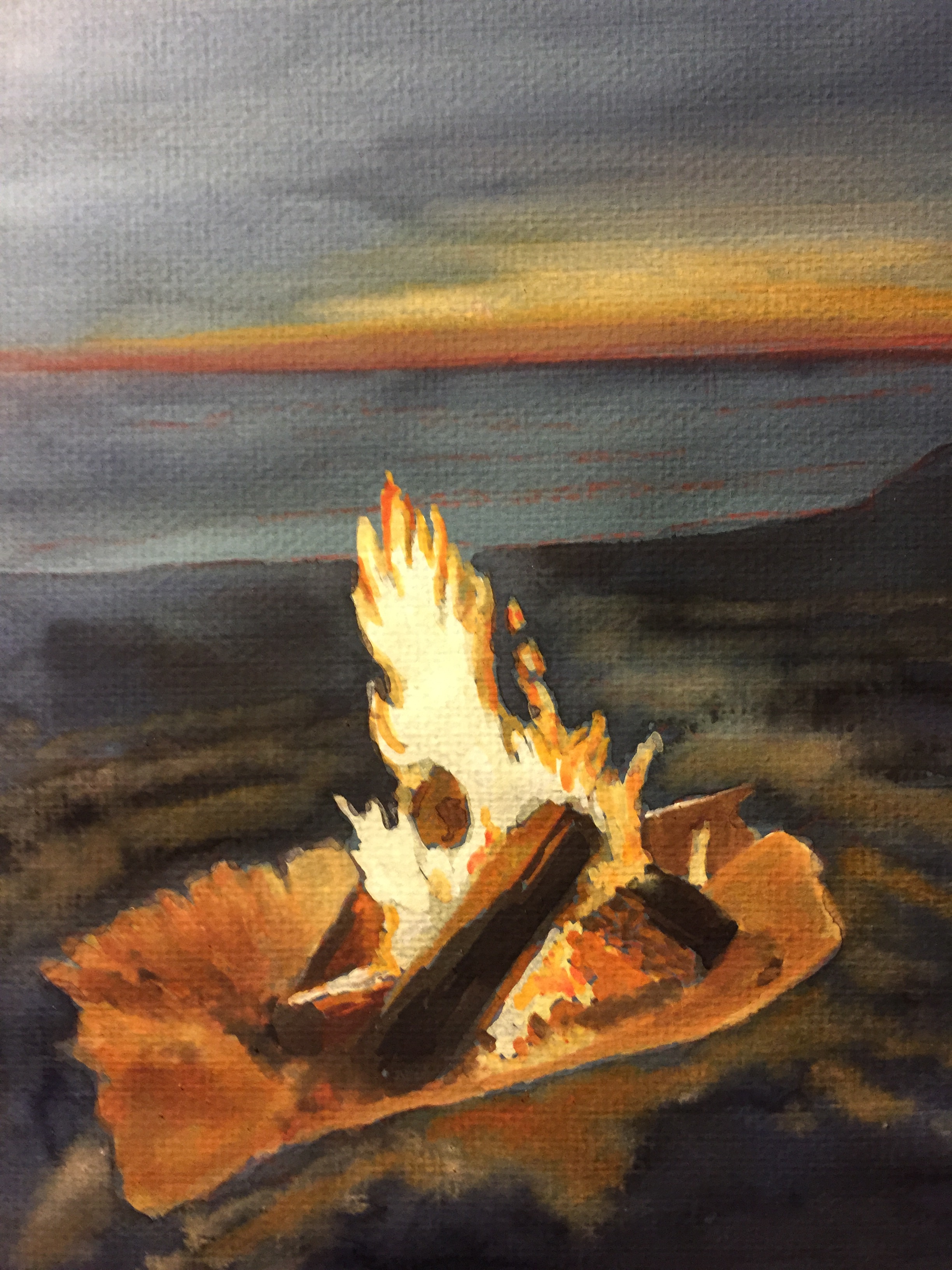
Fire next time

Beach fire Santa Cruz. Robin L. Chandler Copyright 2015.

Darkness appeared in the corner of my eye. The sun dawdled splashing yellow and orange in her wake. Stars like motion detectors tracked the sun’s journey. And then suddenly, almost without warning, it was night. In the beauty of the evening it was easy to neglect the rotation and forward motion of time. Ebb tide, the waves teased the shoreline, waiting, where families danced the crescendo. On the beach friends gathered sharing stories and laughter. Beach fires, first flickering, grew stronger against the night sky, a shield against the darkness, a memory of color and warmth. In this context, fire is friend, a restorative. Staring into the magical flames, I reflect and imagine, a ritual connecting humankind across the millennia. But miles from here, on this summer night of the fourth year of our drought, fire crews are on the line, feverishly working to contain an inferno, capable of erasing entire communities. Difficult to believe on this calm, still night, but scientists say this pacific ocean nurtures El Nino; the infant, powerful, bringing rain and flood to wash away our sins. We live in a fundamental time; a time of powerful extremes. It is feast or famine, flood or fire; forces are in motion changing lives forever in a matter of seconds. A minor traffic violation, becomes a struggle for power; a match is lit resulting in a conflagration of unimagined consequences. Lives are ended, families devastated, and communities entrenched. And for what? How do we heal the rift and bridge the chasm?

The renowned African American writer James Baldwin published two essays as a book The Fire Next Time, taking it’s title from a line in a Negro Spiritual, “God gave Noah the rainbow sign, no more water but fire next time.” In the first essay titled The Fire Next Time:  My Dungeon Shook: Letter to My Nephew on the One Hundredth Anniversary of the Emancipation, Baldwin discusses the history of race in the United States. Baldwin argues that Americans, black and white, must step outside themselves and re-examine what they believe, understand and fear.  Counseling his young nephew, Baldwin writes know whence you came. If you know whence you came, there is really no limit to where you can go…please try to remember that what they believe, as well as what they do and cause you to endure, does not testify to your inferiority but to their inhumanity and fear…and if the word integration means anything, this is what it means: that we, with love, shall force our brothers to see themselves as they are, to cease fleeing from reality and begin to change it…you came from sturdy, peasant stock, men who picked cotton and dammed rivers and built railroads, and, in the teeth of the most terrifying odds, achieved an unassailable and monumental dignity.

From this valley

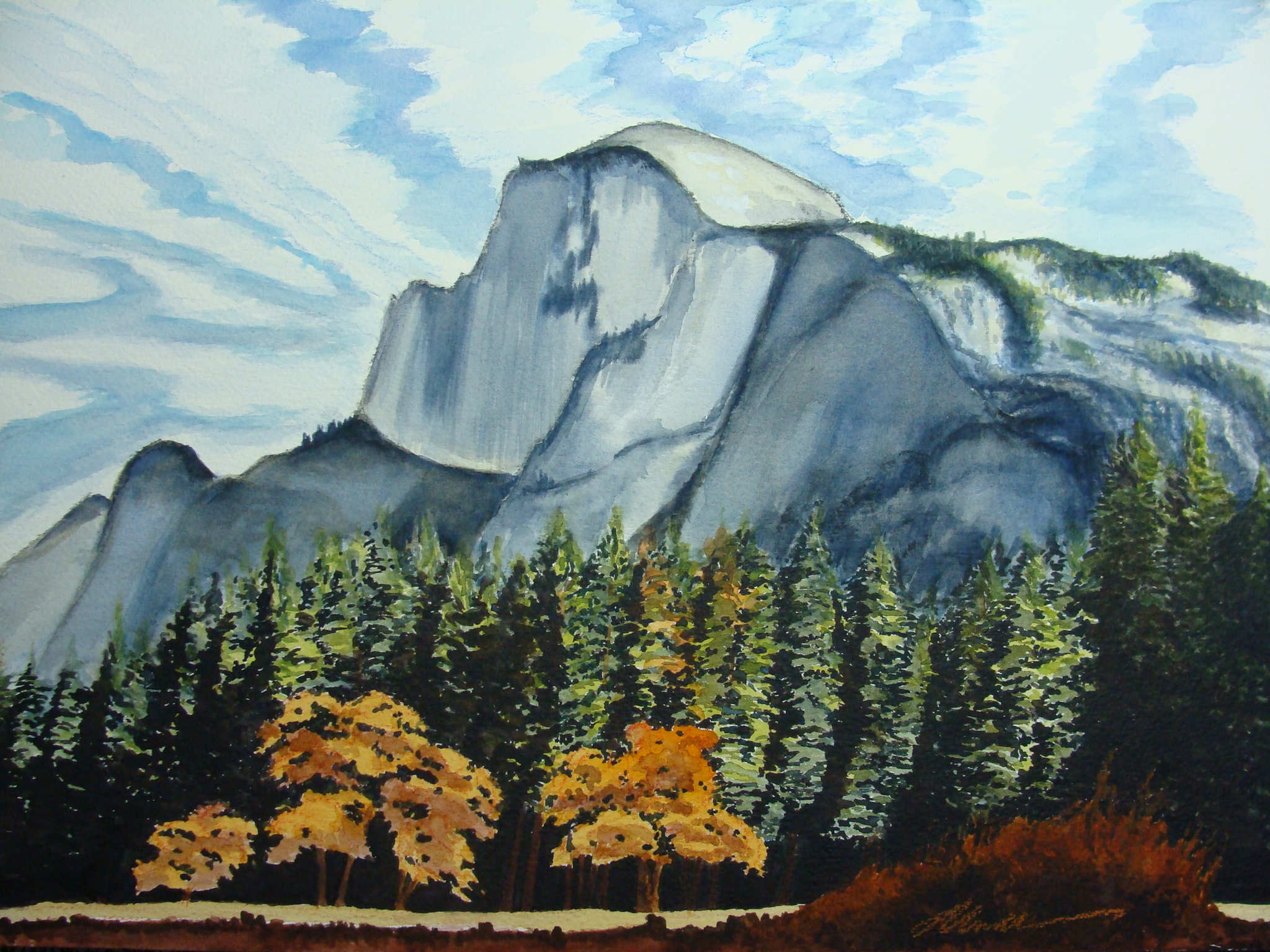
View of Half Dome in Yosemite Valley. Copyright Robin L. Chandler 2014.

From this valley they say you are going…we will miss your bright eyes and sweet smile…for they say you are taking the sunshine…that has brightened our path for a while.” These are lines from Red River Valley, a song heard throughout John Ford’s classic film of the Great Depression, The Grapes of Wrath, and the melancholy theme for the Joad family’s hard-travelin’ exodus from dustbowl Oklahoma. Tenant farmers, the Joads head to California hoping for a better life, forced from their home by drought and economic hardship. With a few days off in early November, I am driving there and back, crisscrossing my great state of California from Santa Cruz to Nipomo, Los Angeles to Fresno, and Yosemite to Oakland. The many legs of my journey take me through the Central Coast, the Los Angeles Basin, the Central Sierras, and the Central Valley. The land is parched, thirsting for rain and relief from a multi-year drought; and Chicano, Latino and Mexican-American agricultural workers — immigrants and migrants – who came to California hoping for a better life, populate much of this land.

In the fields of the Pajaro Valley, near Watsonville in Monterey County, artichokes, strawberries and cole crops like Brussels sprouts and cauliflower are tended and harvested. Farther down the road, I arrive in yet another important agricultural county, San Luis Obispo, where avocados, citrus, and vegetables are grown. As I drive by the workers in the field, Gloria Anzaldua’s words from her book Borderlands: La Frontera ring in my ears: “To live in the Borderlands means you are neither hispana india negra espanola, ni gabacha, eres mestizo, mulata, half-breed caught in the crossfire between camps while carrying all five races on your back not knowing which side to turn to, run from…”

Today migrants of the borderlands make these agricultural riches possible, but some fifty years ago, “Okies” migrants from the 1930s dustbowl tended the crops of this county. Working in Nipomo, Dorothea Lange documented this earlier migration and plight of the workers in her famous Great Depression photograph of the “Migrant Mother.”

Further down the road, I reach Kern County in the San Joaquin Valley where, Buck Owens Boulevard crosses Highway 58, which leads to the Cesar Chavez National Memorial in Keene. The child of Texas sharecroppers driven out by dust and the Depression, Buck Owens found seasonal work following the crops from Gila Bend, Arizona through the Imperial and San Joaquin Valleys of California. Growing up listening to Mexican border radio stations and Baptist gospel songs, Buck made Bakersfield his home and became famous for singing the story of the “Okie” migrants who came to find work in the farms and oilfields of Central California. Owen’s contributions and the work of Merle Haggard are chronicled in Gerald Haslam’s Workin’ Man’s Blues: Country Music in California. Ironically, just a few miles south of the road memorializing Owens is the final resting place of Cesar Chavez at the headquarters of the United Farm Workers (UFW) who started and led the farm workers’ movement to give voice to the next generation of poor and disenfranchised agricultural workers.


Or maybe the coast of Cal-i-forn

Monterey coastline. Copyright Robin L. Chandler 2014.
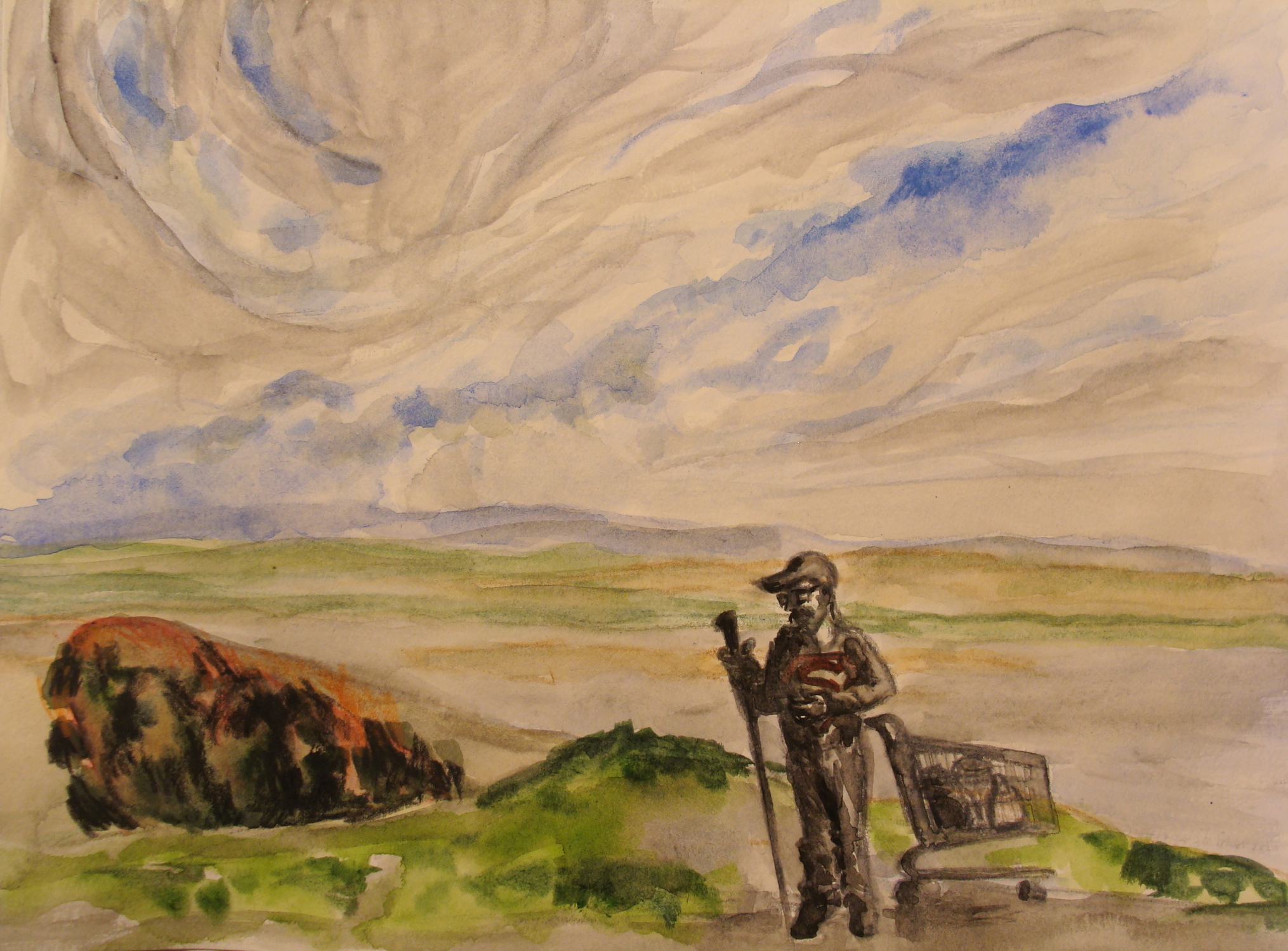
A traveller walking the Monterey coastline. Copyright Robin L. Chandler 2014.

Santa Cruz ahead and Monterey behind, we cycled through coastal farmland on yet another rainless winter day a couple of weekends ago. Here in drought stricken California, the Monterey Bay shimmers beside us and the air is sweet, replenishing my body with every breath. It is nearing the end of a sunny day, high clouds above us, but distant hills are taking on a hazy quality and we are glad it’s only a few more miles to retrieve our cars. I feel a strange guilt and paradox. It is beautiful, but it should be raining. We are training for the Strawberry Fields Forever ride, a fundraising event sponsored by Cyclists for Cultural Exchange dedicated to the “express purpose of furthering peace and international understanding through exchanges between people with a common interest in cycling.” An unusual and wonderful goal! As happy as riding makes me, I am nagged by the lack of rain. We need a strong steady downpour to quench this parched land. My mind jumps months on the calendar knowing I’ll be cycling some of these same roads in June when more than two thousand of us ride in the AIDS/Lifecycle from San Francisco to Los Angeles.  Excited about the long journey in June and that my fundraising is helping people with HIV/AIDS, I know the route to Los Angeles will take me through my beloved golden brown California landscape. Oh, but how I hope we get more rain and soon.

Putting those thoughts aside, I reach the crest of a small hill. About a mile ahead, a man, dressed in black, is pulling a shopping cart; a mystery considering there is no grocery store in sight for miles…no strip malls, box stores, houses or anything of the kind remotely close. The rich farming fields of Monterey County envelope us, a land where artichokes, broccoli, cauliflower, spinach, and strawberries grow readily. Reaching his side, I note his tiredness and resignation, but I grasp this young man in his dirty Superman t-shirt is on an epic journey. He is not homeless, he is without home. Hoping my last Clif Bar will ease some of his sadness, he tells me his name is Lawrence. He describes leaving San Diego some weeks ago, “Life got messed up. It was time to walk…walk a long time…leave it all behind me…I’m going to Washington State. The walk will make it better. But Big Sur was rough. I barely survived.” Reaching into my pocket, I pull out a twenty, giving it to him as I shake his hand hoping the gesture will get him a little farther down the road and a few steps closer to finding home. I wish you well Lawrence wherever the road takes you.

It was time to return to my own odyssey. As my bike put space between us, I began to sing Bob Dylan’s Farewell, a tune lingering with me since seeing the Coen brother’s Inside Llewelyn Davis. I hope Lawrence strikes it lucky on the highway goin’ west.

“Oh it’s fare thee well my darlin’ true,
I’m leavin’ in the first hour of the morn.
I’m bound off for the bay of Mexico
Or maybe the coast of Californ.
So it’s fare thee well my own true love,
We’ll meet another day, another time.
It ain’t the leavin’
That’s a-grievin’ me
But my darlin’ who’s bound to stay behind.

Oh the weather is against me and the wind blows hard
And the rain she’s a-turnin’ into hail.
I still might strike it lucky on a highway goin’ west,
Though I’m travelin’ on a path beaten trail.
So it’s fare thee well my own true love,
We’ll meet another day, another time.
It ain’t the leavin’
That’s a-grievin’ me
But my darlin’ who’s bound to stay behind.

there’s many a river that waters the land

Springtime along Salado Creek, Texas.  Copyright April 2013 Robin L. Chandler
Springtime. Cottonwoods and willow trees along Salado Creek, Texas. Copyright 2013 Robin L. Chandler

“The Rivers of Texas” is an old cowboy song that mentions fourteen rivers in the Lone Star state; Lyle Lovett recorded his version  – The Texas River Song –  on the album Step Inside This House. My good friend Bill tells me Townes Van Zandt also recorded this classic. This excerpt of lyrics comes courtesy of Verne Huser’s book Rivers of Texas:

“We crossed the broad Pecos and we crossed the Nueces, Swam the Guadalupe and followed the Brazos; Red River runs rusty; the Wichita clear. Down by the Brazos I courted my dear…The sweet Angelina runs glossy and glidey; The crooked Colorado flows weaving and winding. The slow San Antonio courses the plain. I will never walk by the Brazos again.”

Nomadic by circumstance, or maybe I just like driving, I am on the road again, speeding northward into the oncoming night from San Antonio towards Austin and Waco.  I laugh out loud recalling an essay in High Country News by John Daniel; in A Word In Favor of Rootlessness he wrote “marriage to place is something we all need to realize in our culture, but not all of us are the marrying kind…it makes me very happy to drive the highways and back roads of the American West, exchanging talk with people who live where I don’t, pulling off somewhere to sleep in the truck and wake to a place I’ve never seen.” Out my side window, I search for the “Old Yellow Moon,” Emmylou Harris and Rodney Crowell croon about on my CD player.  Running north – south, I-35 intersects a series of rivers crisscrossing Texas roughly north-west to south-east; I catalog them in my mind: San Antonio, Guadalupe, Colorado and as I get closer to my destination the tributaries to the Brazos including the Leon, San Gabriel and Little Rivers and of course Salado Creek.

Mission San Jose, San Antonio, Texas.  Copyright April 2013, Robin L. Chandler.
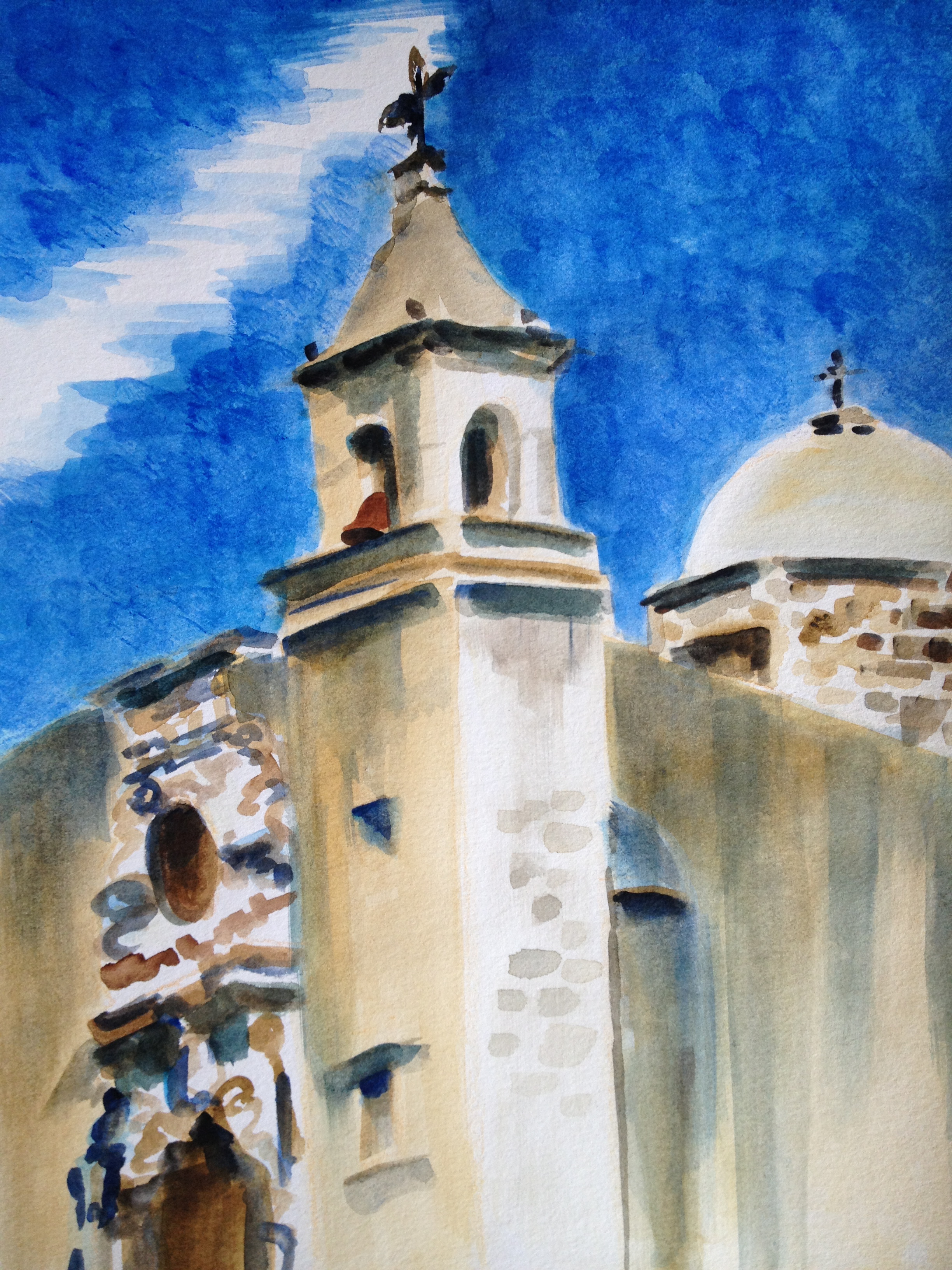
Mission San Jose, San Antonio, Texas. Copyright 2013, Robin L. Chandler.

This year, Texas like many places in the Western and Midwest United States is suffering from drought. Not enough rain is falling to soak into and heal the land, fill the reservoirs and aquifers and bless the riparian areas providing a respite to migratory birds and a home for wildlife along the streambeds. At the same time the demand for the life-giving water grows for agriculture, industry, and the expanding suburbs.  In the thirty-some odd years I’ve been coming to Central Texas the population keeps increasing; more houses, more malls and with this expansion the burgeoning need for water.  But this is not a new story.  In San Antonio, I travelled parts of the San Antonio River Walk heading south to the Historic Missions National Park. Built in the early 18th century, close to rivers, the mission communities constructed dams and aqueducts to guide water for irrigating crops and powering flourmills.  The Belton Lake Dam on the Leon River is a 20th century version of the mission acequias; Belton just provides a lot more water for a lot more people.  The grandfather of Texas conservation, John Graves, wrote a book Goodbye to A River, published in 1959, now considered a classic about his late 1950s canoe trip down the Brazos River.  The book is often cited as a major reason only a limited number of dams were built on the Brazos. The current drought places a strain on stored water supplies.  But what can we do to make sure that there is enough water for all those  who need it, including the native plants and animals? In the 13th Century, it is believed the Anazasi left the Colorado Plateau for the Rio Grande valley of New Mexico when extreme drought caused these peoples to abandon their homes.  Where could we go?

Nomad that I appear to be, place and community do obsess me. Wherever I land, I want to understand the context of the place – the land and its people. I do not feel geographic detachment, but I realize this ability to move quickly from place to place comes at an expense. In Teaching About Place Hal Crimmel published the article “Teaching About Place in an Era of Geographical Detachment.”  Crimmel states “technology enables escape from any particular locale, accelerating the process of geographical detachment.  In fact, living in place may have more to do with restraint than passion these days.  Unprecedented access to distant energy sources, such as natural gas piped across the continent, and to mechanical or electrical technologies means people need not live within the ecological limits imposed by climate and topography.” I feel the contradiction deep in my bones; I hope my Prius buys me some credit when my judgement comes.

Toeing potshards

Monument Valley. Copyright 2009 Robin L. Chandler

In the late Spring, when we vacationed on the Colorado Plateau, I discovered a book by Patricia Limerick called Desert Passages.  Dr. Limerick describes the American encounter with deserts in terms of three attitudes towards nature “as a biological reality in human life…hunger, thirst, injury, disease and death….as an economic resource…a container of treasures awaiting extraction…or as an aesthetic spectacle. “  We affectionately called our trip the archaeology tour as we visited the ruins of the Ancient Pueblo Peoples at Wupatki, Monument  Valley, Mesa Verde, and Canyon de Chelly. Wave and I spent many hours at the ruins in quiet meditation while I attempted to capture the  essence of these amazing cultural resources on watercolor paper.

White House ruin, Canyon de Chelly
White House ruin, Canyon de Chelly. Copyright 2009 Robin L. Chandler

One of the great mysteries is what happened to the ancient peoples?  Archaeological evidence reveals that sometime in the late 13th century these peoples abandoned their homes amongst the mesas and canyon walls and it is theorized that environmental changes —  possibly extreme drought — caused these peoples to abandon their homes.  One feels a certain twinge given the current state of  drought in San Diego, Los Angeles and the rest of California, and of course the fire still burning in the San Gabriel mountains.   It is believed that they left the Colorado Plateau and migrated to join other pueblos along the Rio Grande river in New Mexico.   How would we best characterize the Ancient Pueblo peoples encounters with the desert?  As a biological reality?  Probably yes.  As an economic resource?  Probably yes.  As an aesthetic spectacle?  Probably yes.  We  preserve the artifacts they left us and look for answers in the patterns as we piece the pot shards together.   Ann Weiler Walka’s poem  “Other Dreams: Grand Gulch”  in Waterlines: Journeys on a Desert River gives us something to ponder.  “My thumb polishes the fragment of a bowl, its shallow curve delicately cross hatched with black…some woman dug this clay from a slip of mud…she kneaded the clay with sand and spun a ball into coils….she painted the bowl with a yucca leaf…and dreamed the design from her fingers…she blessed the bowl…that night in her sleep she saw clouds piling over a mesa, spirits coming home. She dreamed of the clay along the creek cool and slippery as a freshly opened heart.”

On the fireline

Sunday afternoon I swam on campus at the Canyonview pool. The cool water was delicious as I did my laps, a good way to exercise on a hot day! Built on a mesa, the pool provides a great view down the canyon to the northeastern section of San Diego County.  On a typical Summer’s day the view from this part of UC San Diego extends across the Carmel Valley to the foothills southwest of Escondido.   I’ve tried to capture this summertime view in my ink and watercolor drawing.

Canyon view
Canyon view. Copyright 2009 Robin L. Chandler

On a crisp clear day in Winter after a cold rain, one can see a dusting of snow on the hills — sometimes catching a glimpse of a snow capped Palomar Mountain (some 5300 feet above sea level) in the Agua Tibia mountain range. In August, however, snow is a distant promise, and on this day the sky was a very hazy and thick gray-pink color, a result I believe of the fires burning in the San Gabriel mountains north of Los Angeles.  Crossing the Tehacapi and the San Gabriel mountains is the final driving test before Northern Californians  —  tired from slogging through the endless miles of Interstate 5 —  are permitted to enter the City of Angels.  It is dramatic country.  The San Andreas rift zone lies on the San Gabriel ridgeline  neatly separating the Mojave Desert from the Los Angeles Basin.   The San Gabriels are also the majestic backdrop to the craftsman bungalows of Pasadena.  In the autumn of 1888, Mary Austin — future author of  The Land of Little Rain —  journeyed from Pasadena to the San Joaquin valley.  The journey  — described in her book One Hundred Miles on Horseback —  took her across the San Gabriels via the towns of San Fernando and Newhall and up the San Francisquito Canyon to the ridgeline and finally Tejon Pass.  On her way to San Fernando she ambled past orchards and vineyards alternating with stony stretches “marking the wash of some mountain stream and covered with brown tangled chapparal, bristling with the dried stalks of that species of yucca known as the Spanish Bayonet…these stony places are the favorite haunts of the prickly pear.” Once she began to climb the walls of the San Francisquito canyon she encountered the “dark red satin smooth stems, and olive green foliage of the manzanita;  sometimes bare and ragged cliffs with strata turned and twisted, and folded back upon itself, bearing on its face the marks of primeval fire and flood.” California has a summer drought followed by a risky fire season and native plants many of which have adapted so well to this climate that they don’t reproduce until after a fire.  As Californians we all know that flood, fire and earthquake are part of living in this beautiful place, and many of us prepare as best we can, but their significance as life changing events cannot be overstated.