Tumanguya: great spirit home

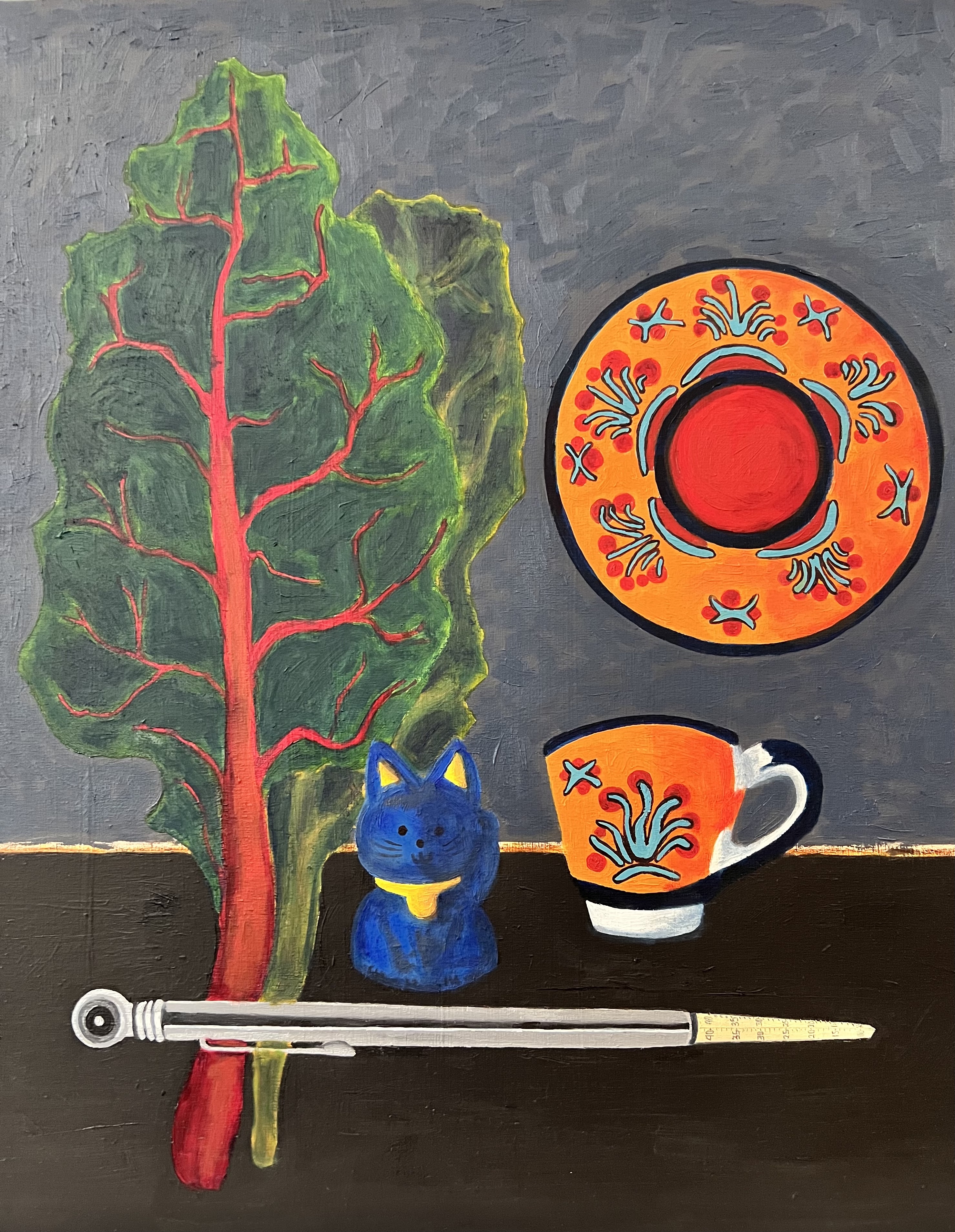
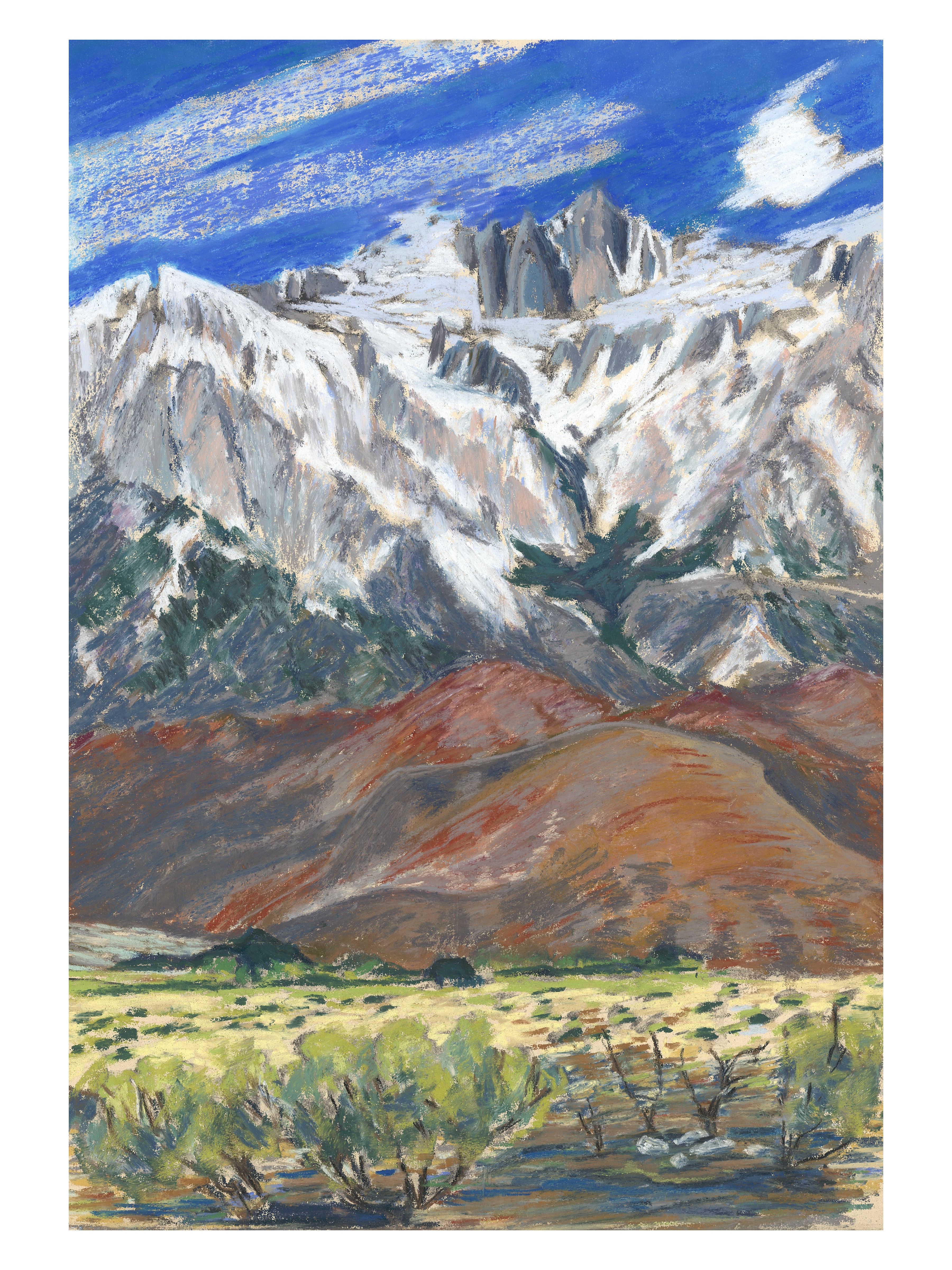
Tumanguya, also known as Mt. Whitney, in Spring. Robin L. Chandler, 2024.

“In 1750, nearly all of the world’s 750 million people, regardless of where they were or what political or economic system they had, lived and died within the biological old regime. The necessities of life – food, clothing, shelter, and fuel for heating and cooking – mostly came from the land, from what could be captured from annual energy flows from the sun to the Earth. Industries too, such as textiles, leather, and construction, depended on products from agriculture or the forest. Even iron and steel making in the biological old regime, for instance, relied upon charcoal made from wood. The biological old regime thus set limits not just on the size of the human population but on the productivity of the economy as well.

These limits would begin to be lifted over the century from 1750 to 1850, when some people increasingly used coal to produce heat and then captured that heat to fuel repetitive motion with steam-powered machines, doing work that previously had been done with muscle. The use of coal-fired steam to power machines was a major breakthrough, launching human society out of the biological old regime and into a new one no longer limited by annual solar energy flows. Coal is stored solar energy, laid down hundreds of millions of years ago. Its use in steam engines freed human society from the limits imposed by the biological old regime, enabling the productive powers and numbers of humans to grow exponentially. The replacement – with steam generated by burning coals – of wind, water, and animals for powering industrial machines constitutes the beginning of the Industrial Revolution and ranks with the much earlier agricultural revolution in importance for the course of history. The use of fossil fuels – first coal and then petroleum – not only transformed economies around the world but also added greenhouse gases to Earth’s atmosphere.”

Excerpt from Robert B. Marks’ The Origins of the Modern World: A Global and Environmental Narrative from the Fifteenth to the Twenty-First Century. Fifth Edition (p. 101 – 102)

The concept of the biological old regime, as discussed by Dr. Marks in great detail in Chapter One of the book, is based upon relationships, such as the rise of civilization and the agricultural revolution, the relationships between towns or cities and the countryside, between elites and peasants (also called agriculturalists or villagers), between civilizations and nomadic pastoralists, and between people and the environment 
home…home on the range

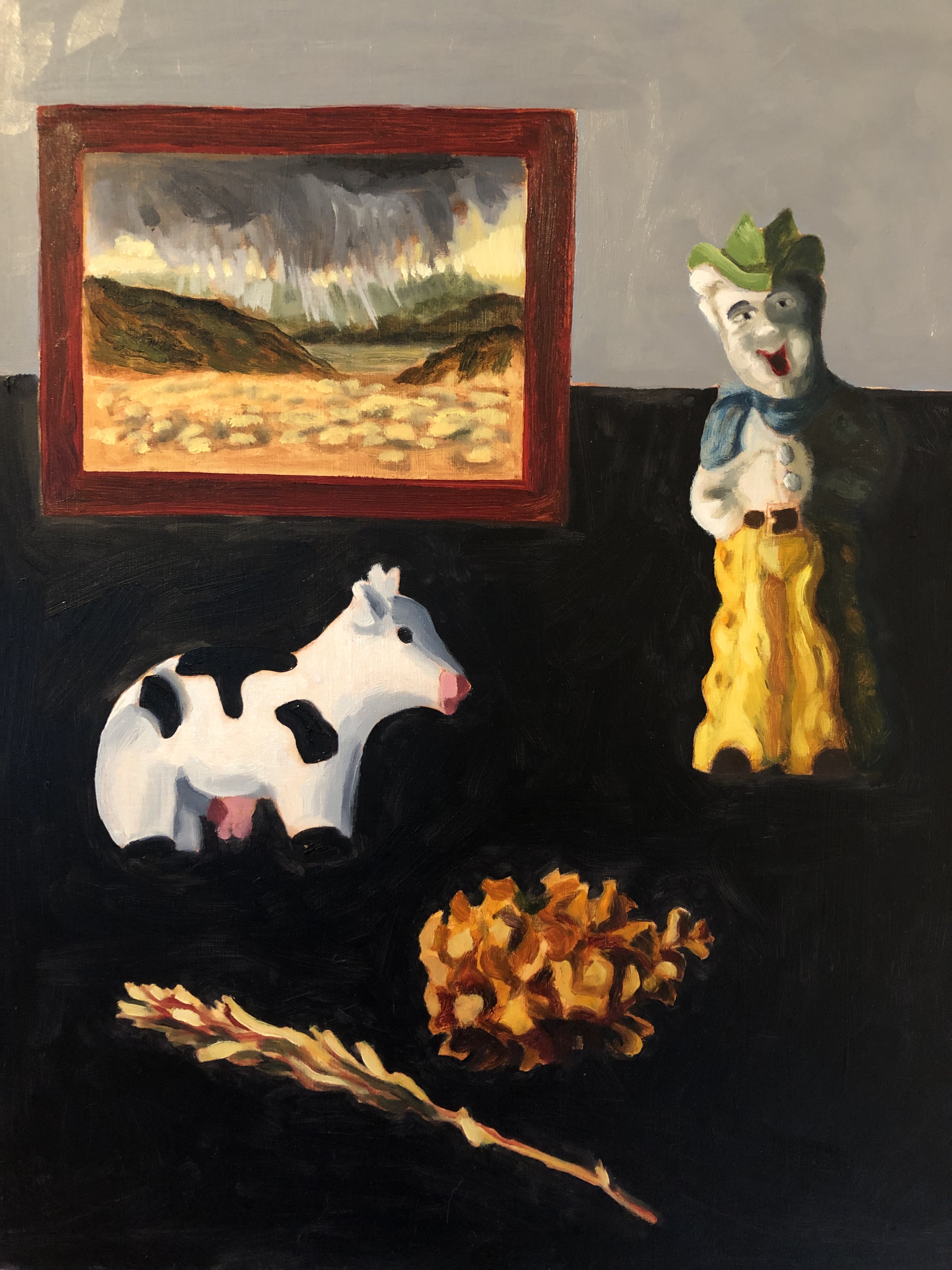
Where the Deer and the Antelope Play. Robin L. Chandler, 2022.

“…..as is well argued by Bruce Pascoe in his book Dark Emu, the Europeans had a terrible track record for arriving in a new world (Australia in the case of Dark Emu) and, as we all know, devastating the Native tribes by varying methods of genocide, or at least brutal displacement. In order to treat other human souls so viciously, this behavior on “our” part required a certain degree of denial. This was achieved by treating the American Natives, or the Aboriginal tribes in Australia as less than human – vermin, really – that required extermination, so that the proper “civilized” humans could set-up house. Pascoe succinctly points out that when the English made their reports detailing the progress of their settlements Down Under, they therefore had to necessarily ignore the complex civilizations of the local tribes entirely, despite their methods of surviving amicably in concert with nature that had been developed over millennia. Housing, farming, fishing complete economies: eradicated. Wiped off the face of Australia. “Nothing to see here, your highness, except some random savages!” Next, of course, the English heroically shipped in herds of grazing sheep and cows and attempted to plant their wheat and other continental grains, and then looked on stupidly as they all faltered and died in inhospitable soil, within an ecosystem that was entirely alien to the biology of their plants and animals. They exhibited all the common sense of hijacking a plane for its cargo of riches and then killing the pilots without gleaning any of their imperative knowledge. We’re all in so much of a hurry, then and now, to make money, that we never bother learning to land the son-of-a-bitching plane.”

Excerpt from Nick Offerman‘s book Where the Deer and the Antelope Play: The Pastoral Observations of One Ignorant American Who Loves to Walk Outside.

Chinese boxes

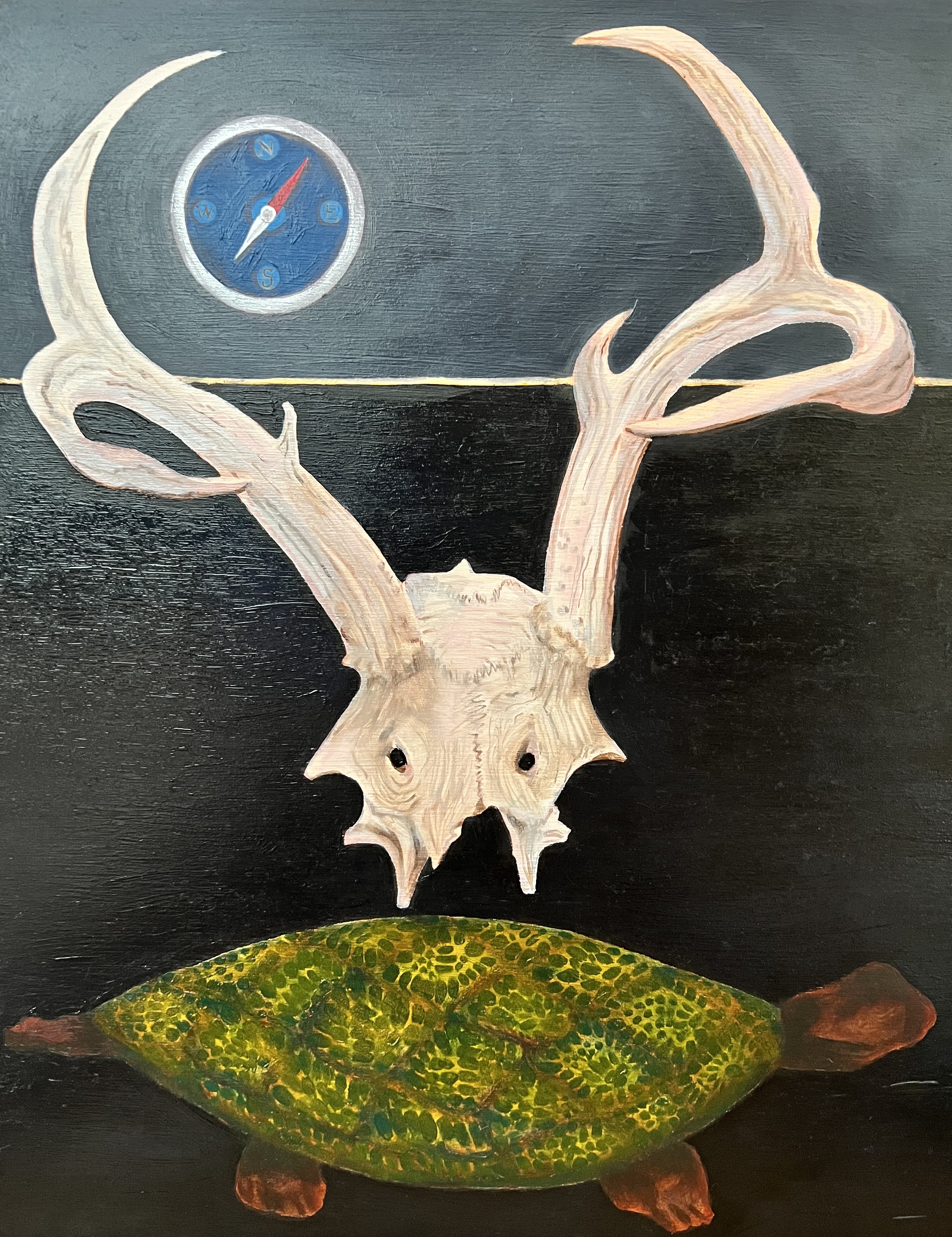
Chinese Boxes. Robin L. Chandler, 2022.

“…..that’s how my grandfather used to tell stories. The long wind-up, all the background, all those Chinese boxes; and then suddenly, the swift and expert slide into the finale…..where the connections between all the details you’d learned along the way…..he’d lingered over at the beginning, suddenly became clear.”

From Daniel Mendelsohn‘s The Lost: A Search for Six of Six Million

C = 2 π r

Robin L. Chandler, 2022

Where we lived, the settlers build their houses. Where

we drew fresh water, the oil companies sucked oil.

Where deer ran in countless numbers, we have a new

mall. Where the healing plants thrived; the river is

burning. Now, a fence cuts the road home. Next the sky

will be tethered, and we will pay for air.

From Conflict Resolution for Holy Beings by Joy Harjo

the demands of certainty lead inevitably to tragedy

Powerlock. Robin L. Chandler, 2022.

Obsidian is so sharp that you can use it to cut your lousy life to pieces, and then when you have the original parts, the real ones, you can put them back together and have a clean assembly of things and see the world as it is and always was, and get to work at last, before it’s too goddam late.

-A Nevada hermit living near Big Smoky Valley

Excerpt from the book The Paradise Notebooks: 90 Miles across the Sierra Nevada by Richard J. Nevle & Steven Nightingale

The Coyolxauhqui imperative is to heal and achieve integration. When fragmentations occur, you fall apart and feel as though you’ve been expelled from paradise. Coyolxauhqui is my symbol for the necessary process of dismemberment and fragmentation, of seeing that self or the situations you’re embroiled in differently. Coyolxauhqui is also my symbol for reconstruction and reframing, one that allows for putting the pieces together in a new way. The Coyolxauhqui imperative is an ongoing process of making and unmaking. There is never any resolution, just the process of healing.

-Gloria E. Anzaldua

Excerpt from the book Light In The Dark/ Luz En Lo Oscar: Rewriting, Identity, Spirituality, Reality by Gloria E. Anzaldua and edited by Analouise Keating

for our Grinnell

fragile and fleeting. Robin L. Chandler, 2022.

To live to mourn an ancient woodland, known

Always, loved with an old love handed down,

That is a grief that will outlast the griever,

Grief as landmark, grief as a wearing river

That in its passing stays, biding in rhyme

Of year with year, time with returning time,

As though beyond the grave the soul will wait

In long unrest the shaping of the light

In branch and bole through the centuries that prepare

This ground to pray again its finest prayer.

An excerpt from Wendell Berry’s A Timbered Choir, 1987: III

Today March 31, 2022 our beloved Grinnell, peregrine falcon and mate for seven years to Annie, passed away. Thank you Grinnell for gracing our lives and for giving us so many treasured moments. Life is so fragile and so precious. You will soar always in our hearts.

for Kyiv

Robin L. Chandler, 2022.

Bees build around the honeycomb of lungs,

Ants build around white bone.

Torn is paper, rubber, linen, leather, flax,

Fiber, fabrics, cellulose, snakeskin, wire.

The roof and the wall collapse in flame and heat seizes the foundations.

Now there is only the earth, sandy, trodden down,

With one leafless tree.

Excerpt from the poem A Poor Christian Looks At The Ghetto by Czeslaw Milosz

nature and nurture

Point Reyes. Robin L. Chandler, 2022.

“Did you know, Dad, that if you write the word ‘red’ in green and ask a small child to tell you the color, the answer will be ‘green?’ But if you show the same word to an adult, the answer will be red. Children see the color, not the word. Adults see the word, and not the color.”

I am an advocate for wild creatures, rare plants, arrays of native vegetation, clean water, fish, stewardship of natural resources, and learning. I believe these things are compatible with ranching, sometimes lost without ranching. Some people call me a cowboy. A lot of good cowboys call me an environmentalist. I suppose there are lots of labels you can attach to me. There was a time when doing so was hurtful, so I threw back labels of my own. We throw a lot of anger at each other with words. It doesn’t do much for the land, really.

The time has come to see colors, not words.

Excerpt from the essay Colors and Words by Bob Budd in Ranching West of the 100th Meridian: Culture, Ecology, and Economics

we do not know

Robin L. Chandler, 2021.

WE DO NOT KNOW THE FUTURE. We do not know when the next war will start. We do not know when the last glacier will melt. We do not know when the last coral reef will bleach. We do not know how much oil we might still burn. We do not know when the last Javan rhinoceros will die. We do not know how nation-states will cope with millions of climate refugees. We do not know what policies economic crisis will be used to justify. We do not know when the Amazonia will collapse. We do not know how many more concentration camps will be built. We do not know when the Colorado River will go dry. We do not know toward what insidious ends the righteous hate of the downtrodden will be turned. We do not know when the Arctic Ocean will be ice free. We do not know what politics looks like in a world of catastrophic ecological collapse. We do not know when the Gulf Stream will slow to a stop. We do not know what we are capable of getting used to.

From Beginning with the End by Roy Scranton in Emergence Magazine

land of little rain

the east side. Robin L. Chandler, 2021.

It is thus that the novel takes its modern form, through “the relocation of the unheard-of toward the background…while the everyday moves into the foreground.” There is, however, an important difference between the weather events that we are now experiencing and those that occur in surrealist and magical realist novels: improbable though they might be, these events are neither surreal nor magical. To the contrary, these highly improbable occurrences are overwhelmingly, urgently, astoundingly real.

Amitav Ghosh The Great Derangement: Climate Change and the Unthinkable