“Mass extinctions are extremely rare and catastrophic events, but the human-driven one is seldom deemed newsworthy by the dominant media. This is not an incidental oversight: the destruction of life’s diversity must remain invisible or obscure in the public domain, because it is fully entangled with the freedoms that people (are goaded to) value and seek.”
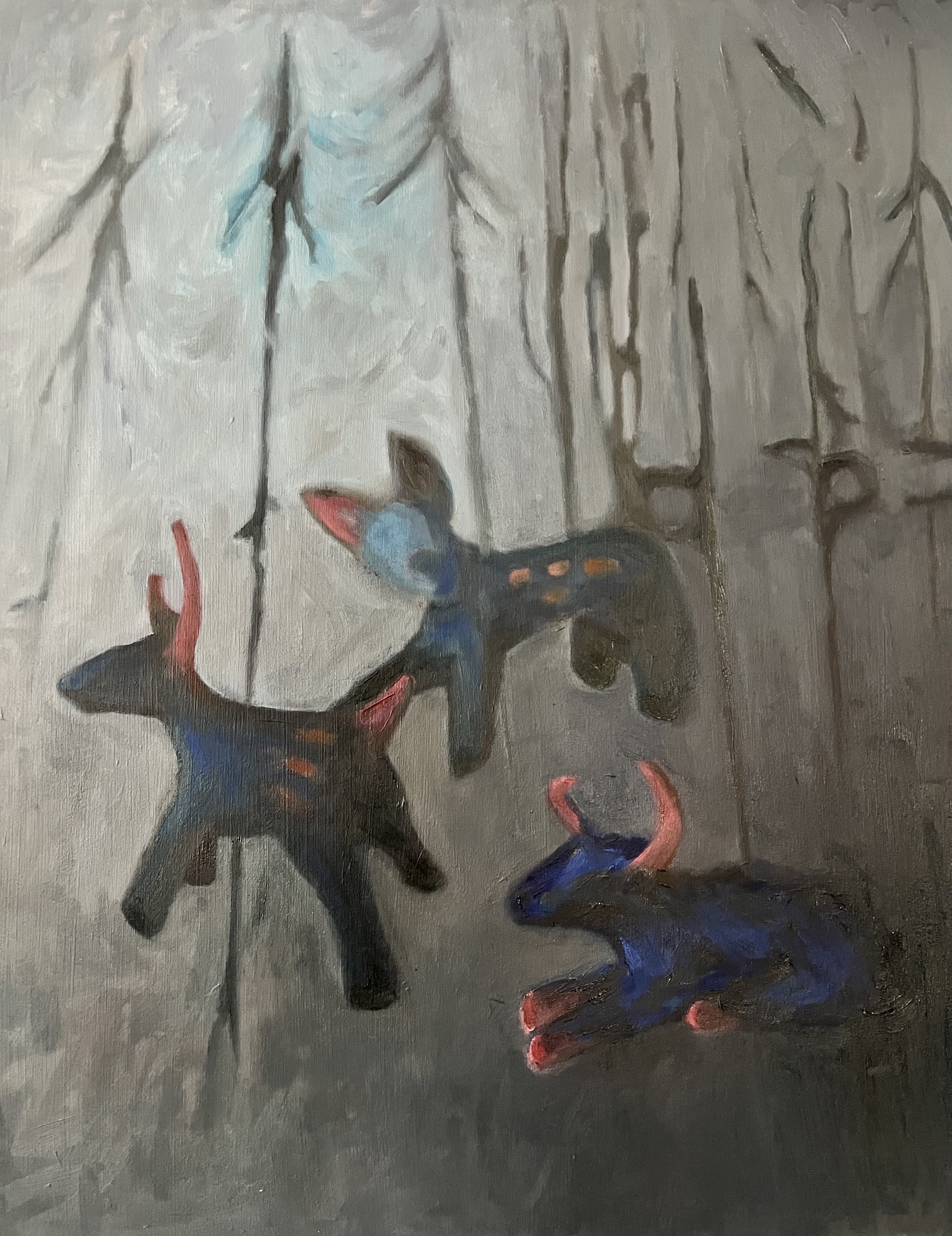
Black tailed deer in the forest near Drake’s Estero, Point Reyes. Robin L. Chandler, 2025.
“What can turn us from this deserted future, back into the sphere of our being, the great dance that joins us to our home, to each other and to other creatures, to the dead and the unborn? I think it is love. I am perforce aware how badly and embarrassingly that word now lies on the page – for we have learned at once to overuse it, abuse it, and hold it in suspicion. But I do not mean any kind of abstract love, which is probably a contradiction in terms, but particular love for particular things, places, creatures, and people, requiring stands and acts, showing its successes or failures in practical or tangible effects. And it implies a responsibility just as particular, not grim or merely dutiful, but rising out of generosity…”
“…there in the empty desert; there are the arid mountains; they shimmer in the ashen heart of noon, or swim in the far elusive colors of evening – a reality that appears unreal, challenging the imagination…you cannot argue with the silence. It returns your questionings to you, to your own inner silence which becomes aware – a mystical something that is neither reason nor intelligence nor intuition, a recognition of some nameless truth that may not be denied.” (p.234)
Quote from a letter written by the artist Maynard Dixon on the occasion of a retrospective exhibit of his work held in November 1945 at the Scripps College art gallery. This is an excerpt from The Life of Maynard Dixon by Donald J. Hagerty
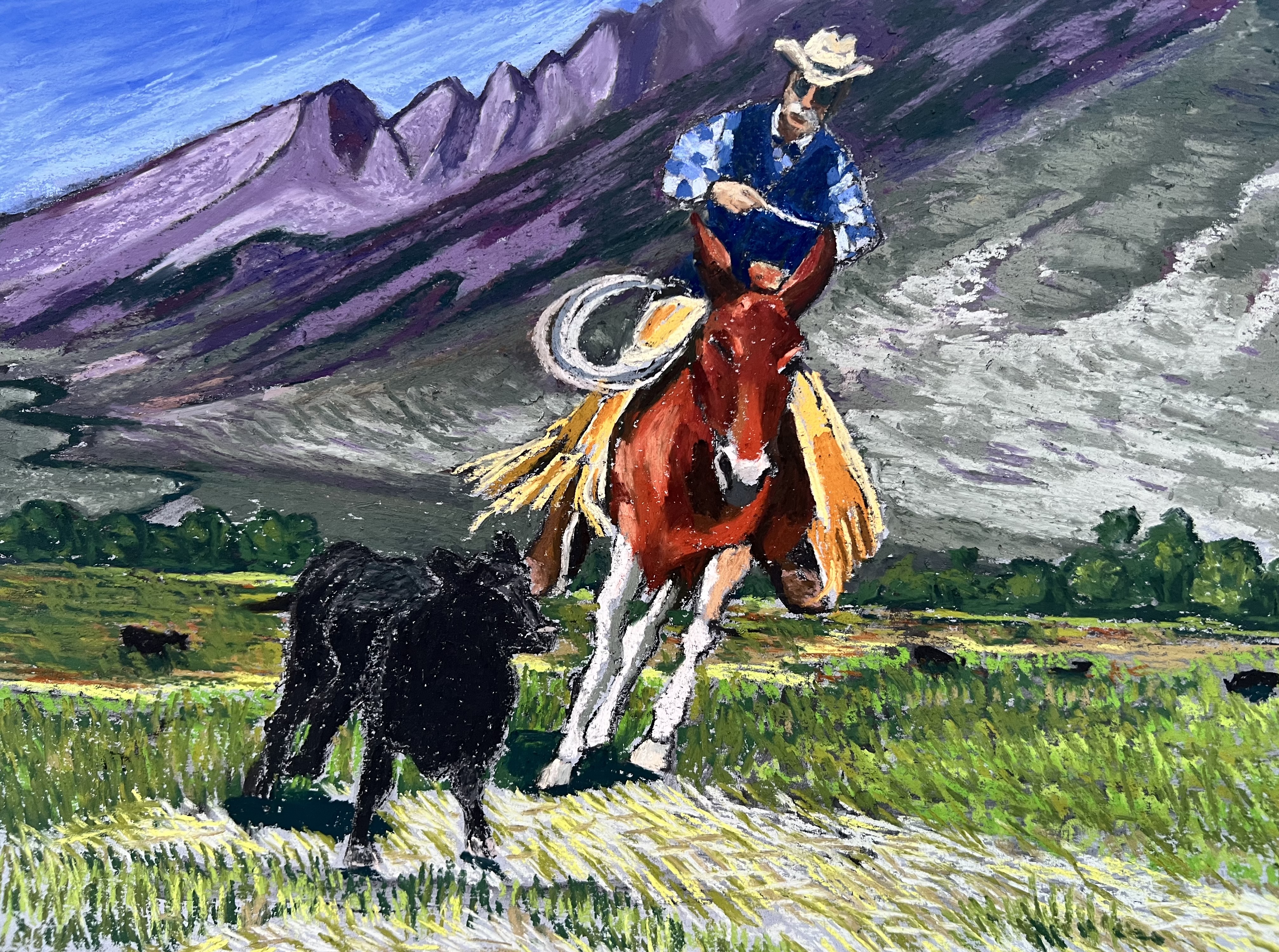
Inspired by Mule Days in Bishop. Robin L. Chandler, 2024
“The reality bequeathed us by centuries of pioneering and its industrial sequel made our great need the creation of a new reality. But only spiritual force can create. Reason directs and conserves. Reason, it follows, was an ideal guide for the progress westward: and remains an ideal preservative for the traditional moods. Pragmatism, in its servility to Reason, is supine before the pioneer reality whose decadent child it is. As a recreative agent of American life – which it claimed to be – it was destined to be sterile: destined to rationalize and fix whatever world was already in existence. The legs of the pioneer had simply become the brains of the philosopher.” (28 – 29)
“America was builded on a dream of fair lands…..in the infinitely harder problems of social and psychic health, the dream persists. We believe in our Star. And we do not believe in our experience. America is filled with poverty, with social disease, with oppression and with physical degeneration. But we do not wish to believe that this is so. We bask in the benign delusion of our perfect freedom. In the same way, the pioneer…..believed only in pressing on. There is this great difference, however. Physical prowess throve best unconsciously and fostered by a dream. Spiritual growth without the facing of the world is an impossible conception.” (31 – 32)
Excerpts from Our America by Waldo Frank published in 1919
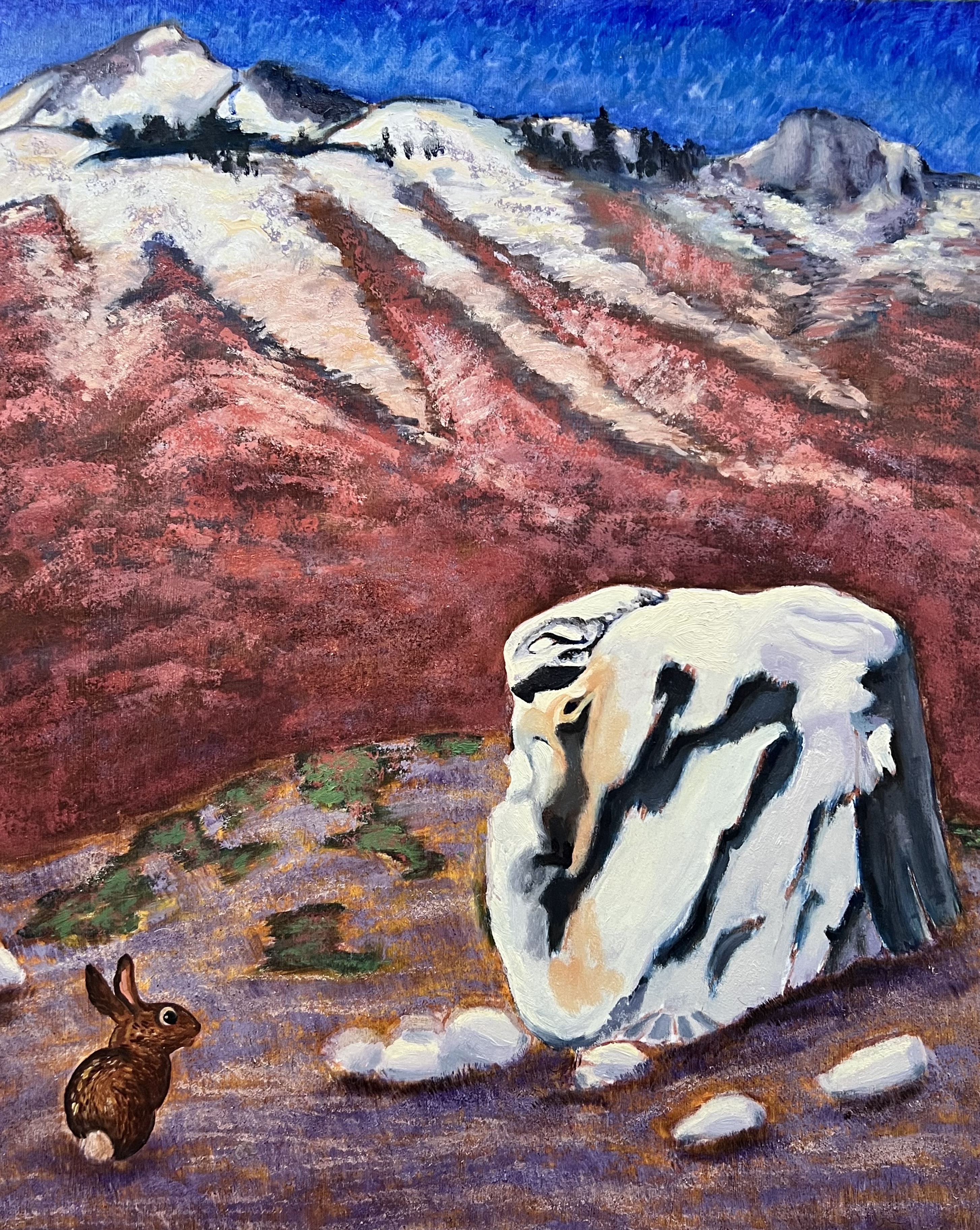
Wit-Sa-Nap Creek Winter Sunset. Robin L. Chandler, 2024
“[According to the Avatamsaka Sutra,] Indra’s net is pictured as stretching indefinitely in all directions, and at each of the knots of the net is a glittering jewel. All the other jewels in the net are reflected in each individual jewel, and each jewel reflected is also reflecting all the other jewels. This metaphor describes what was called, in Pali (the original language of the Buddhist canon), paticca samupadda, “dependent co-arising.” Modern Buddhist teachers have called it “interbeing,” or “the harmony of universal symbiosis.” This is a theory of mutual intercausality, interconnectedness, and interdependence. It is a worldview from the same ecophilosophical galaxy as Alexander von Humboldt’s “kosmos,” the Nuu-chah-nulth First Nation’s principle of hisuknis cawaak, and the “everything is connected” view at the heart of ecology. When Thoreau wrote that humans need to “realize where we are and the infinite extent of our relations,” he had this kind of idea in mind.
We think in metaphors, often — and even scientists do. Metaphors are the templates of pattern, and having those templates helps scientists — and everyone — “see” the patterns and relationships underlying the superficial “data” of experience, which often appear chaotic. Thoreau wrote in his journal on August 5, 1851, “The question is not what you look at, but what you see.” Seeing deep patterns needs a metaphoric, poetic mind.” (p.166)
The Sierra Nevada Red Fox pictured in my painting is endangered; there are less than forty of these beautiful creatures remaining in the California counties of Alpine, Fresno, Inyo, Madera, Mono and Tuolumne. As an artist, I choose to make art that fosters kinship with the earth by capturing glimpses of the world’s beauty. I hope that inspiring others to understand our interconnectedness with nature will help preserve the earth- and in this case, the Sierra Nevada Red Fox – for future generations.
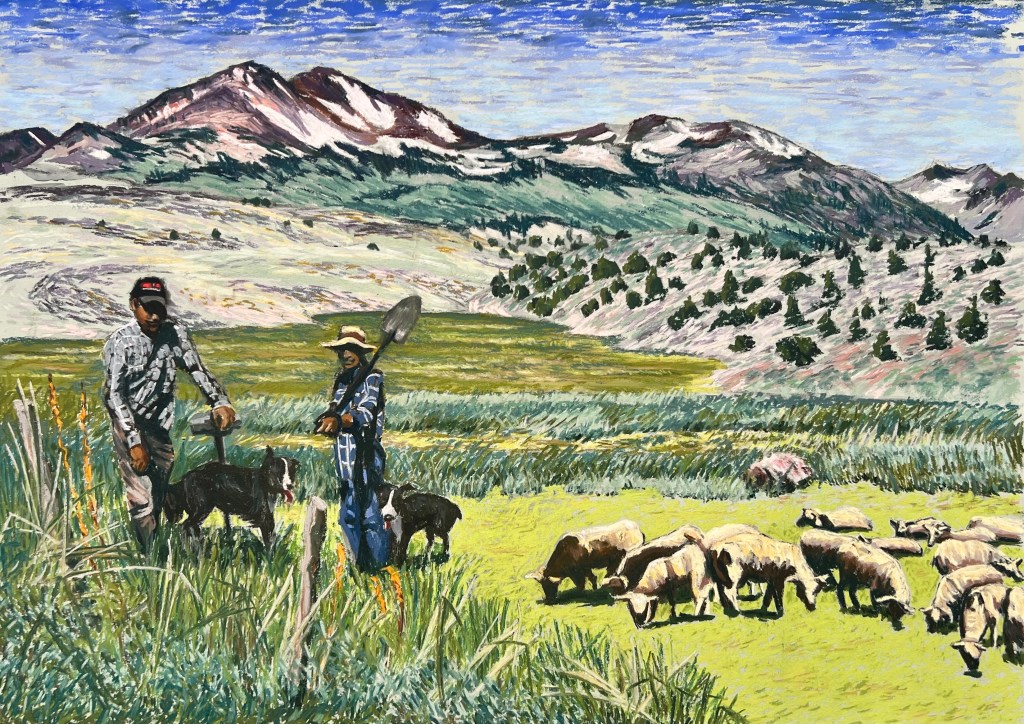
Walking along Division Creek near the Sawmill Pass Trailhead. Robin L. Chandler, 2023.
“Away from the sounds of roads and the glare of carbon-arc streetlights, it is quiet here. Some would say it is peaceful, but that is not the right word. This land throbs with life in every season and at every hour. And the quiet itself is not truly quiet. In the absence of the noise of jets and air conditioners, internal combustion engines and recorded music that blankets our perception in most of the human environments of America, ten thousand subtler voices may be heard.”
In February, I decided to see the snow. The weather broke for a week and I took advantage of blue skies and snow cleared roads to visit the East Side of the Sierras during this extraordinary California winter! The snowcapped Sierras were magnificent! Walking with my friends in the fields and along the waterway canals surrounding Bishop, we met horses, mules, and burros – for me the “holy trinity of the Sierras” – in their winter pastures, resting before their busy summer hauling supplies into the high mountains from pack stations, such as McGee Creek, Pine Creek, and Rock Creek, for hikers and fishermen to camp and sojourn alongside alpine lakes.
Writing about a summer pack into the California Sierras, Everett Ruess wrote, “much of the time I feel so exuberant, I can hardly contain myself. The colors are so glorious, the forests so magnificent, the mountains are splendid, and the streams so utterly, wildly, tumultuously, effervescently joyful that to me, at least, the world is a riot of sensual delight.”
In his Sunday, September 16, 1933, journal entry during his Sierra adventure, Ruess wrote about his day trekking with his burros Grandma and Betsy:
Up before day. There was heavy frost on the meadow grass. I packed with surpassing adroitness and celerity. We went up the north fork of Mono creek and climbed out of the canyon by the edge of a waterfall. I quarreled with the trailmakers several times, but it seems they went in the best way, after all. We passed some lakes and climbed to Silver Pass, where I was “High in the white windy presence of eternity”…..
After lunch, when the burros had rested and eaten their fill, I packed with great rapidity and drove the burros down…..we reached a fork of the trail, and it appears that the Muir Trail does not go down Cascade and Fish Valley, but up to Mammoth Lakes. Reds Meadow and Devil’s Post Pile are my next destinations.
Instead of down, we went up hill, over two passes. We are now in terra incognita, for I do not have the Mt. Morrison quadrangle. In a valley below the second pass, I camped by a long lake that sparkled in the evening sun. I managed to have a bath and plunge before sunset, and felt the better for them. I salted the burros and had constarch pudding, lemon flavor for supper. Now the alpine glow is fading from the mountains.
Where the Deer and the Antelope Play. Robin L. Chandler, 2022.
“…..as is well argued by Bruce Pascoe in his book Dark Emu, the Europeans had a terrible track record for arriving in a new world (Australia in the case of Dark Emu) and, as we all know, devastating the Native tribes by varying methods of genocide, or at least brutal displacement. In order to treat other human souls so viciously, this behavior on “our” part required a certain degree of denial. This was achieved by treating the American Natives, or the Aboriginal tribes in Australia as less than human – vermin, really – that required extermination, so that the proper “civilized” humans could set-up house. Pascoe succinctly points out that when the English made their reports detailing the progress of their settlements Down Under, they therefore had to necessarily ignore the complex civilizations of the local tribes entirely, despite their methods of surviving amicably in concert with nature that had been developed over millennia. Housing, farming, fishing complete economies: eradicated. Wiped off the face of Australia. “Nothing to see here, your highness, except some random savages!” Next, of course, the English heroically shipped in herds of grazing sheep and cows and attempted to plant their wheat and other continental grains, and then looked on stupidly as they all faltered and died in inhospitable soil, within an ecosystem that was entirely alien to the biology of their plants and animals. They exhibited all the common sense of hijacking a plane for its cargo of riches and then killing the pilots without gleaning any of their imperative knowledge. We’re all in so much of a hurry, then and now, to make money, that we never bother learning to land the son-of-a-bitching plane.”
Today March 31, 2022 our beloved Grinnell, peregrine falcon and mate for seven years to Annie, passed away. Thank you Grinnell for gracing our lives and for giving us so many treasured moments. Life is so fragile and so precious. You will soar always in our hearts.
“Did you know, Dad, that if you write the word ‘red’ in green and ask a small child to tell you the color, the answer will be ‘green?’ But if you show the same word to an adult, the answer will be red. Children see the color, not the word. Adults see the word, and not the color.”
I am an advocate for wild creatures, rare plants, arrays of native vegetation, clean water, fish, stewardship of natural resources, and learning. I believe these things are compatible with ranching, sometimes lost without ranching. Some people call me a cowboy. A lot of good cowboys call me an environmentalist. I suppose there are lots of labels you can attach to me. There was a time when doing so was hurtful, so I threw back labels of my own. We throw a lot of anger at each other with words. It doesn’t do much for the land, really.
The time has come to see colors, not words.
Excerpt from the essay Colors and Words by Bob Budd in Ranching West of the 100th Meridian: Culture, Ecology, and Economics



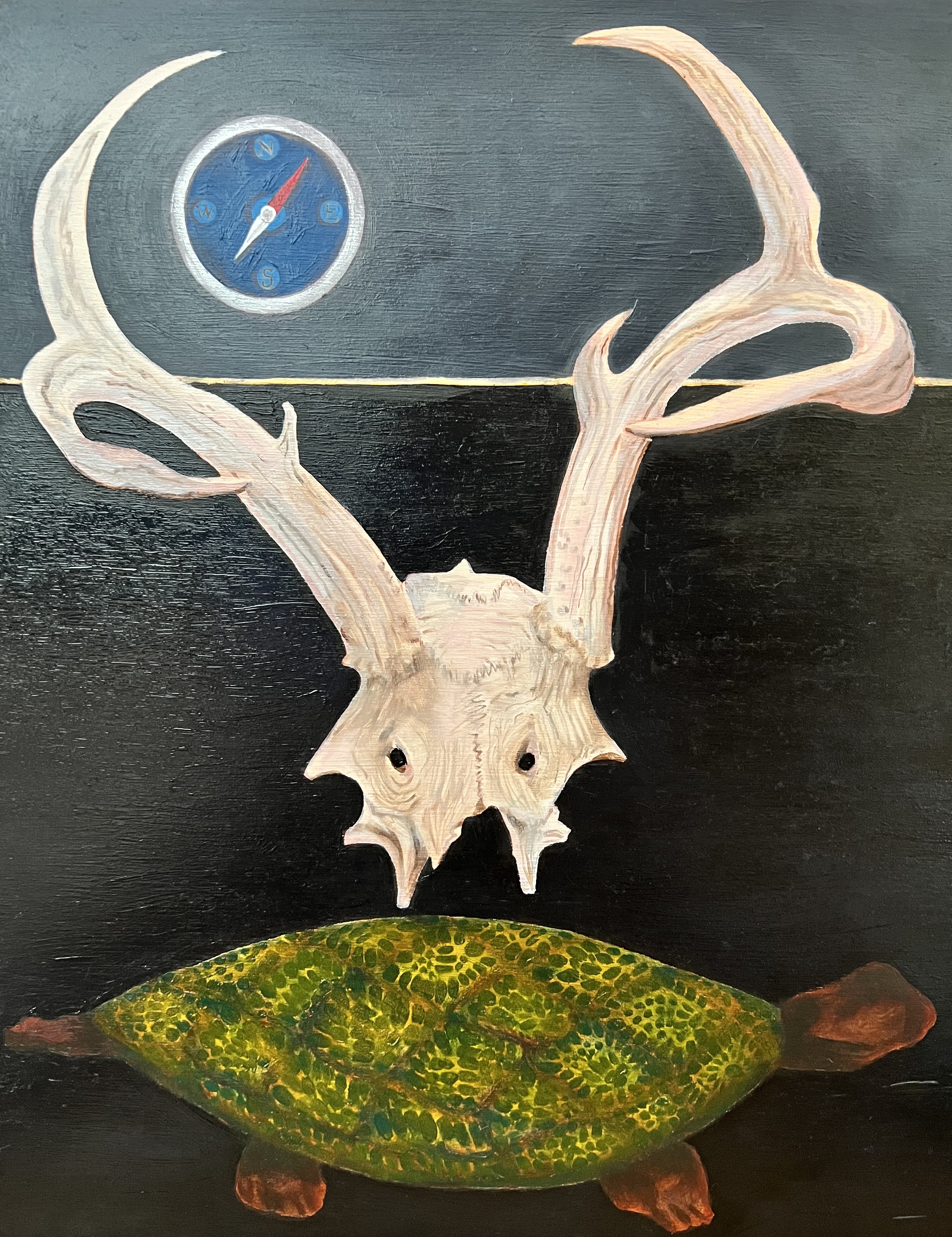


 alive in the sea of information