Glowing in the spirit

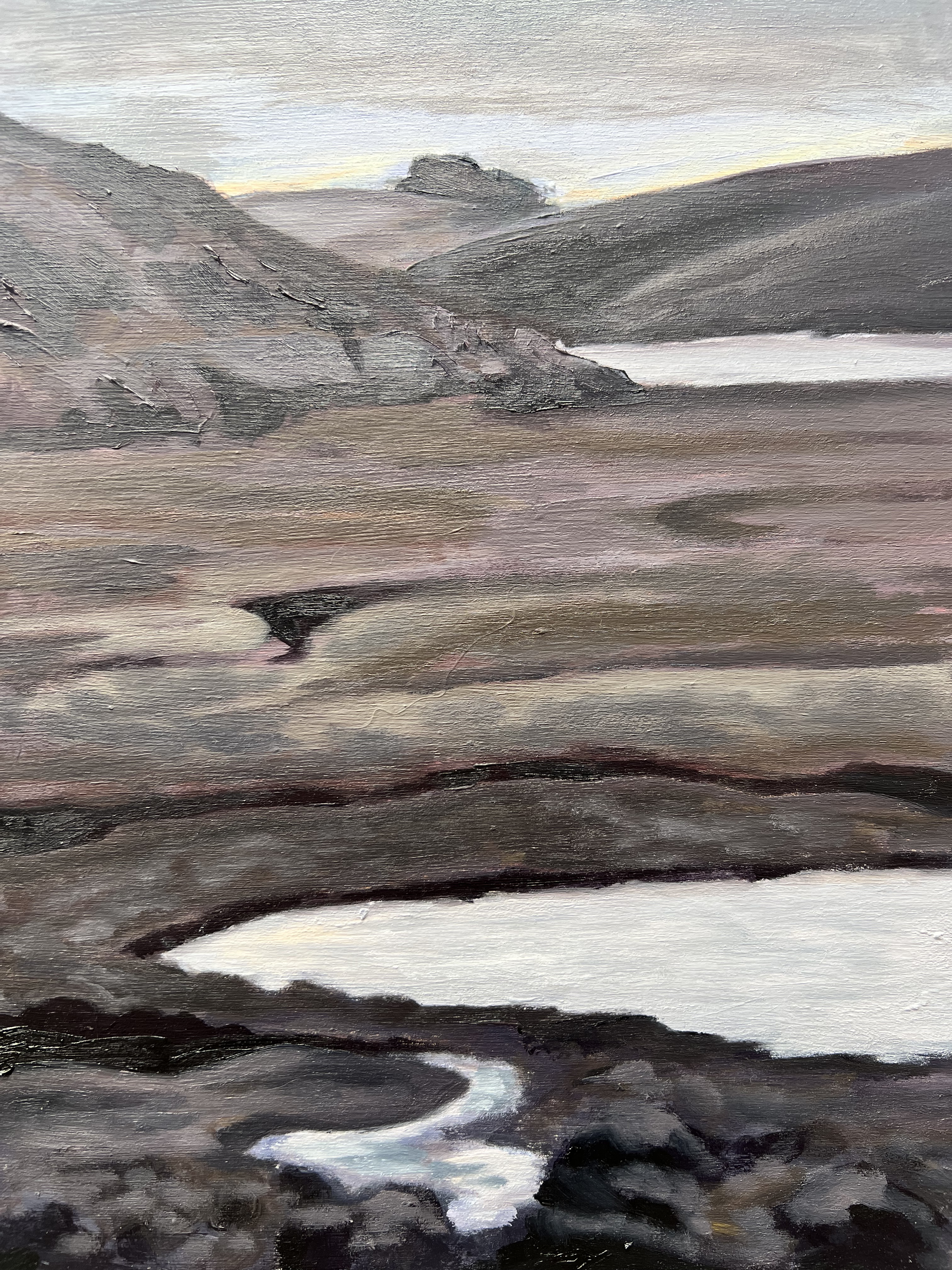
View from the Estero Trail at Point Reyes. Robin L. Chandler, 2025

Thomas [Mann] paid his bill and walked towards his grandmother’s house. He could see his two sisters now, waiting for the rest of the story. Both of them in their night attire, and he could see Heinrich sitting apart from them and always in a story their mother would sigh and say that she had work to do and would continue the story tomorrow. And they would appeal to her, beg her to finish the story and she always would.

The young composer’s name was Johann Sebastian Bach, she said, and he walked to Lübeck through wind and rain and often he could find no boardinghouse and had to sleep in haystacks or in fields. Often, he was hungry. Very often he was cold. But he was always sure of his purpose. If he could get to Lübeck, he would meet the man who would help him to become a great composer.

Buxtehude was almost in despair. Some days he really believed that his sacred knowledge would be buried with him. On other days, in his heart, he knew that someone would come and he dreamed that he would recognize the man immediately and he would take him to church, and he would share his secrets with him.

‘How would he recognize the man?’ Carla asked. ‘The man would have a light in his eyes, or something special in his voice,’ her mother said.

‘How could he be sure?’ Heinrich asked.

‘Wait! He is still on the journey and worried,’ she went on.

Every day the walk seems longer. He has told the man he works for that he will be away only a short time. He does not realize how far Lübeck is. But he does not turn back. He walks on and on, asking all the time how far Lübeck is. But it is so far that some people he meets have never even heard of Lübeck and they advise him to turn back. But he is determined not to, and eventually when he reaches Lüneberg, he is told that he is not far from Lübeck. And the fame of Buxtehude has spread to there. But because of all his time on the road, poor Bach, normally so handsome, looks like a tramp. He knows that Buxtehude will never receive a man as badly dressed as he is. But he is lucky. A woman in Lüneberg, when she learns of Bach’s plight, offers to lend him the clothes. She has seen the light in him.

And so Bach arrives in Lübeck. And when he asks for Buxtehude, he is told that he will be in the Marienkirche practicing the organ. And as soon as Bach steps into the church, Buxtehude senses that he is no longer alone. He stops playing and looks down from the gallery and sees Bach and behind him he sees the light, the light Bach has carried with him all the way, something glowing in his spirit. And he knows that this is the man to whom he can tell the secret.

‘But what is the secret?’ Thomas asked.

‘If I tell you, will you promise to go to bed’

‘Yes.’

‘It is called beauty,’ his Mother said. ‘The secret is called beauty. He told him not to be afraid to put beauty in his music. And then for weeks and weeks and weeks, Buxtehude showed him how to do just that.’

‘Did Bach ever give the woman back the clothes?’ Thomas asked.

‘Yes, he did on his way home. And on their piano, he played music for her that she thought came from heaven.’ “

Excerpt from Colm Toibin’s The Magician pgs. 496-497

the great dance that joins us

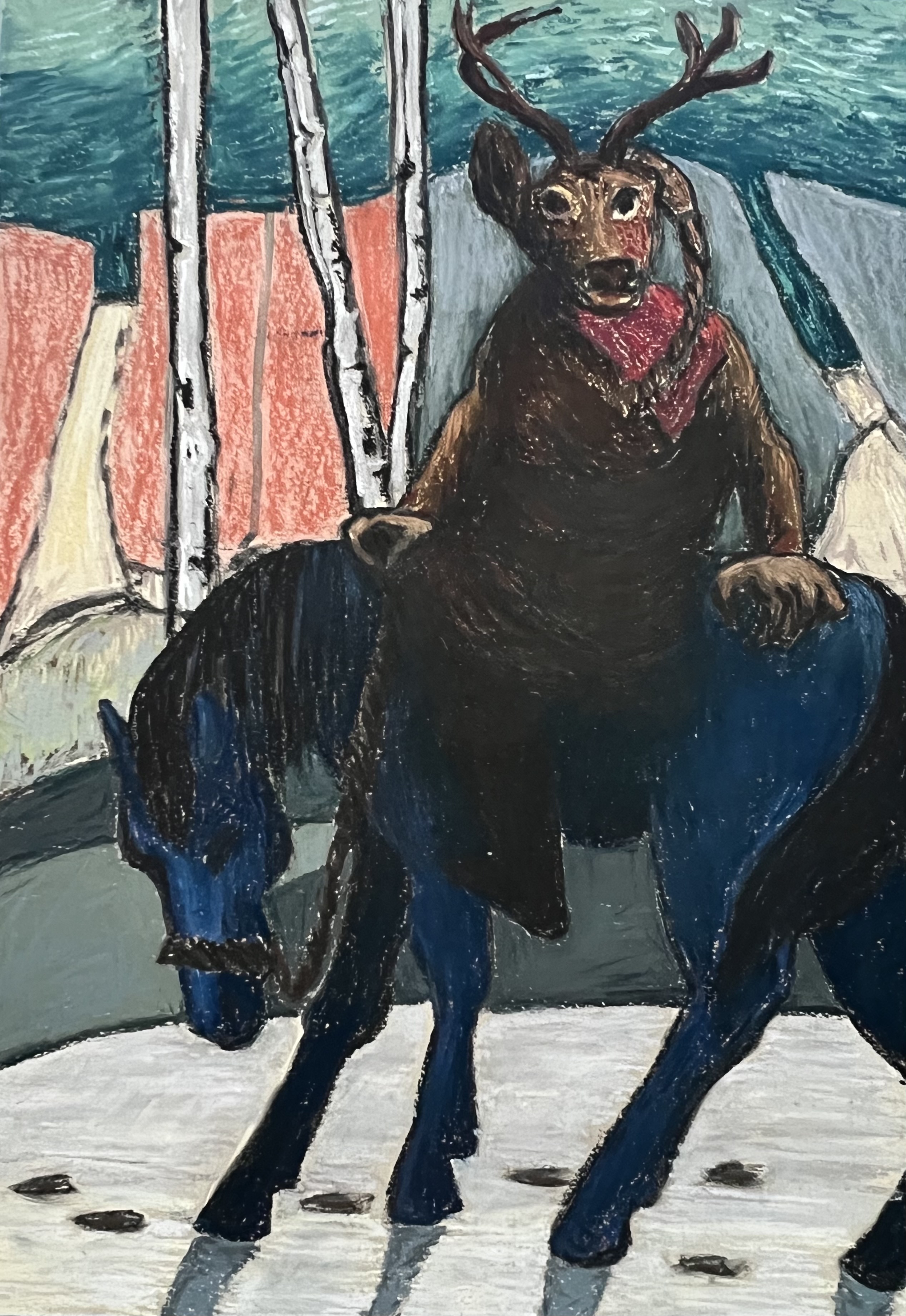
Black tailed deer in the forest near Drake’s Estero, Point Reyes. Robin L. Chandler, 2025.

“What can turn us from this deserted future, back into the sphere of our being, the great dance that joins us to our home, to each other and to other creatures, to the dead and the unborn? I think it is love. I am perforce aware how badly and embarrassingly that word now lies on the page – for we have learned at once to overuse it, abuse it, and hold it in suspicion. But I do not mean any kind of abstract love, which is probably a contradiction in terms, but particular love for particular things, places, creatures, and people, requiring stands and acts, showing its successes or failures in practical or tangible effects. And it implies a responsibility just as particular, not grim or merely dutiful, but rising out of generosity…”

Excerpt from a broadside by Wendell Berry produced to honor the legacy of North Point Press, 1980 – 1991.

what one touches

Limantour Estero, Point Reyes. Robin L. Chandler, 2025

“I think of two landscapes – one outside the self, the other within. The external landscape is the one we see – not only the line and color of the land and its shading at different times of the day, but also its plants and animals in season, its weather, its geology, the record of its climate and evolution. If you walk up, say, a dry arroyo in the Sonoran Desert you will feel a mounding and rolling of sand and silt beneath your foot that is distinctive. You will anticipate the crumbling of sedimentary earth in the arroyo bank as your hand reaches out and in the tangible evidence you will sense a history of water in the region. Perhaps a black-throated sparrow lands in a paloverde bush – the resiliency of the twig under the bird, that precise shade of yellowish green against the milk-blue sky, the fluttering whir of the arriving sparrow, are what I mean by “the landscape.” Draw on the smell of creosote bush, or clack stones together in the dry air. Feel how light is the desiccated dropping of the kangaroo rat. Study an animal track obscured by the wind. These are the elements of the land and what makes the landscape comprehensible are the relationships between them.  One learns a landscape finally not by knowing the name or identity of everything in it, but by perceiving the relationships in it – like that between the sparrow and the twig. The difference between the relationships and the elements is the same as that between history and a catalog of events.

The second landscape I think of is an interior one, a kind of projection within a person of a part of the exterior landscape. Relationships in the exterior landscape include those that are named and discernable, such as the nitrogen cycle, or a vertical sequence of Ordovician limestone, and others that are uncodified or ineffable, such as winter light falling on a particular kind of granite, or the effect of humidity on the frequency of a blackpoll warbler’s burst of song. That these relationships have purpose and order, however inscrutable they may seem to us, is a tenet of evolution. Similarly, the speculations, intuitions, and formal ideas we refer to as “mind” are a set of relationships in the interior landscape with purpose and order; some of these are obvious, many impenetrably subtle. The shape and character of these relationships in a person’s thinking, I believe, are deeply influenced by where on this earth one goes, what one touches, the patterns one observes in nature – the intricate history of one’s life in the land, even a life in the city, where wind, the chirp of birds, the line of a falling leaf, are known. These thoughts are arranged, further, according to the thread of one’s moral, intellectual, and spiritual development. The interior landscape responds to the character and subtlety of the exterior landscape; the shape of the individual mind is affected by land as it is by genes.”

Excerpt from Barry Lopez’s essay “Landscape and Narrative” published in the ebook Vintage Lopez (p.3 -4) 

ash and bone

Walking along Inverness Ridge among the new growth of bishop pines after the Vision Fire (1995); in the distance are douglas firs burned in the Woodward Fire (2020). Robin L. Chandler, 2025.

We were afraid to go back

afraid to listen to the stories

ash and bone might tell

We wanted to believe our lives were immutable

untouchable by nature, fate or disaster

At twilight we skirted the base of the first burned hill

reclaimed her scorched shoulder

her ruined slope

The ground beneath our feet released puffs of smoke

like ancient ghosts they rose up around us

to disappear into wind…..

Excerpt from the poem “After the Fires” by Devereaux Baker published in California Fire & Water: A Climate Crisis Anthology edited by Molly Fisk (p.15)

“When Sir Francis Drake spent a month in 1579 repairing his ship in the bay that now bears his name, the hills and ridges to the east would have been mostly open grassland or coastal scrub because of the Miwok’s liberal use of fire as a key tool of their ecological management and because of grazing by herds of elk, which benefited from the anthropogenic burning. The same was true when Sebastian Ceremeno, a Portuguese navigator and explorer sailing on the Manilla galleon route, was shipwrecked in Drakes Bay in 1595. Richard Henry Dana, visiting San Francisco Bay in 1840 described the herds of elk he could see on the open headlands.” (p.84)

“The [Mt.] Vision Fire started on October 3, 1995, and burned for about a week in an area mostly designated as park wilderness, eventually burning almost twelve thousand acres. Some local boys apparently thought they had drowned their campfire, but they hadn’t. It’s a story that reminds me of Henry David Thoreau; on a camping trip with a friend in April 1844, their campfire got out of control and almost burned down their hometown of Concord, Massachusetts. Many years later, that experience led Thoreau to investigate the fire ecology of his local ecosystem. He recognized the influence of past Native American burning on the landscape and became essentially the first published fire ecologist through his writing on the subject. The Vision Fire burned an area partly dominated by bishop pine, Pinus muricata. Bishop pine became so familiar with fire that it evolved a relationship that could be called “friends with fire.”  (p.86-87)

Excerpt from the chapter “Making Friends with Fire” published in Bruce Byer’s book titled Nature on the Edge: Lessons for the Biosphere from the California Coast.

the tangle of human failures

Reinman. Robin L. Chandler, 2024

“After dancing all night in a circle we realize that we are a

                  part of a larger sense of stars and planets dancing with us

                  overhead.

When the sun rises at the apex of the ceremony, we are

                  renewed.

There is no mistaking this connection, though Walmart

                  might be just down the road.

Humans are vulnerable and rely on the kindness of the 

                  earth and sun; we exist together in a sacred field of

                  meaning.”

Excerpt from Joy Harjo’s poem Talking with the Sun published in her book titled Conflict Resolution for Holy Beings: Poems (2015) (p.31)

ode to Gloucester

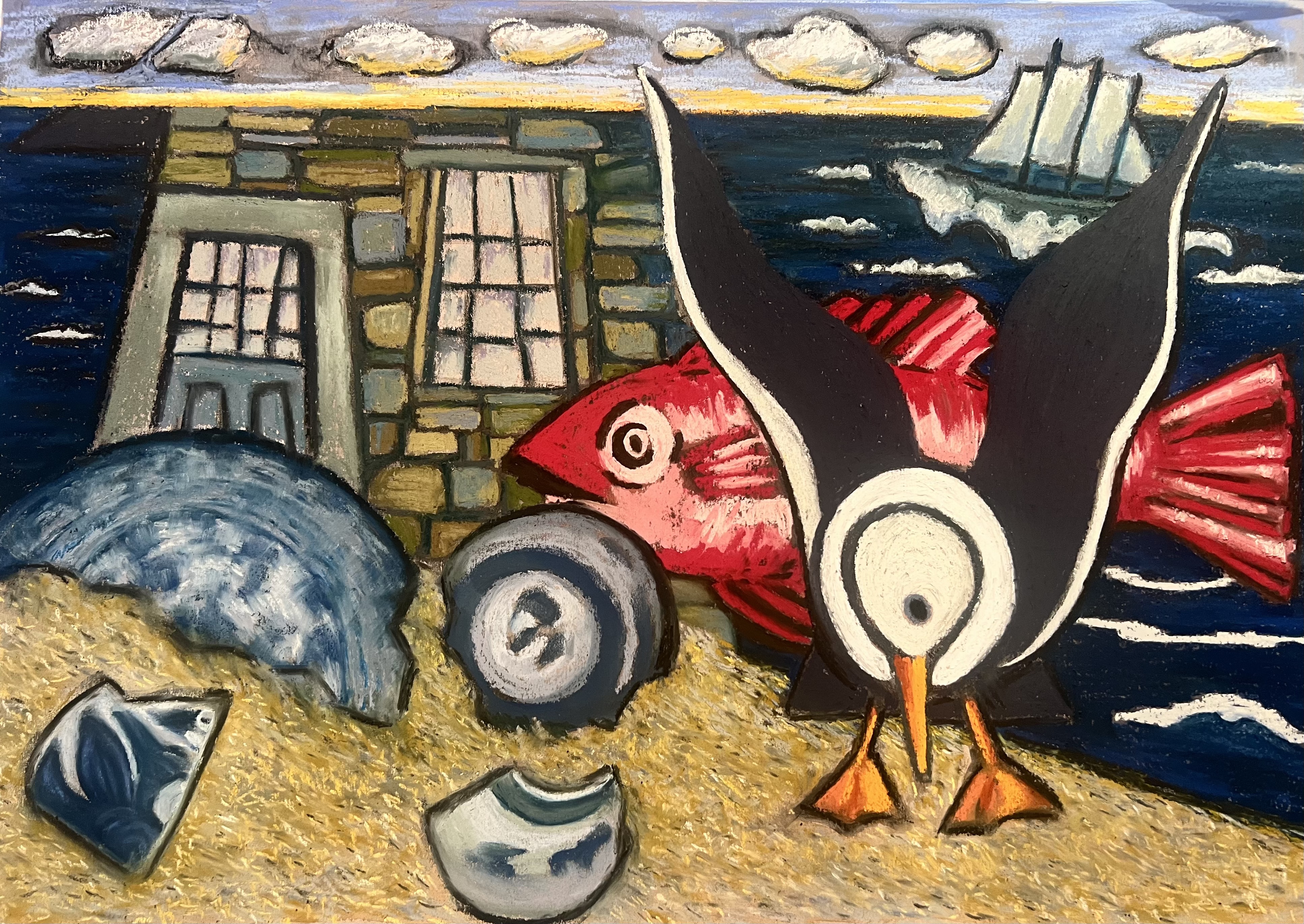
ode to Gloucester. Robin L. Chandler, 2024

Liberty for the few

Equality for the many

The criminal copies the oligarchy

Which is an international fold of moneys

The gulls of New England

Close their bills against the oil

Spills. At night pleasure rocks

In chairs and harbors

Wine colors contort on the goblets

From Selected Poems (2000) by Fanny Howe (p.105)

*****

“With [Charles] Olson his identity with the place, with Gloucester, give his major work, The Maximus Letters, a deep emotional center. The only other American writer who gives me the same sense of responding to a place, in both an historical and philosophic sense is Thoreau in his first book, A Week On the Concord And Merrimack Rivers.

“Olson, in one of the Letters’ most persistent themes, uses Gloucester as a poetic expression of the realities of history…..the sense of place in the letters is – in a final sense – so compelling because what Olsen is trying to hold on to is the sense of place in time, as well as the sense of the immediate place of Gloucester.”

“The Letters become less of the poet’s expression and more the historian’s as they go on, even though the history is handled as poetic material. In any of the single Letters the history is almost without meaning – odd facts, lists of provisions, inserted paragraphs on the fishing industry – but with the growth of the poem as a whole it is clear that something else is involved.”

“Sometimes I find myself thinking of Olson as an artisan, a worker with his hands, a carpenter, New England journeyman…..It is difficult to be both a historian and a poet, but by using some of his materials as an artisan he is usually able to keep the two together within the poem.”

“The fullest aspect of the poem is still its involvement with Gloucester, but it is also about the painter Marsden Hartley – the period of his work in Gloucester, the powerful, mythic, almost folk paintings of the 1930s. The emphasis of the Letter is still circular – within, from, and to Gloucester – but Olson has separated out a part of this experience, and given it a distinct, separate identity outside of the main currents of the rest of the Letters.”

“I’ve never decided whether or not Olson considers his poems difficult to follow or if he cares, but he is difficult, one of the most difficult of the modern poets to follow…sometimes as in the inner references of Letter 7 its because he doesn’t give enough away – at other times, as in the overall structure of the Letters, because he includes a maze of only distantly related material.

“The glimpse that Olson gives of Hartley does have its inner intensity. Is it only for someone who knows the paintings? Who is already familiar with Hartley’s life? It could be. The response to anything in Maximus has to be personal. For someone already deeply familiar with the painter and his work Olson’s poem, with all it’s rambling and discursion, is a sensitive, moving portrait…..whatever someone decides about the poem any American poet beginning to sort out his poetic background will have to find his own place in the Letters – to find his own place in the American vision of Charles Olson’s Gloucester.”

From Young Tom and Charlie: Two American Poets at Home in Gloucester Seven Poems by T.S. Eliot and Charles Olson and Two Commentaries by Amanda Cook and Samuel Charters Selected with an Introduction by Ann Charters (p.72 – 81)

The quotes are from the commentary by Samuel Charters.

Tumanguya: great spirit home

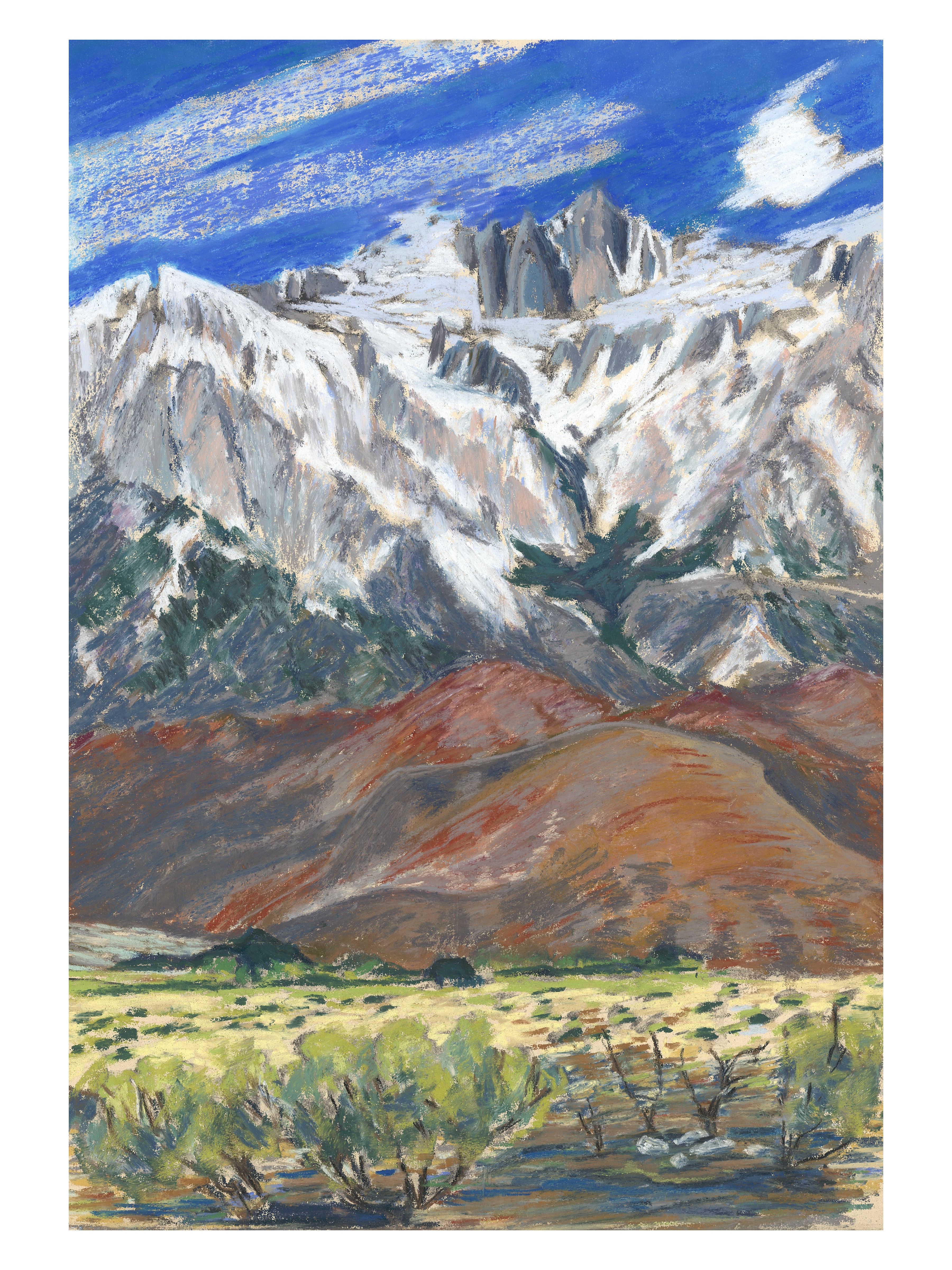
Tumanguya, also known as Mt. Whitney, in Spring. Robin L. Chandler, 2024.

“In 1750, nearly all of the world’s 750 million people, regardless of where they were or what political or economic system they had, lived and died within the biological old regime. The necessities of life – food, clothing, shelter, and fuel for heating and cooking – mostly came from the land, from what could be captured from annual energy flows from the sun to the Earth. Industries too, such as textiles, leather, and construction, depended on products from agriculture or the forest. Even iron and steel making in the biological old regime, for instance, relied upon charcoal made from wood. The biological old regime thus set limits not just on the size of the human population but on the productivity of the economy as well.

These limits would begin to be lifted over the century from 1750 to 1850, when some people increasingly used coal to produce heat and then captured that heat to fuel repetitive motion with steam-powered machines, doing work that previously had been done with muscle. The use of coal-fired steam to power machines was a major breakthrough, launching human society out of the biological old regime and into a new one no longer limited by annual solar energy flows. Coal is stored solar energy, laid down hundreds of millions of years ago. Its use in steam engines freed human society from the limits imposed by the biological old regime, enabling the productive powers and numbers of humans to grow exponentially. The replacement – with steam generated by burning coals – of wind, water, and animals for powering industrial machines constitutes the beginning of the Industrial Revolution and ranks with the much earlier agricultural revolution in importance for the course of history. The use of fossil fuels – first coal and then petroleum – not only transformed economies around the world but also added greenhouse gases to Earth’s atmosphere.”

Excerpt from Robert B. Marks’ The Origins of the Modern World: A Global and Environmental Narrative from the Fifteenth to the Twenty-First Century. Fifth Edition (p. 101 – 102)

The concept of the biological old regime, as discussed by Dr. Marks in great detail in Chapter One of the book, is based upon relationships, such as the rise of civilization and the agricultural revolution, the relationships between towns or cities and the countryside, between elites and peasants (also called agriculturalists or villagers), between civilizations and nomadic pastoralists, and between people and the environment 

standing tall

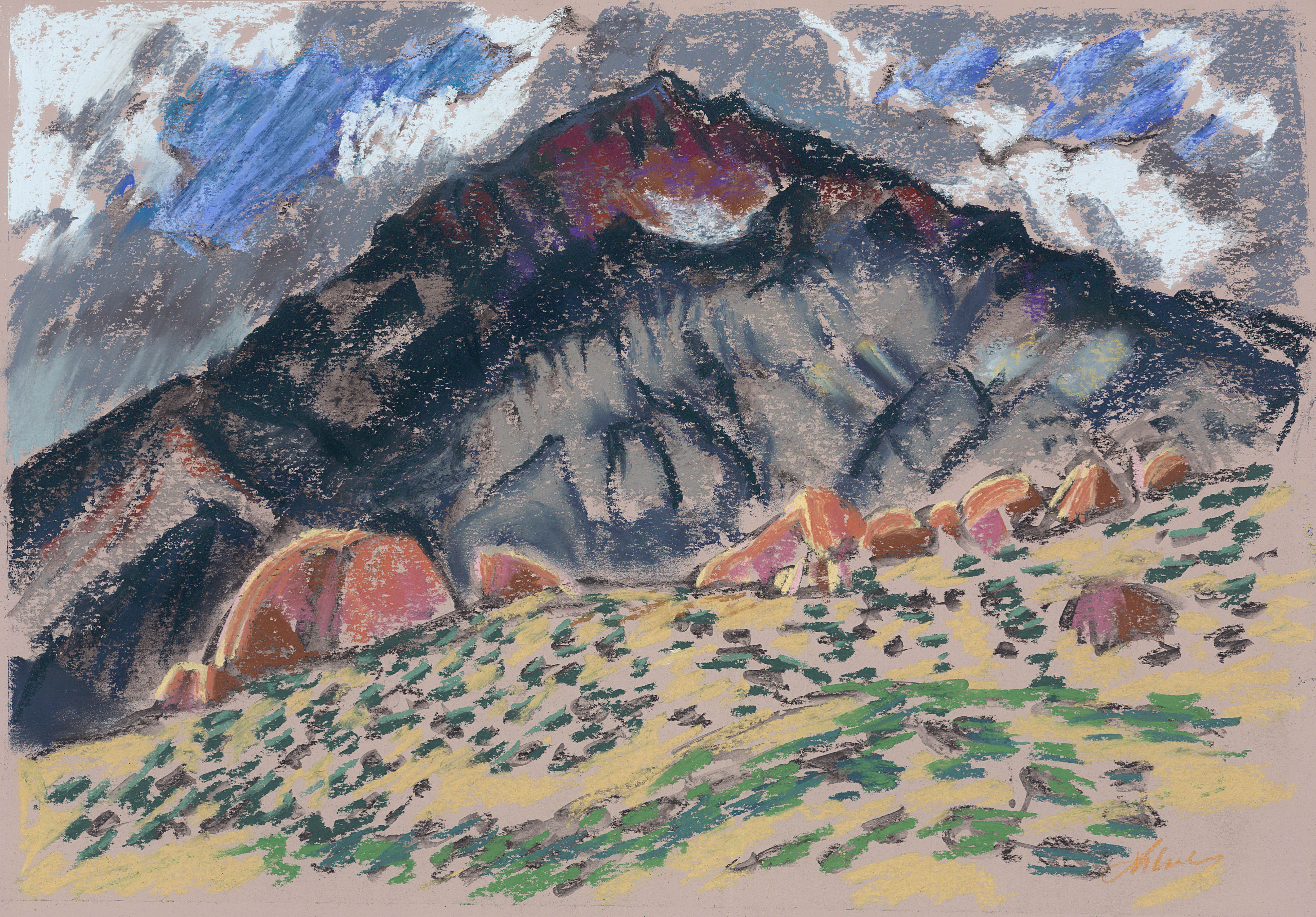
Winuba. Robin L. Chandler, 2023

“…..on a September afternoon…..I return to the Buttermilks, walking about six miles roundtrip on the wash-boarded and rutted road up to the monster boulders known as Grandma and Grandpa Peabody, a favorite haunt of rock climbers. It is an amazing hike. I meet and talk with several people who call Payahuunadu their home. I am hooked on the Buttermilks! Storms linger in the valley and the day is a patchwork of blue skies, rainbows, and occasional downpours, but mostly a sensational cloud cover frames the mountain the Numu Paiute called Winuba (“Standing Tall”). Winuba is known to many as Mount Tom, and at 13,658 feet is the commanding peak of the Upper Owens Valley. I scramble amongst the granite boulders and marvel at their size. Grandpa Peabody is 50 feet high and 65 feet in diameter. Based on analysis of the boulders’ composition, geologists conclude that earthquakes shook these boulders loose from the ridgecrest and they rolled downslope, coming to rest in this field. I made this pastel in the studio from a photograph I took that day; the large pink boulder on the left is Grandpa Peabody.”

Excerpt from my book Awakened in the Range of Light: Art, Pilgrimage, and Friendship in the Sierra Nevada (p.42)

The Slim Princess

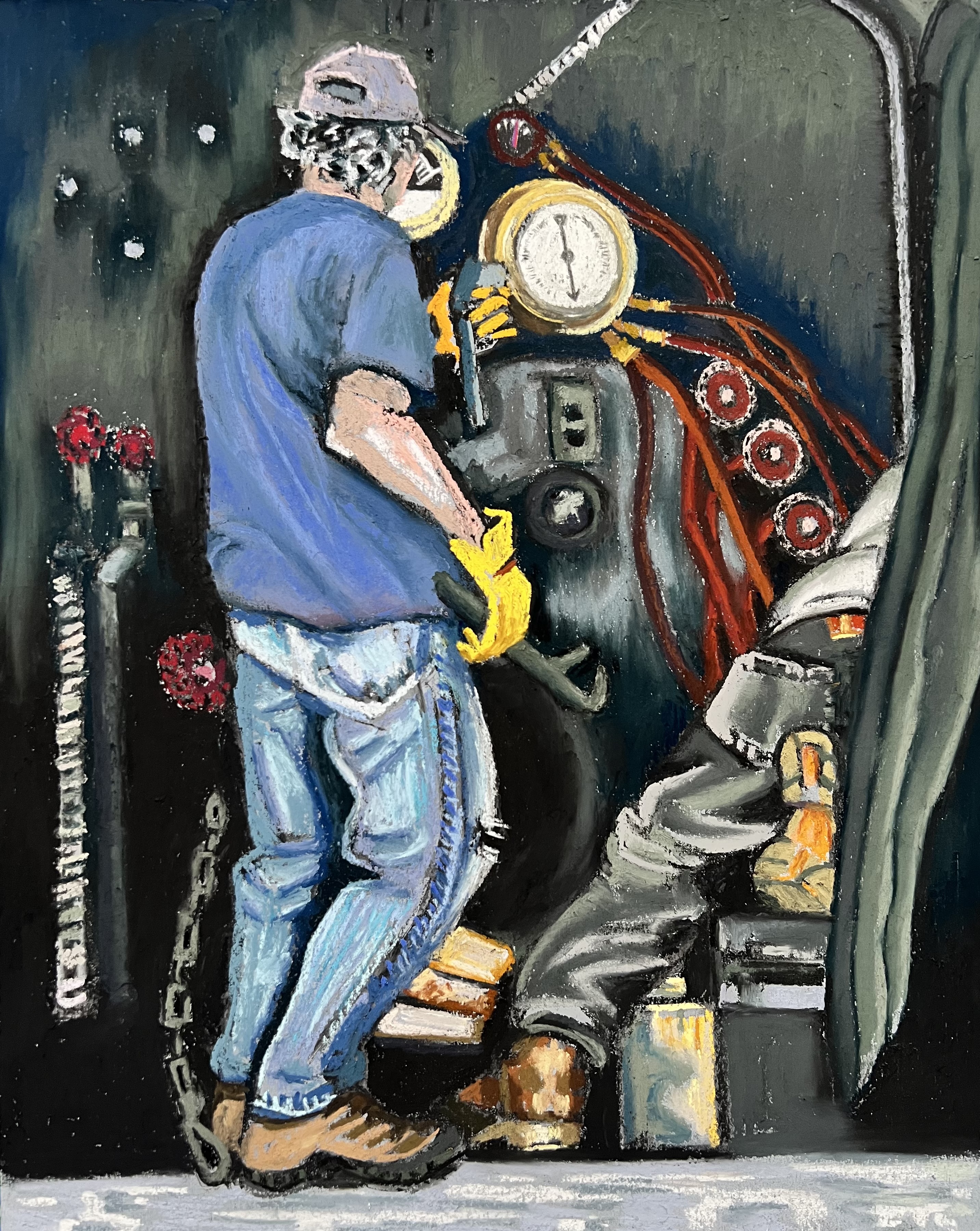
Cab compartment of Southern Pacific no. 18, the “Slim Princess.” Robin L. Chandler, 2024

The Slim Princess is an oil fire 4-6-0 “Ten Wheeler” type narrow-gauge steam locomotive built in 1911 by the Baldwin Locomotive Works of Philadelphia, Pennsylvania. This incredible machine is preserved by the Eastern California Museum (in the Larry Peckham Engine House) and has been lovingly restored and maintained in operable condition by a devoted cadre of volunteers who I recently watched laboring on the engine. Working from a photograph I made onsite, I painted this pastel.

“…..the Slim Princess worked the Nevada California Oregon line for 15 years, eventually sold to the Southern Pacific narrow gauge line. Mining and timber and farming in east California, Nevada and points west kept railroad companies going since the 1880s. The Carson and Colorado Railroad Company was incorporated in 1880 running on the narrow-gauge lines.” 

Excerpt from Sierra Wave Media, March 30, 2021 

“…..a little more than ten years later the Southern Pacific took over the Carson and Colorado. The ever-present hope of a southern railroad was encouraged. Collis P. Huntington, head of the greater company, decided to complete the line through the valley, connecting the transcontinental systems to the south and the north. Before he proceeded with that plan, death claimed him, and his successors held a different view. When the Los Angeles aqueduct required large quantities of freight, the long-wanted [rail]road was built, and its last spike was driven at Owenyo October 18, 1910. It gave the valley a southern rail connection, though the narrow-gauge traversing Owens Valley as far as Owenyo has never been standardized…..the ‘Slim Princess,’ as the narrow-gauge was locally dubbed, would be made a part of a through north-and-south interior system. But those improvements have been completed, and there still remains 134 miles of the narrow-gauge which Mills said had been ‘built 300 miles too long and 300 years too soon.’ “

Excerpt from W.A. Chalfant’s The Story of Inyo (revised edition 1933), p. 313-314

the road to Bodie

Dunderberg Peak from the road to Bodie. Robin L. Chandler, 2024

“…there in the empty desert; there are the arid mountains; they shimmer in the ashen heart of noon, or swim in the far elusive colors of evening – a reality that appears unreal, challenging the imagination…you cannot argue with the silence. It returns your questionings to you, to your own inner silence which becomes aware – a mystical something that is neither reason nor intelligence nor intuition, a recognition of some nameless truth that may not be denied.” (p.234)

Quote from a letter written by the artist Maynard Dixon on the occasion of a retrospective exhibit of his work held in November 1945 at the Scripps College art gallery. This is an excerpt from The Life of Maynard Dixon by Donald J. Hagerty