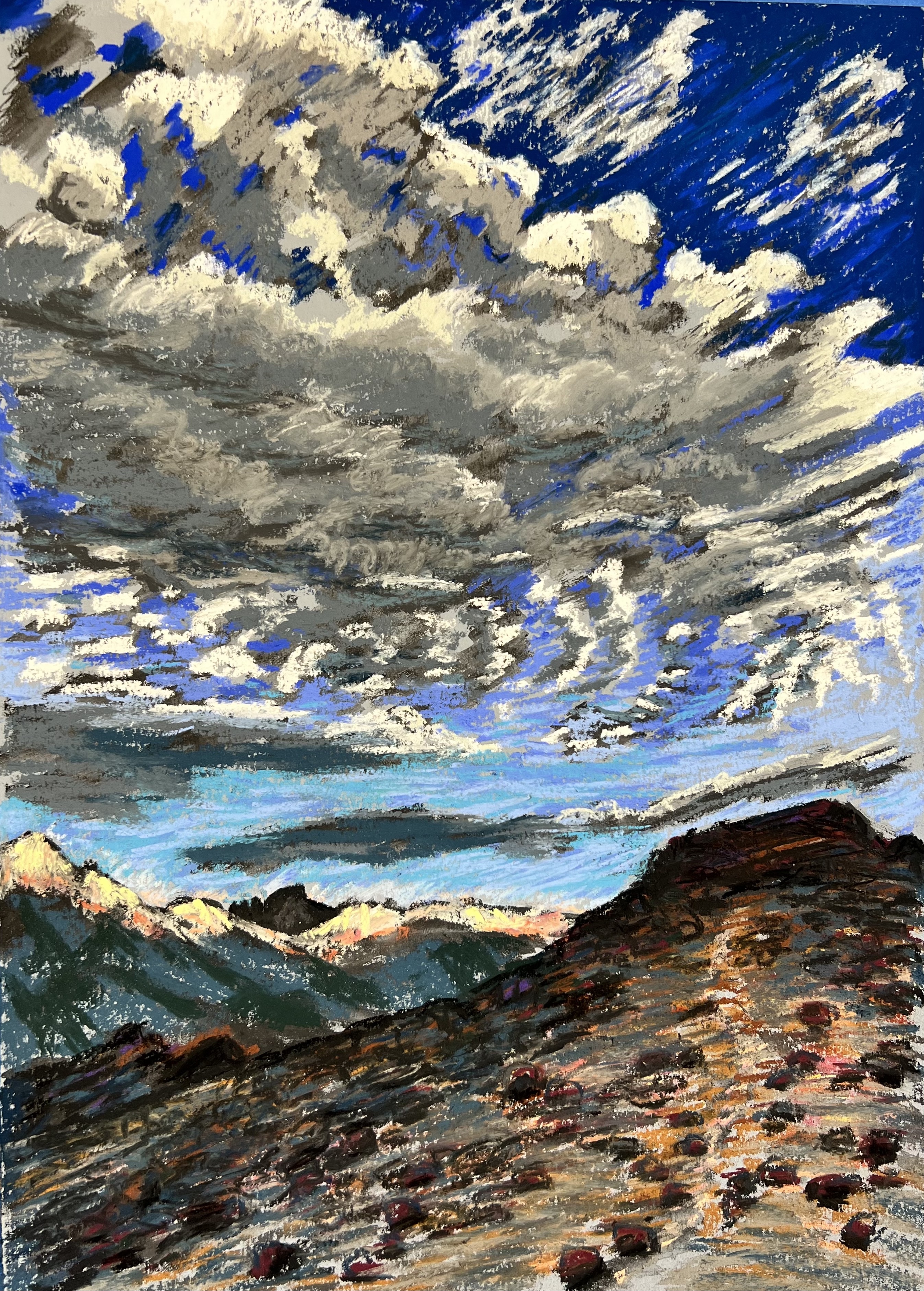
“…Beauty in the Song is clearly not the idealized, symmetrical, or abstract beauty of the Greeks, although occasional references to symmetry occur as in the images of twin gazelles and twin teeth (4:3, 4:5, 6:6, 7:4). The poet presents impressionistic images rather than a definitive likeness. Beauty in the song is visual, aromatic and tactile; it is textured and complex – a synesthetic experience. Beauty is a function of the abundance of the natural world. It is a function of aliveness. Beauty only becomes intelligible through the Song’s figurative language, which collapses the distance between the lovers and the land they inhabit. What beauty actually looks like in the Song is a luxurious land, alive with sheep grazing on hillsides, gazelles bounding through mountains, and trees laden with fruit.” (p.22)
An excerpt from Rabbi Ellen Bernstein’s Toward a Holy Ecology: Reading The Song of Songs in the Age of the Climate Crisis
 alive in the sea of information